Native Plants

Q. Who is Mr. Smarty Plants?
A: There are those who suspect Wildflower Center volunteers are the culpable and capable culprits. Yet, others think staff members play some, albeit small, role. You can torture us with your plant questions, but we will never reveal the Green Guru's secret identity.

Did you know you can access the Native Plant Information Network with your web-enabled smartphone?

Ask Mr. Smarty Plants
Ask Mr. Smarty Plants is a free service provided by the staff and volunteers at the Lady Bird Johnson Wildflower Center.

rate this answer

Sunday - June 01, 2008
From: Brenham, TX
Region: Southwest
Topic: Deer Resistant
Title: Native plants for deer
Answered by: Nan Hampton
QUESTION:
I live on 5 acres near Brenham and want to plant FOR the deer, without using non-natives. I leave unmowed islands of Buffalo grass, little bluestem and many native forbs. I know they are using it for cover but are they actually eating it or do they prefer my neighbor's veggies?ANSWER:
Wow! I think this is the first time we have gotten a question looking for plants that deer LIKE to eat. It is usually the reverse.First of all, grass is not a large component of the deer's food. They do eat it, but mostly when it is young and tender and provides the highest nourishment or as a last resort when nothing else is available. Their major foods are forbs (herbaceous plants) and browse (foliage of shrubs and trees). They will also eat mast (acorns, persimmons, mesquite beans, cedar berries and other fruits) which is, I suppose, a sort of subset of browse. There is an excellent article, White-tailed Deer Management in the Texas Hill Country by W. E. Armstrong and E. L. Young, from Texas Parks and Wildlife Department that goes into depth about managing the land for deer. In appendices at the end of the article there are lists of preferred deer food—Appendix B: Deer Browse Plants and Appendix C: Common Forbs of the Edwards Plateau. Since Brenham and Washington County are east of the Texas Hill Country, not all of the plants listed are going to be native to your area. I've picked out a few of the ones that are native to Washington County and that deer do prefer.
Browse
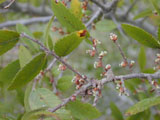
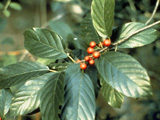
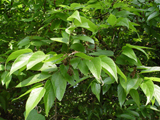
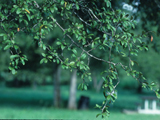
Frangula caroliniana (Carolina buckthorn)
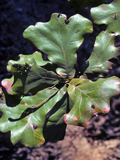
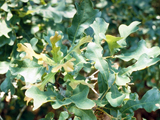
Quercus marilandica (blackjack oak)
Sideroxylon lanuginosum (gum bully)
Smilax bona-nox (saw greenbrier)
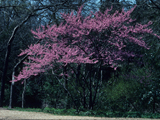
Cercis canadensis (eastern redbud)
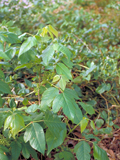
Toxicodendron radicans (eastern poison ivy) (go figure!)
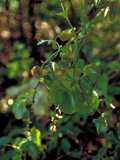
Forbs
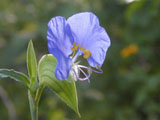
Commelina erecta (whitemouth dayflower)
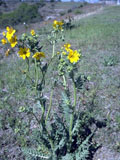
Engelmannia peristenia (Engelmann's daisy)
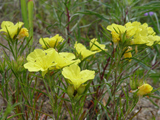
Calylophus berlandieri (Berlandier's sundrops)
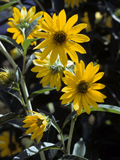
Helianthus maximiliani (Maximilian sunflower)
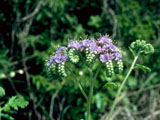
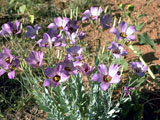
Eustoma exaltatum (catchfly prairie gentian)
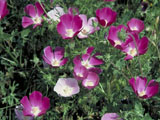
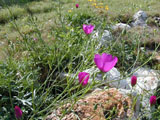
Callirhoe involucrata (purple poppymallow)
Callirhoe pedata (palmleaf poppymallow)
More Deer Resistant Questions
Leguminous deer-resistant groundcover
August 25, 2008 - Please help me identify a deer-resistant leguminous ground cover native to Central Texas to serve as a guard plant in edible-plant groupings.
view the full question and answer
Deer-resistant plants for Williams, OR
January 24, 2011 - I live in Williams, Oregon. I would like a listing of deer resistant, drought tolerant,evergreen, fast growing, native plants that can be used as a privacy screen on property perimeter.
view the full question and answer
Protection of redwoods from deer rutting
June 04, 2008 - We have a mountain home that we visit every other weekend. Are there any methods to protect redwoods from deer rutting that we can put in place since we are not there enough to spray repellent every f...
view the full question and answer
Native, deer-resistant evergreen trees for Rhode Island
March 17, 2008 - What deer proof evergreens can I plant in RI that may make nice xmas trees in a few years?
view the full question and answer
Deer--resistant plants for Great Falls, VA
August 16, 2010 - We have just moved to a house with a rural garden enjoyed by us and the deer. Can you recommend any deer resistant plants for ths location ? ( We have full sun and shade - zip code 22066.
Thanks,
view the full question and answer
| Support the Wildflower Center by Donating Online or Becoming a Member today. |