Native Plants

Q. Who is Mr. Smarty Plants?
A: There are those who suspect Wildflower Center volunteers are the culpable and capable culprits. Yet, others think staff members play some, albeit small, role. You can torture us with your plant questions, but we will never reveal the Green Guru's secret identity.

Did you know you can access the Native Plant Information Network with your web-enabled smartphone?

Ask Mr. Smarty Plants
Ask Mr. Smarty Plants is a free service provided by the staff and volunteers at the Lady Bird Johnson Wildflower Center.

rate this answer

Saturday - November 28, 2015
From: River Falls, WI
Region: Midwest
Topic: Plant Lists, Pollinators, Erosion Control, Herbs/Forbs
Title: Hillside Groundcovers for Pollinating Insects in Wisconsin
Answered by: Anne Van Nest
QUESTION:
I am looking for native plants for a project around Hudson, Wisconsin. We are to choose native plants to be seeded next spring 2016. They are to be planted on a hillside under and around solar panels (partial shade and 0-2 feet tall). It must provide vegetation for pollinating insects and look appealing. since on hillside, must control soil erosion and low-maintenance, meaning does not require frequent mowing. preferably perennials. Any suggestion will help greatly?ANSWER:
There are many native, perennial plants that should work well under and around your solar panels on your hillside that will also be a habitat for pollinating insects, control soil erosion and be low maintenance.
A search through the Native Plant Database on our website produced these for you to investigate (a few low shrubs are also included):
Antennaria plantaginifolia (plantain-leaf pussytoes)
Anaphalis margaritacea (Western pearly evelasting)
Aquilegia canadensis (Eastern red columbine)
Coreopsis lanceolata (lanceleaf coreopsis)
Fragaria virginiana (Virginia strawberry)
Geum triflorum (old man's whiskers)
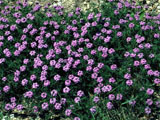
Glandularia bipinnatifida (purple prairie verbena)
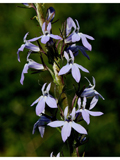
Lobelia spicata (palespike lobelia)
Mitchella repens (partridgeberry)
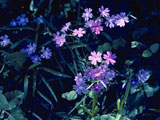
Phlox subulata (creeping phlox)
Potentilla simplex (common cinquefoil)
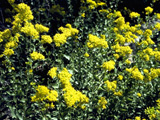
Solidago nemoralis (gray goldenrod)
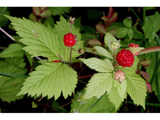
Rubus pubescens (dwarf red blackberry)
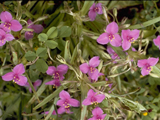
Tradescantia occidentalis (prairie spiderwort)
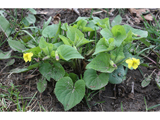
Viola pubescens (downy yellow violet)
Each plant webpage has information about growing conditions, sources and plant characteristics.
From the Image Gallery
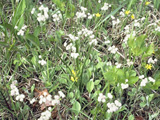

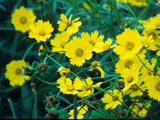
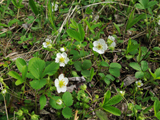
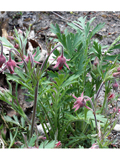
More Herbs/Forbs Questions
Are Brown-eyed susans and Black-eyed susans the same species?
December 02, 2014 - Are Brown eyed Susans the same as the Black-eyed Susan? I've read that they are both common names for the same plant, but the flower looks slightly different in different regions. Thank you.
view the full question and answer
Different colors of Argemone spp. from McAllen TX
March 16, 2014 - I took pictures of at least 5 colors of pricklepoppy today. Is this common to have so many colors in one area? How do I harvest the seedpods and when is the best time to do so?
view the full question and answer
Native plants for full sun and low maintenance
May 13, 2006 - I have volunteered to plant flowers/bushes around a sign at my church. I want to plant indigenous plants so the maintenance is low but I also want attractive plants. The soil is clay and the locatio...
view the full question and answer
Will native Galium aparine be a problem in Austin garden?
March 25, 2014 - Should I be concerned that my yard is overrun with "sticky weed" (Galium aparine) in the early spring?
Specifically, about five years ago I undertook converting about half my back yard into a na...
view the full question and answer
Flowering ofPluchea odorata in Houston, TX
August 13, 2014 - I sprouted Pluchea odorata seeds this spring, but the plants seem too small to bloom this year. Although your website characterizes this plant as an annual, do you think it will survive the Houston wi...
view the full question and answer
| Support the Wildflower Center by Donating Online or Becoming a Member today. |