Native Plants

Plant Database
Search for native plants by scientific name, common name or family. If you are not sure what you are looking for, try the Combination Search or our Recommended Species lists.
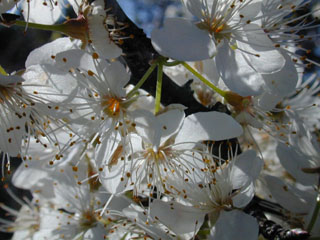
Marcus, Joseph A.
Prunus mexicana
Prunus mexicana S. Watson
Mexican Plum, Bigtree Plum, Inch Plum
Rosaceae (Rose Family)
Synonym(s): Prunus americana var. lanata, Prunus lanata, Prunus mexicana var. flutonensis, Prunus mexicana var. polyandra, Prunus pensylvanica var. mollis
USDA Symbol: PRME
USDA Native Status: L48 (N)
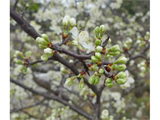
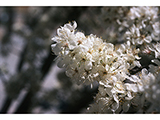
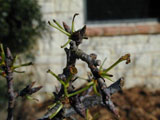
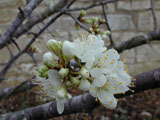
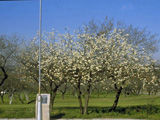
Bigtree or Mexican plum is a single-trunked, non-suckering tree, 10-35 ft. tall, with fragrant, showy, white flowers displayed before the leaves appear. Mature trunks become satiny, blue-gray with darker, horizontal striations. Leaves up to 5 inches long and 2 inches wide, ovate to narrower with serrate margins; minute glands on the petiole near the base of the blade. Plums turn from yellow to mauve to purple as they ripen from July through September.
The common wild plum of the forest-prairie border from Missouri and eastern Kansas to Texas. The fruit is eaten fresh and made into preserves and is also consumed by birds and mammals. This species has served as a stock for grafting cultivated varieties of plums.
Plant Characteristics
Duration: PerennialHabit: Tree
Leaf Retention: Deciduous
Fruit Type: Drupe
Size Notes: Up to about 35 feet tall, often much shorter.
Bloom Information
Bloom Color: White , PinkBloom Time: Feb , Mar , Apr
Distribution
USA: AL , AR , GA , IA , IL , IN , KS , KY , LA , MO , MS , NC , NE , OH , OK , SC , SD , TN , TX , WINative Distribution: Extreme s. OH to s.e. SD, s. to SC, AL, TX & Mex.
Native Habitat: Dry to moist thin woods, river bottoms & prairies. mostly in northeast and north central Texas.
Growing Conditions
Water Use: LowLight Requirement: Sun , Part Shade
Soil Moisture: Dry , Moist
Cold Tolerant: yes
Soil Description: Dry to moist, well-drained soils. Sandy, Sandy Loam, Medium Loam, Clay Loam, Clay, Limestone-based
Conditions Comments: Bigtree or Mexican plum is a single-trunked, non-suckering tree with fragrant, showy, white flowers displayed before the leaves appear. Mature trunks become satiny, blue-gray with darker, horizontal striations. Plums turn from yellow to mauve to purple as they ripen from July through September.
Benefit
Use Ornamental: Attractive, Aromatic, Showy, Fall conspicuous, Accent tree or shrubUse Wildlife: Plums attract birds. Nectar-bees, Fruit-birds, Fruit-mammals
Use Food: Fruit used for preserves and cooking.
Conspicuous Flowers: yes
Fragrant Flowers: yes
Attracts: Birds , Butterflies
Larval Host: Tiger Swallowtail, Cecropia moths
Nectar Source: yes
Deer Resistant: No
Value to Beneficial Insects
Special Value to Native BeesThis information was provided by the Pollinator Program at The Xerces Society for Invertebrate Conservation.
Propagation
Propagation Material: Softwood CuttingsDescription: Prunus species may be rooted from dormant hardwood, softwood, semi-hardwood, or root cuttings. Semi-hardwood and softwood cuttings taken in summer root easiest. Seeds of P. mexicana require a period of after-ripening followed by cold stratification.
Seed Collection: Collect fruit when it is filled out, firm, and its ripe color. Clean seeds from pulp. Storage viability is maintained at 31-41 degrees. Loses viability rapidly if allowed to dry out after collection and cleaning.
Seed Treatment: For spring sowing, stratify seeds in moist sand for 30-60 days in a greenhouse, then cold stratify (36-41 degrees) for 60-90 days. Plant well before high temperatures.
Commercially Avail: yes
Mr. Smarty Plants says
Native alternative for Japanese Red Maple in Oklahoma
October 12, 2009
Mr. Smarty Plants, I am looking for a native alternative to a Japanese Red Maple. I would like a small tree that I can put in my front garden that will not pose a security risk my being overgrown and ...
view the full question and answer
Edible plants native to Austin, TX
August 05, 2009
Hello,
I am a chef from Buenos Aires Argentina visiting Austin, Texas and would like to learn about native, edible plants in the region.
Please let me know if there are any native, edible plants...
view the full question and answer
Fruit trees for South Austin.
January 25, 2008
I live in South, South Austin, just a pinch West of 35 near 1626. I would like to plant some fruit trees in the back yard. Anyone will sell fruit trees, but they don't always grow. What fruiting var...
view the full question and answer
Plants for wildlife and trees for shade.
September 29, 2007
We live in Kempner Texas, our land has mostly cedar trees. We would like to make a wildlife habitat on the back side of our property. Can you recommend plants that will grow in shade to partial sun,...
view the full question and answer
Variety of native tall plants for a screen in shady area near Ft. Worth
June 12, 2007
Hello, we live west of Ft Worth. We are looking for tall plants to form a visual screen along a chain link fence we share with a neighbor. We have post oaks there and it is very shady and the ground ...
view the full question and answer
From the National Organizations Directory
According to the species list provided by Affiliate Organizations, this plant is on display at the following locations:Lady Bird Johnson Wildflower Center - Austin, TX
Pineywoods Native Plant Center - Nacogdoches, TX
Texas Discovery Gardens - Dallas, TX
Brackenridge Field Laboratory - Austin, TX
Patsy Glenn Refuge, c/o Wimberley Birding Society - Wimberley, TX
NPSOT - Native Plant Society of Texas - Fredericksburg, TX
Texas Parks and Wildlife Department - Austin, TX
NPSOT - Fredericksburg Chapter - Fredericksburg, TX
Texas Master Naturalists - Lost Pines Chapter - Bastrop, TX
NPSOT - Austin Chapter - Austin, TX
Jacob's Well Natural Area - Wimberley, TX
NPSOT - Williamson County Chapter - Georgetown, TX
Wildflower Center Seed Bank
LBJWC-MLE-5 Collected 2009-08-26 in Lampasas County by Lady Bird Johnson Wildflower CenterBibliography
Bibref 307 - Edible and Useful Plants of Texas and the Southwest: Including recipes, harmful plants, natural dyes, and textile fibers: A Practical Guide (1999) Tull, D.Bibref 298 - Field Guide to Texas Trees (1999) Simpson, B.J.
Bibref 946 - Gardening with Prairie Plants: How to Create Beautiful Native Landscapes (2002) Wasowski, Sally
Bibref 355 - Landscaping with Native Plants of Texas and the Southwest (1991) Miller, G. O.
Bibref 354 - Native & Naturalized Woody Plants of Austin & the Hill Country (1981) Lynch, D.
Bibref 841 - Native Alternatives to Invasive Plants (2006) Burrell, C. C.
Bibref 318 - Native Texas Plants: Landscaping Region by Region (2002) Wasowski, S. & A. Wasowski
Bibref 297 - Trees of Central Texas (1984) Vines, Robert A.
Bibref 328 - Wildflowers of Texas (2003) Ajilvsgi, Geyata.
Search More Titles in Bibliography
Web Reference
Webref 3 - Flora of North America (2014) Missouri Botanical Garden, St. Louis, MO & Harvard University Herbaria, Cambridge, MA.From the Archive
Wildflower Newsletter 1993 VOL. 10, NO.2 - Berry Browsing in the Backyard, Director\'s Report, Essays on Trillium\'s, Natio...Additional resources
USDA: Find Prunus mexicana in USDA PlantsFNA: Find Prunus mexicana in the Flora of North America (if available)
Google: Search Google for Prunus mexicana
Metadata
Record Modified: 2022-10-10Research By: TWC Staff