Native Plants

Plant Database
Search for native plants by scientific name, common name or family. If you are not sure what you are looking for, try the Combination Search or our Recommended Species lists.
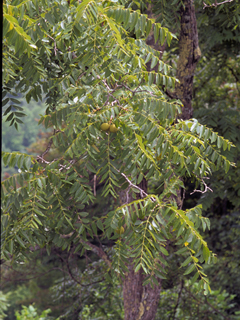
Wasowski, Sally and Andy
Juglans nigra
Juglans nigra L.
Black Walnut, Eastern Black Walnut, American Black Walnut
Juglandaceae (Walnut Family)
Synonym(s): Wallia nigra
USDA Symbol: JUNI
USDA Native Status: L48 (N), CAN (N)
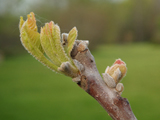
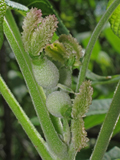
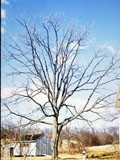
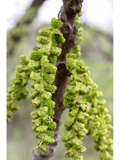
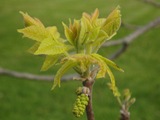
Black walnut is a large, rugged, deciduous tree, 50-75 ft. in height and width, sometimes reaching 150 ft. tall. Dark, furrowed bark on the trunk. Wide-spreading branches form an upright, umbrella-like crown in the woods or a round-topped crown in the open. The well-formed trunk is usually devoid of branches a considerable distance from the ground. Leaves up to 2 feet long with 5 to 11 pairs of leaflets along a central axis and a single leaflet at the tip; midrib of the lateral leaflets off-center with the wider part of the blade toward the leaf tip. Leaflets emerge very late in spring and are yellow-green. Fall color is clear yellow, unless the tree has been troubled with insects or leaf blight. Flowers inconspicuous, in elongate, green clusters. Fruit 1 1/2 to 2 1/4 inches in diameter, consisting of a hard-shelled, furrowed nut enclosed in a green husk, darker when ripe.
One of the scarcest and most coveted native hardwoods, Black Walnut is used especially for furniture, gunstocks, and veneer. Individual trees fetch attractive prices and a few prized trees have even been stolen. Since colonial days and before, Black Walnut has provided edible nuts and a blackish dye made from the husks. Tomatoes and apples do not survive near mature trees. The delicious nuts must be gathered early, before squirrels and other wildlife can consume them. Of all the native nut trees of North America, the Black Walnut is the most valuable save only the Pecan (Carya illinoinensis), and in the traditions of pioneer life and rustic childhood it is even more famous.
Plant Characteristics
Duration: PerennialHabit: Tree
Leaf Retention: Deciduous
Leaf Arrangement: Alternate
Leaf Complexity: Pinnate
Breeding System: Flowers Unisexual , Monoecious
Fruit Type: Nut
Size Notes: Usually up to about 75 feet tall. Can be up to 150 feet tall.
Leaf: Green
Autumn Foliage: yes
Fruit: Green, Brown
Bloom Information
Bloom Color: Yellow , Green , BrownBloom Time: Apr , May
Distribution
USA: AL , AR , CT , DC , DE , FL , GA , IA , IL , IN , KS , KY , LA , MA , MD , ME , MI , MN , MO , MS , NC , ND , NE , NH , NJ , NY , OH , OK , PA , RI , SC , SD , TN , TX , UT , VA , WI , WV , WYCanada: ON
Native Distribution: W. MA to n.w. FL, w. to s. MN, n.e. NE, w. OK & c. TX
Native Habitat: Rich, moist woods; bottomlands
Growing Conditions
Water Use: HighLight Requirement: Sun , Part Shade
Soil Moisture: Moist
Soil pH: Circumneutral (pH 6.8-7.2)
CaCO3 Tolerance: High
Cold Tolerant: yes
Heat Tolerant: yes
Soil Description: Moist, rich soils. Sandy Loam, Medium Loam, Clay Loam, Acid-based, Calcareous
Conditions Comments: Black walnut is slow-growing especially if not in its preferred moist, fertile, sunny site. The deep tap-root makes transplanting difficult. Nuts may become a nuisance as they litter and stain. Foliage is often attacked by caterpillars, and the species is susceptible to anthracnose which defoliates trees for the season.
Benefit
Use Ornamental: Fall conspicuous, Shade treeUse Wildlife: Squirrels are among the few creatures with strong enough teeth and the determination to gnaw through the extremely hard shells.
Use Other: Certain plants will not grow under Black Walnut trees because of the juglones that the tree puts in the soil. Walnut husks are rich in tannins and toxins. Ground husks have provided insecticides, fish poison and black dye.
Fragrant Foliage: yes
Attracts: Birds , Butterflies
Larval Host: Black walnut is the preferred host of the luna and regal moth.
Propagation
Propagation Material: SeedsDescription: Plant nuts in fall or spring. If nuts are sown in spring, they must be stratified. Protection from squirrels is necessary.
Seed Collection: Collect nuts in fall or winter when husks begin to turn black and split open. Remove husks. It is not necessary to remove shell. Sow immediately or keep in moist sand over winter. Nuts lose viability if allowed to dry out.
Seed Treatment: Stratify for 60-120 days at 34-41 degrees.
Commercially Avail: yes
Find Seed or Plants
View propagation protocol from Native Plants Network.
Mr. Smarty Plants says
Edible Plants for North Georgia
January 10, 2010
We are planning a forest food garden in the hollers of the N GA Mountains.
Which edible fruit, nut, berry, herb and creepers would be best for this reddish, clay-like soil? The food garden is in...
view the full question and answer
Are black walnut and sugar maple poisonous to alpacas
June 09, 2008
I have alpacas and wonder if black walnut or sugar maple are poisonous to them.
view the full question and answer
National Wetland Indicator Status
| Region: | AGCP | AK | AW | CB | EMP | GP | HI | MW | NCNE | WMVE |
| Status: | UPL | UPL | FACU | FACU | FACU | FACU | UPL |
From the National Organizations Directory
According to the species list provided by Affiliate Organizations, this plant is on display at the following locations:Stengl Biological Research Station - Smithville, TX
Texas Parks and Wildlife Department - Austin, TX
Georgia Native Plant Society - Atlanta, GA
NPSOT - Austin Chapter - Austin, TX
Mt. Cuba Center - Hockessin, DE
Bibliography
Bibref 298 - Field Guide to Texas Trees (1999) Simpson, B.J.Bibref 355 - Landscaping with Native Plants of Texas and the Southwest (1991) Miller, G. O.
Bibref 354 - Native & Naturalized Woody Plants of Austin & the Hill Country (1981) Lynch, D.
Bibref 318 - Native Texas Plants: Landscaping Region by Region (2002) Wasowski, S. & A. Wasowski
Bibref 297 - Trees of Central Texas (1984) Vines, Robert A.
Search More Titles in Bibliography
From the Archive
Wildflower Newsletter 1994 VOL. 11, NO.6 - Wildflower Center Featured Non-Profit in Neiman Marcus Christmas Book, Dana Leav...Additional resources
USDA: Find Juglans nigra in USDA PlantsFNA: Find Juglans nigra in the Flora of North America (if available)
Google: Search Google for Juglans nigra
Metadata
Record Modified: 2023-01-02Research By: TWC Staff