Native Plants

Q. Who is Mr. Smarty Plants?
A: There are those who suspect Wildflower Center volunteers are the culpable and capable culprits. Yet, others think staff members play some, albeit small, role. You can torture us with your plant questions, but we will never reveal the Green Guru's secret identity.

Did you know you can access the Native Plant Information Network with your web-enabled smartphone?

Ask Mr. Smarty Plants
Ask Mr. Smarty Plants is a free service provided by the staff and volunteers at the Lady Bird Johnson Wildflower Center.

rate this answer

Saturday - March 02, 2013
From: Boulder, CO
Region: Rocky Mountain
Topic: Invasive Plants, Vines
Title: Passionflower Vine for Boulder
Answered by: Anne Van Nest
QUESTION:
I would love to have a passionflower vine growing up an arbor. I have read comments online that indicate: 1. I can grow some types of passionflowers in Colorado. 2. The plants can become very invasive. Do I need to worry about the invasiveness of these plants in Colorado? If I want to be certain of containing the roots can I put some type of barrier in the ground to keep plants contained? Any suggestions and how deep should the barrier go? Which varieties will grow in CO? Thanks so much for advice!ANSWER:
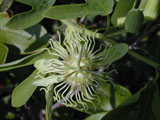
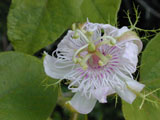
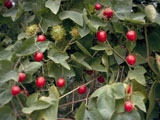
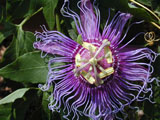
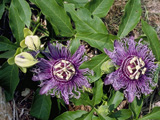
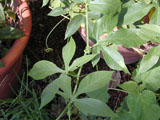
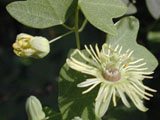
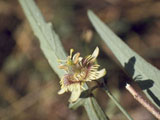
There are about six (depending on how taxonomists group which plants together) native Passiflora (passionflower) vines in the United States. Exquisite in bloom and great screening plants, these vines can mostly be found in the warmest parts of the country. There are two that can tolerate colder winter weather conditions and could be possibilities for your garden in Colorado. The hardiest native passionflower vines are Passiflora incarnata and P. lutea.
Boulder, Colorado is in the USDA plant hardiness zone 5b/6a so these plants will need to be located in a protected site, given lots of extra mulch to insulate the roots and will die down to the ground during the winter. A plentiful amount of continuous snow cover is also an excellent insulating blanket for the winter. If it is too risky to grow these two passionflower vines outdoors in Boulder, then consider planting them in large containers and moving the containers into a garage or basement for the winter. Then move them out to the garden in late spring.
The native passionflowers are: Passiflora affinis (native to TX), Passiflora foetida (AZ, FL, HI, and TX), Passiflora incarnata (DE to MO) Hardiness zone 5-7 to 10. Passiflora lutea (PA to FL) Hardiness zone 5 to 9 and tolerant of winter temperatures down to -15 or -30 deg. C. Passiflora suberosa (TX), and Passiflora tenuiloba (NM to TX).
There are no worries about any Passiflora becoming invasive in Colorado. The areas where native or exotic passionflower vines are an invasive issue are locations such as Hawaii where there is not a winter freeze to control the plant. A good resource for invasive plant information is the Invasive Plant Atlas of the United States developed by the University of Georgia - Center for Invasive Species and Ecosystem Health and the National Parks Service (among other partners).
From the Image Gallery
More Invasive Plants Questions
Identification of fast-growing weeds with orange flowers
July 14, 2013 - I have fast growing plants (weeds?) in my heavily wooded backyard. They reach heights of over 6 ft and have orange flowers. I have spent hours searching the web today with no success -the closest thin...
view the full question and answer
Seeds of Meremia dissecta from Austin
September 30, 2012 - I have a large quantity of seeds of Merremia dissecta that I acquired from plants growing in the parking lot of the San Antonio Museum of Art. (Hmmm… I wonder if it's called alamo vine because of som...
view the full question and answer
Horsetail Rush invasive in Santa Monica CA
January 16, 2012 - Mr. Smarty Plants:
I live about 3 miles from the beach in the Santa Monica area and have an 18inch deep planter area in my backyard that is adjacent to my garage. I like the look of horsetail rush. I...
view the full question and answer
Removal of Ashe juniper trees
April 19, 2015 - I have 15 acres with scattered huge oak and elm trees with tens of thousands of Ashe Juniper (cedar) trees 2” to 10” in diameter growing within the drip zone of the hardwoods. How do I take out the c...
view the full question and answer
Invasive plants in native plant area from Austin
May 15, 2012 - Why do invasive plants grow in native plant territory?
view the full question and answer
| Support the Wildflower Center by Donating Online or Becoming a Member today. |