Native Plants

Q. Who is Mr. Smarty Plants?
A: There are those who suspect Wildflower Center volunteers are the culpable and capable culprits. Yet, others think staff members play some, albeit small, role. You can torture us with your plant questions, but we will never reveal the Green Guru's secret identity.

Did you know you can access the Native Plant Information Network with your web-enabled smartphone?

Ask Mr. Smarty Plants
Ask Mr. Smarty Plants is a free service provided by the staff and volunteers at the Lady Bird Johnson Wildflower Center.

rate this answer

Sunday - April 01, 2012
From: Brockton, MA
Region: Northeast
Topic: Groundcovers
Title: Groundcover for Massachusetts campus
Answered by: Nan Hampton
QUESTION:
Our campus is converting to more sustainable landscaping practices, and in the process we are planting native plants and removing lawn. Thus we would like to replace the lawn, and some invasive groundcovers such as Vinca and Pachysandra, between the buildings and the sidewalk with hardy groundcovers. Many of the buildings have an overhang, so part of the ground will be quite dry and part will be exposed to moisture, and of course there are a variety of sun exposures.ANSWER:
Congratulations for moving to sustainable native plants to replace your invasive groundcovers! Here are some suggestions for groundcovers that could be used in combination to fill your various sun and soil moisture situations.
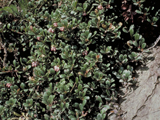
Arctostaphylos uva-ursi (Kinnikinnick) is evergreen, grows in sun, part shade and shade and in both dry and moist soil.
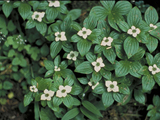
Cornus canadensis (Bunchberry dogwood) is semi-evergreen depending on the severity of the winter and grows in moist soil in sun, part shade and shade.
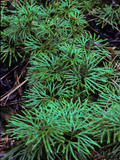
Lycopodium digitatum (Fan clubmoss) prefers dry shade and part shade and is evergreen.
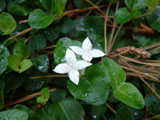
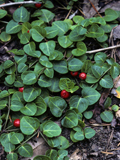
Mitchella repens (Partridgeberry) will grow in dry and moist habitats in shade and part shade and is evergreen.
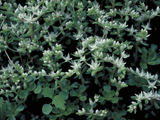
Sedum ternatum (Wild stonecrop) grows in moist part shade and is described as semi-evergreen or evergreen. In Massachusetts, it is probably semi-evergreen depending on the severity of the winter.
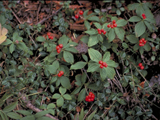
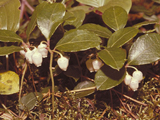
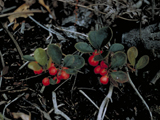
Gaultheria procumbens (Checkerberry) for part shade and shade in dry and moist soil and is evergreen.
Juniperus horizontalis (Creeping juniper) is evergreen and likes sun and part shade and dry rocky soils. Here are photos from North Carolina State University. You can read about several different cultivars described on the University of Connecticut Plant Database.
From the Image Gallery
More Groundcovers Questions
Plant ID at Wildflower Center from Waco TX
June 18, 2012 - I was at the Center last weekend and no one was able to answer these two questions: 1. Where can I buy Silver Ponyfoot groundcover? 2. What is the name of the plant with coral blossoms in front of...
view the full question and answer
Low growing groundcovers for pond banks in Brookville PA
July 30, 2010 - What are some good low growing ground cover plants for pond banks? Zone 5, mostly sun, preferably something I could start from seed? Hopefully low maintenance & non-evergreen. Perennial & hardy pre...
view the full question and answer
Evergreen ground covers and low plants for Dallas area
May 25, 2010 - Would like a list of low growing (24" or less) evergreen plants including ground covers, scrubs, etc-flowering and non-flowering that are hardy and require low maintenance in the Dallas area. So ofte...
view the full question and answer
Native plants for groundcover under Magnolia in Austin
April 09, 2009 - What plants native to the Austin, Tx area will do well underneath a large magnolia tree (instead of the English ivy that is there)?
view the full question and answer
Ground cover for New York sloped area
November 24, 2009 - I'm looking for native ground covers (vines?) for steep, heavy shale sloped areas as well as a ground cover in gently sloped area, preferably not higher than 6 inches. All that I've found is non-nat...
view the full question and answer
| Support the Wildflower Center by Donating Online or Becoming a Member today. |