Native Plants

Q. Who is Mr. Smarty Plants?
A: There are those who suspect Wildflower Center volunteers are the culpable and capable culprits. Yet, others think staff members play some, albeit small, role. You can torture us with your plant questions, but we will never reveal the Green Guru's secret identity.
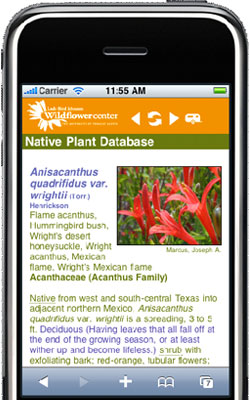
Did you know you can access the Native Plant Information Network with your web-enabled smartphone?

Ask Mr. Smarty Plants
Ask Mr. Smarty Plants is a free service provided by the staff and volunteers at the Lady Bird Johnson Wildflower Center.

rate this answer

Friday - May 27, 2011
From: San Antonio, TX
Region: Southwest
Topic: Diseases and Disorders
Title: Problems with Juniperus ashei in San Antonio
Answered by: Barbara Medford
QUESTION:
I live in San Antonio and have many juniper trees. On inspection I do not see insects or any other form of damage, but my trees are turning brown and dying. I have already had to cut one down. When I look around my area I notice other Juniper trees that look the same. Please tell me what is going on and how can I save my trees?ANSWER:
We are getting all kinds of correspondence from all over, not just Central Texas, about browning or even yellowing of the foliage of various members of the Juniperus genus, including Juniperus ashei (Ashe juniper).
Please read this previous Mr. Smarty Plants answer, which has all sorts of suggestions about the cause. We have even been in e-mail correspondence with a number of area forestry experts or landowners with lots of "cedars." Our opinion is that the extreme drought this year has so stressed the junipers that they have become susceptible to mites of various kinds, including the juniper mite. The consensus from all this discussion is that until it rains, the problem is going to persist. We realize that is not much help to you, but the Ashe juniper is a persistent tough native tree, we know it has had problems in the past, but we think, as a species, it will be all right. There will probably be some tree loss, as we are now passing out of May, our traditionally rainy season, but that is always a risk in gardening in what is basically an arid locale. This makes conservation all the more important, and planting trees and other plants that can tolerate low water use, as well as cutting down on thirsty non-native lawns.
More Diseases and Disorders Questions
Leaf burn on hydrangeas
July 11, 2008 - What causes my leaves to burn on my healthy hydrangeas?
view the full question and answer
Yellowing of Thuja occidentalis leaves in early Fall in Maryland
September 12, 2006 - Mr. Smarty Plants, I am from Maryland. Please help. I have planted 23 Thuja occidentalis Smaragd in my front yard a few months ago. Height of about 3 feet. Most of the trees have turned golden brown....
view the full question and answer
Webs on tree trunk, probably bark lice
August 19, 2009 - webs on tree trunk and creeping up. See no spiders or worms. what could be. very fine, thick web
view the full question and answer
Why is my weeping willow looking so bad?
June 15, 2009 - My weeping willow suddenly up and looked like it died Yellow leaves dried up and dropping off It is planted in what is called "Wet lands" Clay soil water wet Just looks like it is dying
view the full question and answer
Grasshopper-resistant landscape plants?
May 20, 2009 - We have a ton of grasshoppers in our area. I would like to plant bushes and flowers that the grasshoppers will not eat. Can you suggest any??
view the full question and answer
| Support the Wildflower Center by Donating Online or Becoming a Member today. |