Native Plants

Q. Who is Mr. Smarty Plants?
A: There are those who suspect Wildflower Center volunteers are the culpable and capable culprits. Yet, others think staff members play some, albeit small, role. You can torture us with your plant questions, but we will never reveal the Green Guru's secret identity.

Did you know you can access the Native Plant Information Network with your web-enabled smartphone?

Ask Mr. Smarty Plants
Ask Mr. Smarty Plants is a free service provided by the staff and volunteers at the Lady Bird Johnson Wildflower Center.

rate this answer

Monday - February 21, 2011
From: Mohegan Lake, NY
Region: Northeast
Topic: Trees
Title: Flowering Dogwood for NY
Answered by: Anne Bossart
QUESTION:
Hello - can you advise me on a disease-resistant/hardy dogwood? Every nursery I've visited has discouraged me from planting dogwoods. What would you recommend? I live in Westchester County, NYANSWER:
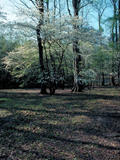
Our Native Plant Database tells us that there are ten different dogwoods that are native to New York, but I am assuming that you are referring to Cornus florida (Flowering dogwood). It is described in our database as "one of the most beautiful eastern North American trees with showy early spring flowers, red fruit, and scarlet autumn foliage".
It is a shame that the nurseries in your area are discouraging you from planting one, as your location is well within its native range as you can see on this map published by the Western North Carolina Nature Center. It is hardy in USDA Zones 5 to 9. Their warnings are likely as a result of a lot of publicity about the many trees in the wild that have died due to anthracnose blight. The disease is a problem under cool, moist weather conditions, made worse by poor air circulation, as is typical in their native forest habitat. Dogwoods which are planted in more open, sunny conditions are much less prone to the problem.
That being said, they do require evenly moist, acid, well drained soil and partial shade and will not thrive in a full sun, drought prone, compacted suburban lawn.
You will find more information about the plant, its cultural requirements and some information about improved cultivars in this USDA Plant Guide. We also encourage you to contact your local agricultural extension office for advice regarding selecting and planting your tree.
If you can provide a hospitable site for a dogwood, we encourage you to do so. Many nurseries and garden designers will recommend you plant a (non-native) Kousa dogwood instead, as it will not be as susceptible to disease. Researchers now suspect that the fungus was actually introduced to this country with the Kousa dogwood. However, we discourage you from doing so as our indigenous dogwood (with such a wide native range) is an important food source for migrating songbirds. The berry of the Kousa dogwood is too large for most of our native songbirds to swallow, making it an inappropriate alternative to our natives.
We also recommend you consider the following alternatives:
Cornus alternifolia (Alternateleaf dogwood) (Images)
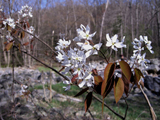
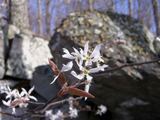
Amelanchier arborea (Common serviceberry)
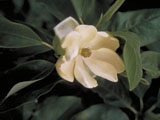
Magnolia virginiana (Sweetbay)

More Trees Questions
Dwarf golden cypress outgrowing their space
December 28, 2008 - I planted two dwarf golden cypress on opposite sides of a dwarf alberta spruce in a small bed by the front door. After 4 years I have to severely prune back the dwarf cypress in spring as they will sp...
view the full question and answer
Use of fresh clippings from tree trimmers for mulch in Austin
May 02, 2010 - Hi, The tree trimmers are in my neighborhood (east central Austin) to clear the power lines and said I can have a load of free mulch. I am wondering if there is any harm in using the fresh mulch from...
view the full question and answer
Replacement for dead oak tree after hurricane
October 01, 2008 - Mr. Smarty Plants,
It still is hard to believe but my dead Oak tree survived H.Ike! Now that I've gotten that dreaded letter from the HOA, they want me to replace it with at least a 45 gallon tree....
view the full question and answer
Growing non-native avocado outside from Austin
December 27, 2012 - My son has a very large avocado tree that he rooted from a pit that is currently growing in a large container. However, it has gotten too big to winter inside. Can it be planted in the ground in Aust...
view the full question and answer
Evergreen trees for California that are non-toxic for dogs
February 19, 2014 - Hi,
we live in California, San Bernardino County and would like to know what evergreen trees are safe to plant in our backyard with 2 little dogs being around. I did quite some search online but ever...
view the full question and answer
| Support the Wildflower Center by Donating Online or Becoming a Member today. |