Native Plants

Plant Database
Search for native plants by scientific name, common name or family. If you are not sure what you are looking for, try the Combination Search or our Recommended Species lists.
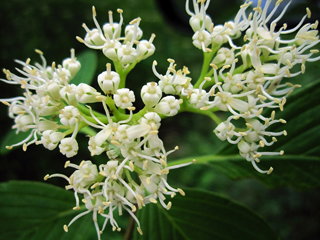
Baugh, James C.
Cornus alternifolia
Cornus alternifolia L. f.
Alternateleaf Dogwood, Alternate-leaf Dogwood, Pagoda Dogwood
Cornaceae (Dogwood Family)
Synonym(s): Swida alternifolia
USDA Symbol: COAL2
USDA Native Status: L48 (N), CAN (N), SPM (N)
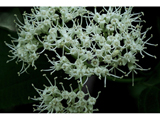
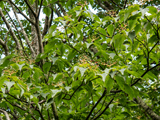
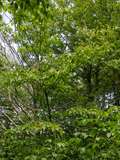
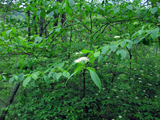
Shrub or small tree with short trunk and flat-topped, spreading crown of long, horizontal branches. Alternate-leaf dogwood or pogoda dogwood is a deciduous shrub or small tree, 20-35 ft. tall, with decidedly horizontal branching. Branch ends are upturned. Bark and twigs are green to reddish-purple. Wide, flat-topped clusters of fragrant, white-cream flowers become clusters of reddish-purple berries. Fall foliage is a dull maroon.
Unlike all other native dogwoods, this species has alternate rather than opposite leaves. The name "Pagoda Dogwood" alludes to the flat-topped crown, with horizontal layers of branches. The bitter berrylike fruits of this and other dogwoods are consumed in quantities in fall and winter by wildlife.
The genus Cornus is Latin for a horn.
Plant Characteristics
Duration: PerennialHabit: Shrub
Leaf Retention: Deciduous
Fruit Type: Drupe
Size Notes: Up to about 35 feet tall.
Leaf: Dark Green
Autumn Foliage: yes
Fruit: Black, Blue
Bloom Information
Bloom Color: WhiteBloom Time: Apr , May , Jun
Bloom Notes: Creamy white.
Distribution
USA: AL , AR , CT , DE , FL , GA , IA , IL , IN , KY , MA , MD , ME , MI , MN , MO , MS , NC , NH , NJ , NY , OH , PA , RI , SC , TN , VA , VT , WI , WVCanada: MB , NB , NL , NS , ON , PE , QC
Native Distribution: Nf. to MN & s. Man., s. to n. FL, AL & AR
Native Habitat: Rich, deciduous & mixed woods; rocky slopes; coastal plains; shrub balds
Growing Conditions
Water Use: MediumLight Requirement: Part Shade , Shade
Soil Moisture: Moist
CaCO3 Tolerance: Low
Soil Description: Cool, moist, acid, well-drained soils.
Conditions Comments: This tree has infrequent disease and insect problems, however wind and ice damage are common. It is tolerant of poor soils and clay.
Benefit
Use Wildlife: Attracts ground, water and songbirds and many mammals. The dry, bitter fruits are not edible by human standards, but they provide food for grouse, pheasants, wild turkeys and squirrels. (Kershaw)Use Other: The roots, mixed with vinegar, yield a light to dark brown dye. (Kershaw)
Conspicuous Flowers: yes
Attracts: Birds , Butterflies
Larval Host: Spring Azure
Butterflies and Moths of North America (BAMONA)
|
Spring Azure (Celastrina "ladon" ) 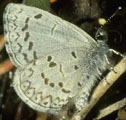 Larval Host |
Propagation
Description: Propagate by seed or softwood cuttings. The cuttings must not be disturbed until they have been allowed to go through a winter dormancy and have begun spring growth.Seed Collection: Seeds mature inside blue-black fruit in mid-summer. Seeds can be stored or sown without extracting them from the fruit.
Commercially Avail: yes
Find Seed or Plants
View propagation protocol from Native Plants Network.
Mr. Smarty Plants says
Flowering and evergreen shrubs for landscape in Indiana
May 29, 2010
I live in Southern Indiana and we are getting ready to redesign our front landscape. Currently, we have some yews and other shrubs that are unruly and require a lot of pruning and care. My husband hat...
view the full question and answer
National Wetland Indicator Status
| Region: | AGCP | AK | AW | CB | EMP | GP | HI | MW | NCNE | WMVE |
| Status: | FAC | FAC | FACU | FAC | FACU |
From the National Organizations Directory
According to the species list provided by Affiliate Organizations, this plant is on display at the following locations:Delaware Nature Society - Hockessin, DE
Mt. Cuba Center - Hockessin, DE
Bibliography
Bibref 1186 - Field Guide to Moths of Eastern North America (2005) Covell, C.V., Jr.Bibref 1185 - Field Guide to Western Butterflies (Peterson Field Guides) (1999) Opler, P.A. and A.B. Wright
Bibref 841 - Native Alternatives to Invasive Plants (2006) Burrell, C. C.
Search More Titles in Bibliography
Web Reference
Webref 3 - Flora of North America (2014) Missouri Botanical Garden, St. Louis, MO & Harvard University Herbaria, Cambridge, MA.Additional resources
USDA: Find Cornus alternifolia in USDA PlantsFNA: Find Cornus alternifolia in the Flora of North America (if available)
Google: Search Google for Cornus alternifolia
Metadata
Record Modified: 2022-10-03Research By: TWC Staff