Native Plants

Q. Who is Mr. Smarty Plants?
A: There are those who suspect Wildflower Center volunteers are the culpable and capable culprits. Yet, others think staff members play some, albeit small, role. You can torture us with your plant questions, but we will never reveal the Green Guru's secret identity.

Did you know you can access the Native Plant Information Network with your web-enabled smartphone?

Ask Mr. Smarty Plants
Ask Mr. Smarty Plants is a free service provided by the staff and volunteers at the Lady Bird Johnson Wildflower Center.

rate this answer

Monday - July 20, 2009
From: Tucson, AZ
Region: Southwest
Topic: Propagation, Transplants
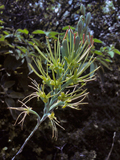
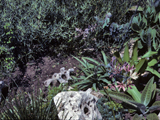
Title: Separate pups on Manfreda variegata in Tucson
Answered by: Barbara Medford
QUESTION:
Can you tell me the best way to separate pups on a Manfreda variegata? The first ones we tried were very close to the main plant. Your help is appreciated.ANSWER:
At first glance, our thought was to give you the standard instructions for transplanting an Agave, because the Manfreda variegata (mottled tuberose) is a member of the Agave family. From a previous answer by Mr. Smarty Plants, here are those instructions:
"Agaves produce new smaller plants around their base. All you need do is remove the pups from the mother plant using a trowel or knife and put them in smaller pots with the same kind of soil mixture that your original plant has been thriving in. If you don't know what the original is growing in, nurseries carry "cactus mix" potting soil which is grittier and more like the desert ground the plants are used to. Keep them watered, but let the soil dry a bit between waterings so they don't rot. These pups can have very long roots that connect them to the mother plant, but you can break them off to about the same length as the height of the plant or whatever will fit in your new pot. Even if you think you have lost too much of the root, pot it up anyway and see what happens. Agaves are very hardy and forgiving plants!"
However, we noted that the Manfreda variegata is also considered a tuberose, so we did a little research along those lines. From this rather technical website Flora of North America, we learned that the rhizomes (underground stems) were "globose" as in fatter than the usual stem. We also found tuberose information on this Pacific Bulb Society site, saying that the tuberose was herbaceous and bulbous. Then we went to Easy To Grow Bulbs.com picture of tuberose clump, and this led us to wonder if you would do better with the transplanting of the plant if you treated it more as dividing bulbs than of cutting away a piece of the root. If you have already tried the transplanting by cutting away smaller plants around the base, and found that unsatisfactory, give the division of the roots, which are fat, a try.


More Propagation Questions
Dividing blackeyed susans in Lake Ronkoko NY
July 06, 2009 - How are you supposed to divide blackeyed susan's? And when is the best time to do this?
view the full question and answer
Planting begonias in the Dallas area
March 25, 2009 - What month is it time to plant begonias in the Dallas, Texas area?
view the full question and answer
Transplanting and germination of Pride of Barbados in Adkins, TX
April 02, 2012 - What is the root system like of the Pride of Barbados? I have a lot of new plants coming up in my beds from seeds. Can these be transplanted to a new location easily without damaging the plants? If...
view the full question and answer
Native bulbs for the northeastern U. S.
November 23, 2007 - What native bulbs could we plant in the Northeast? Can they only be planted in the fall as Dutch bulbs are?
view the full question and answer
Propagation of quincula lobata from Alleyton TX
July 20, 2011 - Quincula lobata..how to propagate and when?
view the full question and answer
| Support the Wildflower Center by Donating Online or Becoming a Member today. |