Native Plants

Q. Who is Mr. Smarty Plants?
A: There are those who suspect Wildflower Center volunteers are the culpable and capable culprits. Yet, others think staff members play some, albeit small, role. You can torture us with your plant questions, but we will never reveal the Green Guru's secret identity.

Did you know you can access the Native Plant Information Network with your web-enabled smartphone?

Ask Mr. Smarty Plants
Ask Mr. Smarty Plants is a free service provided by the staff and volunteers at the Lady Bird Johnson Wildflower Center.

rate this answer

Saturday - October 11, 2008
From: Pearland, TX
Region: Southwest
Topic: Non-Natives
Title: Preservation of a non-native Norfolk pine after hurricane damage
Answered by: Barbara Medford
QUESTION:
I had a 25ft. Norfolk pine blow down during hurricane. I have the top 6ft.in water living after 3 weeks. Can I plant this hoping it will survive? Do I need to cut into the trunk or just trim back the branches about three ft. up and plantANSWER:
No, sorry, nice try, but basically what you have done is the same thing as buying a live Christmas tree, and putting it in a stand with a water reservoir. For a while, the water will travel up into the tree to keep the branches fresh, but eventually, it will die, because it has no roots. And it's not going to grow roots from a portion of the trunk. Woody plants are often propagated by taking cuttings, dipping them into hormone powder, and rooting in soil or even water. But it's a slow process, and the cuttings need to be taken in a certain way from a certain portion of a branch, and certainly not all of them "take" and produce new plants. It just doesn't work when the cutting is a broken-off trunk from the top of the tree and, commercially, Norfolk pines are usually propagated from seed. If, however, the roots were not pulled completely out of the ground, you can cut the trunk off at the ground and possibly force some new suckers. They will be a long time developing and growing into a decent-sized tree, but that's about your only hope for that particular tree.
From this article by Floridata on Araucaria heterophylla, we found this information:
"In Florida most specimens are less than 50 ft tall as they are the among the first to be blown away in a hurricane."
At the Lady Bird Johnson Wildflower Center, we focus on the use and propagation of plants native to North America and to the area in which they are being grown, because they will need less water, fertilizer and maintenance, and because they are adapted to the weather. This is not to say that a native tree will not be blown down by a hurricane, they will, course, but something chosen for the Houston area that is more sturdy has a better chance of survival. The Norfolk Pine is not a pine at all, and is native to tropical areas of the Southern Hemisphere. It is only viable in USDA hardiness Zones 10-11 in North America; a temperature drop to 40 deg. will do some significant damage. Most of the Norfolk pines sold in retail nurseries are intended as houseplants or for decorative uses at Christmas.
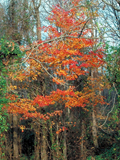
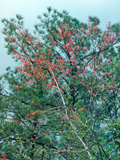
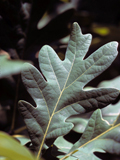
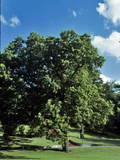
If you would like to replace your tree with one with a better survivability chance, go to our Recommended Species section, select East Texas on the map, Narrow Your Search by selecting Tree for "Habit" and indicating the amount of sun you have under "Light Requirement" and the moisture of your soil. We selected Sun (6 or more hours of sun a day), and Moist soil. When we did this, we got ten possibilities, of which we have chosen four to suggest. These trees are all sturdy and deciduous; read all about each in the linked webpage. You can make your own selections in the same way and, having done so, go to our Native Plant Suppliers section, type in your town and state, and you will get the names and contact information on native plant nurseries, seed suppliers and landscape consultants in your immediate area.
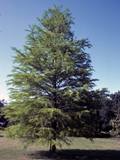
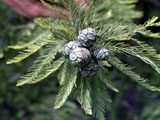
Taxodium distichum (bald cypress) - a favorite of ours, and, in appearance, somewhat similar to the Norfolk Pine

More Non-Natives Questions
Searching for Acalypha amentacea ssp. wilkesiana (copperleaf)
April 06, 2015 - Some species of Acalypha are natives, but the one I'm looking for is Copper Plant or Acalypha amentacea/wilkesiana. Can you give me a source where I can order seed? When I was kid working at a local ...
view the full question and answer
Information about cenizo care and care of non-native tibouchinas
June 25, 2008 - I just bought some tibouchinas and need some tips. I plan to plant them in an area that gets sun until about 2pm, then shade for the rest of the day. Will these plants thrive in this environment, or w...
view the full question and answer
Plants native to South Florida and the Caribbean
June 22, 2007 - What are the plants native to South Florida and the Caribbean?
view the full question and answer
Non-native red-tip photinias dying in San Antonio
August 20, 2009 - A 17 year old Red tip Photinia in a hedge shows signs of dying. The main stalks are quite large and offshoots from two of the stalks have brittle, drooping leaves. The center of the plant looks norm...
view the full question and answer
Non-native photinias in Monroe NY
April 11, 2012 - Two Questions:
Is the weather too cold to plant red tip photinias in Monroe NY?
What is a good alternative evergreen shrub to hide chain link fence?
view the full question and answer
| Support the Wildflower Center by Donating Online or Becoming a Member today. |