Native Plants

Q. Who is Mr. Smarty Plants?
A: There are those who suspect Wildflower Center volunteers are the culpable and capable culprits. Yet, others think staff members play some, albeit small, role. You can torture us with your plant questions, but we will never reveal the Green Guru's secret identity.

Did you know you can access the Native Plant Information Network with your web-enabled smartphone?

Ask Mr. Smarty Plants
Ask Mr. Smarty Plants is a free service provided by the staff and volunteers at the Lady Bird Johnson Wildflower Center.

rate this answer

Wednesday - June 25, 2008
From: Houston, TX
Region: Southwest
Topic: Non-Natives
Title: Information about cenizo care and care of non-native tibouchinas
Answered by: Nan Hampton
QUESTION:
I just bought some tibouchinas and need some tips. I plan to plant them in an area that gets sun until about 2pm, then shade for the rest of the day. Will these plants thrive in this environment, or what are the best conditions for them? How far apart should I plant them, and how large can I expect them to grow in full-sun and part-shade conditions? Will Leucophyllum frutescens also thrive in a sun-till-2pm area?ANSWER:
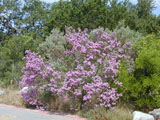
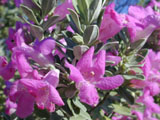
Well, Mr. Smarty Plants can't be of too much help with your tibouchinas since they are not native to North America and our focus and expertise are with plants native to North America. Tibouchinas are native to the tropical regions of South America—many are native to Brazil. We don't know what species you have, but T. urvilleana seems to be a popular one. You can read about its care from Floridata.com or try Googling 'tibouchina care' for other sites that have instructions for their care. Since you just bought your plants you could also go back to the store where you purchased them to see if they have care instructions. Our advice is to never go away from the store with a plant without care instructions in hand.Now, we can tell you about Leucophyllum frutescens (Texas barometer bush) since it is native to Texas, albeit more suited to the drier southwestern regions than humid Houston. However, it will grow in Houston and can grow up to 5 feet high and sometimes taller in landscaped settings with watering. It does best in full sun. It will also grow in part shade (2-6 hours of sunshine per day) but the more sun, the better off it will be. Watering in the summer will make it grow faster, but overwatering it or poor drainage may kill it. It is adapted to dry climatic condidtions.
More Non-Natives Questions
Replacements for photinia from San Antonio
August 31, 2012 - i just read your response to someone regarding Red Tip shrubs. You just saved me thousands of dollars ! I was getting ready to order over 250 of these to line my 2.5 acre fence line. What shrub would ...
view the full question and answer
Problems with non-native Miscanthus sinensis grass in Lewes DE
May 11, 2010 - I have morning light ornamental grass, which was just three days ago. The ends of the grass are shriveling up and appear to be dying; why is this?
view the full question and answer
Identification of stem from a bouquet
January 02, 2012 - I have a stem with leaves that came in a bouquet May 2011. They are still healthy in a vase of water tho they have no roots, just stem. On the back center of each leaf are protrusions half an inch lon...
view the full question and answer
Non-native upside down tomatoes in Edmonton AB
September 19, 2010 - Due to early frost, I have brought my upside down tomato plant into the house & have hung it in the basement. What type of grow lamp can I use? I just have the overhead light & standard lamps at my di...
view the full question and answer
Roses or other flowering plants for Coleman, Texas
March 10, 2009 - I want to plant native roses at a country home in Coleman Co., southern exposure, with well water, drip system,but ,hot, dry & windy!
I know the Mutabilis does well in Austin, but, is it suitable for...
view the full question and answer
| Support the Wildflower Center by Donating Online or Becoming a Member today. |