Native Plants

Q. Who is Mr. Smarty Plants?
A: There are those who suspect Wildflower Center volunteers are the culpable and capable culprits. Yet, others think staff members play some, albeit small, role. You can torture us with your plant questions, but we will never reveal the Green Guru's secret identity.

Did you know you can access the Native Plant Information Network with your web-enabled smartphone?

Ask Mr. Smarty Plants
Ask Mr. Smarty Plants is a free service provided by the staff and volunteers at the Lady Bird Johnson Wildflower Center.

rate this answer

Wednesday - July 02, 2008
From: Fort Worth, TX
Region: Southwest
Topic: Container Gardens, Soils, Shade Tolerant, Shrubs
Title: Darkened leaves on blueberry bush
Answered by: Barbara Medford
QUESTION:
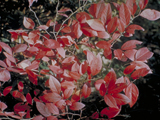
I have a blueberry bush planted in a very large pot. It has been doing very well, producing berries and new growth. All of a sudden the leaves have begun to turn dark. I have it potted in good soil and good light, but wonder if I have been watering it too much. Can you help me?ANSWER:
This is probably a hybrid blueberry bush, with who knows what parentage, but we will work with what we know about two blueberries native to Texas and try to deduce from that what is causing your leaves to darken.
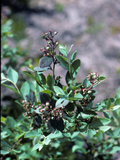
Vaccinium fuscatum (black highbush blueberry) and Vaccinium corymbosum (highbush blueberry) are both native to Texas. The USDA Plant Profile for the black highbush shows it growing naturally in only a few counties in far East Texas. The highbush blueberry, in this USDA Plant Profile, grows in a few more Texas counties, but they are all in deep east and northeast Texas. This is probably our best clue to what's going on with your blueberries. East Texas is well known to have acid, sandy soils, rich in organic matter because of the stands of trees, including pines in that area. Fort Worth is well known to NOT have that kind of soil, with the soils generally being more alkaline.
You obviously made a wise choice potting your blueberry. Read this article from Botany.com on Vaccinium, and learn how to manufacture the correct soil for an acid-loving plant in an area with alkaline soils. Page down on the site until you come to paragraphs on Potting, Container Growing and Fertilizer. They will give you step-by-step instructions for planting and caring for your blueberry. The only place we found a mention of darkening leaves was in reference to a possible nitrogen deficiency. When the soil is amended, a high-nitrogen fertilizer, blood meal or cottonseed meal need to be added. According to our Native Plant Database, blueberries frequently grow in swamp areas, and need a damp soil, with good drainage. They can tolerate sun, part shade to shade; since they are more commonly found in cooler areas, it might be well to put the pot in a spot that is shaded during the hottest part of the day.
More Soils Questions
Yellowing leaves of Texas Sage (Cenizo) from Las Vegas NV
November 21, 2013 - Leaves of Texas Sage are turning yellow. Can you tell me why?
view the full question and answer
Problems with Blackfoot Daisy from Lewisville, TX
April 23, 2013 - I planted a row of Melampodium leucanthum (Blackfoot Daisy) last spring at the front of the front yard, next to the sidewalk. It's full sun, east facing, unamended black clay gumbo soil. I put mulc...
view the full question and answer
Damage to native elm in Texas
August 20, 2008 - We had a major landscape renovation done over the winter. One of the trees, an elm about 10 yrs old, remained in the bed although plants around it were removed. The tree has suddenly started turning...
view the full question and answer
Soil for native Chilopsis linearis and Salvia greggii
February 08, 2010 - I want to plant a desert willow and a salvia greggii in my small lot. The developer used sandy loam to fill in the small garden in the front. I am 73 and a bit impaired. Do I really need to remove ...
view the full question and answer
Plants for a Narrow, Dry, Shaded Site in Georgia
April 03, 2014 - I am writing from Valdosta, GA. Could you please suggest three perennial shrubs and/or plants that flower at different times of the spring and summer? Also ones that can be planted in a 2 ft. wide s...
view the full question and answer
| Support the Wildflower Center by Donating Online or Becoming a Member today. |