Native Plants

Q. Who is Mr. Smarty Plants?
A: There are those who suspect Wildflower Center volunteers are the culpable and capable culprits. Yet, others think staff members play some, albeit small, role. You can torture us with your plant questions, but we will never reveal the Green Guru's secret identity.

Did you know you can access the Native Plant Information Network with your web-enabled smartphone?

Ask Mr. Smarty Plants
Ask Mr. Smarty Plants is a free service provided by the staff and volunteers at the Lady Bird Johnson Wildflower Center.

rate this answer

Wednesday - July 24, 2013
From: Mesa, AZ
Region: Southwest
Topic: Diseases and Disorders, Transplants, Cacti and Succulents
Title: Soaptree yucca falling over in Mesa AZ
Answered by: Barbara Medford
QUESTION:
My soaptree yucca is about 5 ft tall and has fallen over. Does this plant require staking for I thought not, or is something else going on with it?ANSWER:
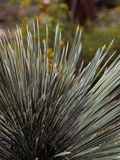
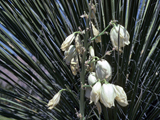
This USDA Plant Profile Map shows that Yucca elata (Soaptree yucca) is native to Maricopa County, AZ, so hopefully that rules out the plant being in the wrong environment. By following the link above to our webpage on this plant, you will learn that it can grow from 5 to 25 ft. tall, and there is no mention of it bending over. One of the pictures from our Image Gallery below shows a Soaptree yucca which looks to be about 5 ft. tall. Here are the growing conditions for this succulent:
"Growing Conditions
Light Requirement: Sun
Soil Moisture: Dry
CaCO3 Tolerance: High
Cold Tolerant: yes
Soil Description: Well-drained soils. Gypseous, Sandy, Sandy Loam, Medium Loam.
From the Image Gallery

More Transplants Questions
Problems with a Monterey Oak in Austin, TX.
November 12, 2010 - I have a large Monterey Oak, planted last year that has not gotten any fuller. Do I need to fertilize and if so, when?
view the full question and answer
Transplant time for Virginia Beach, VA
July 08, 2009 - I have a friend who is not a gardener but lives on a piece of property that has a gorgeous back yard with lots of plants, shrubs and trees that are becoming overgrown. I have her permission to dig up...
view the full question and answer
How to grow milkweeds (Asclepias spp.) for monarch butterflies
March 31, 2010 - I tried and tried and tried to grow Asclepias viridis, A. asperula and even A. oenotheroides from seeds and even tubers for fourteen years! Do you have advice for growing these and other milkweed plan...
view the full question and answer
Huisache tree is not thriving in Kerr County, TX.
May 18, 2011 - Our landscaper planted a Huisache tree in our back yard (Kerr County). It was planted about 3 years ago. It has grown considerably (about 15 feet tall)but it has never flowered and is always late in...
view the full question and answer
Smarty Plants on dutchmans pipe
July 24, 2005 - How do I care for and transplant dutchman pipe?
view the full question and answer
| Support the Wildflower Center by Donating Online or Becoming a Member today. |