Native Plants

Q. Who is Mr. Smarty Plants?
A: There are those who suspect Wildflower Center volunteers are the culpable and capable culprits. Yet, others think staff members play some, albeit small, role. You can torture us with your plant questions, but we will never reveal the Green Guru's secret identity.

Did you know you can access the Native Plant Information Network with your web-enabled smartphone?

Ask Mr. Smarty Plants
Ask Mr. Smarty Plants is a free service provided by the staff and volunteers at the Lady Bird Johnson Wildflower Center.

rate this answer

Saturday - May 11, 2013
From: Montezuma, IN
Region: Midwest
Topic: Seeds and Seeding, Trees
Title: How do you determine male persimmon seedlings from the females?
Answered by: Jimmy Mills
QUESTION:
I have got new persimmon seedlings about 3 inches tall this spring, and am wondering if there is any way to tell male from female at this young stage? I just don't want to plant 20 or 40 seedlings and find out later that they may be all male. Thank you sincerely for any info you may have.ANSWER:
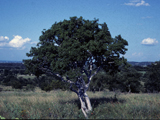
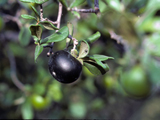
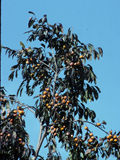
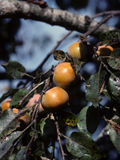
There are two species of Persimmons that occur in Texas; Diospyros texana (Texas persimmon), and Diospyros virginiana (Common persimmon), but only D. virginiana occurs in Indiana. It is a deciduous tree with brilliant fall foliage, and is commonly used in landscapes. As you know, the species is dioecious, meaning that pistillate flowers (female) and staminate flowers (male) are on separate plants. The problem is that you can’t tell which plant is which until flowers appear, and this can take from 5 to 8 years. The probability of all of your seed producing male plants is pretty low, but even if they do, there is still hope. This previous answer explains some of the vagaries of persimmon reproduction that can result in fruit on male trees.
This link has lots of information about Diospyros virginiana.
From the Image Gallery
More Trees Questions
Live oaks lifting up sidewalks in Palm Coast FL
December 12, 2013 - My live oak trees roots are lifting up my side walks. Can I cut just the roots that are causing the problem without hurting the trees? Thank you.
view the full question and answer
Split trunk in Bald Cypress in Uhland, TX
May 31, 2009 - I live just south of Austin, and near the pond (stock tank) is a bald cypress, young, about 12-15 yrs., and after this past year, drought and all, I was dismayed to find it not leafing out. When I in...
view the full question and answer
Need help selecting maple cultivars in Houston.
November 25, 2009 - I live in Houston, TX and would like to plant 2 red maples in my front yard. I know there are multiple varieties planted down here, but I can't tell which one would do best. The ones that I've come ...
view the full question and answer
Dead woody plants in wildlife garden in Austin
March 02, 2011 - I am an enthusiastic and pretty successful wildlife gardener, have studied my Wasowski "Bible", but I can't get any evergreens established in my yard! We live on blackland clay, which I amend with ...
view the full question and answer
Space for a desert willow in Odessa, TX
April 23, 2009 - I have a small planting space about 5X5 that is four feet in front of the side of my front door. It is right under the eaves of my house. It's rather an enclosed porch space. I have a new very sma...
view the full question and answer
| Support the Wildflower Center by Donating Online or Becoming a Member today. |