Native Plants

Q. Who is Mr. Smarty Plants?
A: There are those who suspect Wildflower Center volunteers are the culpable and capable culprits. Yet, others think staff members play some, albeit small, role. You can torture us with your plant questions, but we will never reveal the Green Guru's secret identity.

Did you know you can access the Native Plant Information Network with your web-enabled smartphone?

Ask Mr. Smarty Plants
Ask Mr. Smarty Plants is a free service provided by the staff and volunteers at the Lady Bird Johnson Wildflower Center.

rate this answer

Saturday - March 30, 2013
From: Austin, TX
Region: Southwest
Topic: Seeds and Seeding, Wildflowers
Title: Few bluebonnets on MoPac in Austin
Answered by: Barbara Medford
QUESTION:
The grass fields along Mopac from Lake Lady Bird to Southwest Parkway usually have a grand display of bluebonnets. This year I do not see any color at all. Can you help me understand what is happening to this area?ANSWER:
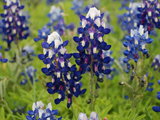
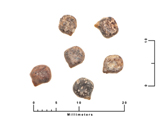
Nobody at the Wildflower Center (home of Mr. Smarty Plants) is happy about that, either. Lupinus texensis (Texas bluebonnet) is a winter annual. This means it blooms like crazy in March and April, drops its seeds where they can sleep away the heat of Summer, and waits for the winter rains of December and January. And you know how much rain we had then - little to nothing. The reason that the Texas Bluebonnet has survived thousands of years of the brutal Texas climate is because its seeds can hide and wait in the soil for better days and some rain, and pop up again in all their glory. We are looking for rain dancers.
From the Image Gallery

More Wildflowers Questions
Planting Suggestions for a Lake Home in Wayne County, MO
April 03, 2014 - We have a lake home in Wayne County, MO at Lake Wappapello. The soil is very rocky. We recently cleared an area around our home of assorted dead trees, some cedars and what seemed like tons of vines. ...
view the full question and answer
Native plants for an outdoor wedding in New York
February 06, 2009 - I am planning an outdoor wedding in New Rochelle, NY in May. We would like to use native plants. Can you suggests some that we can use in the bouquets and as potted plants? Thanks
view the full question and answer
When is best time to plant seeds of Texas Nightshade in San Antonio, TX?
September 20, 2014 - I need to know the time to plant seeds of Texas Nightshade. Can I plant them now ( August ), or wait till fall or spring?
view the full question and answer
More on bluebonnets
April 01, 2003 - Is there such a thing as a red bluebonnet?
view the full question and answer
Texas bluebonnets for Illinois
March 12, 2008 - Thank you Mr. Smarty Plants. I will be closely checking the variety of Texas bluebonnets that I tried to plant. For the record, I did soak them first to loosen the seed shell. I think we probably just...
view the full question and answer
| Support the Wildflower Center by Donating Online or Becoming a Member today. |