Native Plants

Q. Who is Mr. Smarty Plants?
A: There are those who suspect Wildflower Center volunteers are the culpable and capable culprits. Yet, others think staff members play some, albeit small, role. You can torture us with your plant questions, but we will never reveal the Green Guru's secret identity.

Did you know you can access the Native Plant Information Network with your web-enabled smartphone?

Ask Mr. Smarty Plants
Ask Mr. Smarty Plants is a free service provided by the staff and volunteers at the Lady Bird Johnson Wildflower Center.

rate this answer

Wednesday - February 27, 2013
From: Laceys Spring, AL
Region: Southeast
Topic: Wildflower Center, Wildflowers
Title: Wildflower blooming in Austin in mid-March from Laceys Spring AL
Answered by: Barbara Medford
QUESTION:
Hi I will be at and around the center the weekend of March 9 & 10 to exhibit in the Art and Artisan's Festival and plan to stay a few extra days to "wildflower" either before or after. What is your recommendation in regard to the blooming going on now and expected pattern. Obviously would prefer to see most blooms possible.ANSWER:
We are delighted you will be here for the Artists and Artisans Festival as well as doing some wildflower viewing. You will actually be here in a prime time for flower viewing. The ever-popular bluebonnet is reliably in full bloom from early March to mid-April. Here is a previous Mr. Smarty Plants question that has good information on where to tour in this area. This answer was for someone in Arkansas who wanted to know the same thing you do, so you can ignore the references to other parts of the state. From our Native Plant Database. we are going to give you a list of the wildflowers blooming from February through April in Central Texas. You should be able to see all of them in the Center itself, and be sure you get the map for visitors when you first check in. Enjoy!
Wildflowers blooming February to April in Central Texas:
Amblyolepis setigera (Huisache daisy)
Castilleja indivisa (Entireleaf indian paintbrush)
Callirhoe involucrata (Winecup)
Coreopsis lanceolata (Lanceleaf coreopsis)
Coreopsis tinctoria var. tinctoria (Golden tickseed)
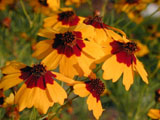
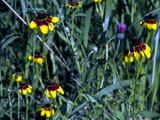
Dracopis amplexicaulis (Clasping coneflower)
Echinacea purpurea (Eastern purple coneflower)
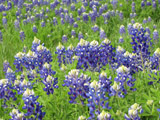
Lupinus texensis (Texas bluebonnet)
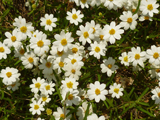
Melampodium leucanthum (Blackfoot daisy)
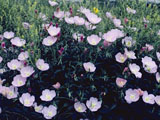
Oenothera speciosa (Pink evening primrose)
From the Image Gallery

More Wildflower Center Questions
Color year round, welcome to Austin Texas.
December 04, 2011 - I am new to Austin and want to plant colorful flowers for fall and winter that get a "wow" reaction. I have not seen much at the local nurseries. Any and all suggestions are greatly appreciated!
view the full question and answer
Why use native plants
March 14, 2004 - Why use native plants?
view the full question and answer
Medicinal plants at the Wildflower Center
April 19, 2006 - What kinds of medicinal plants do you have at the Wildflower Center?
view the full question and answer
Name five non-flowering species at the Wildflower Center.
April 30, 2010 - Can you tell me the names of five non-flowering plant species (true mosses, conifers, ferns) currently growing at your center?
view the full question and answer
What is the acreage of your gardens?
May 20, 2009 - The wildflower gardens and display areas comprise about how much, either percentage or acreage, of the entire 279 acres at the Wildflower Center? Does that also include areas for growing flowers for ...
view the full question and answer
| Support the Wildflower Center by Donating Online or Becoming a Member today. |