Native Plants

Q. Who is Mr. Smarty Plants?
A: There are those who suspect Wildflower Center volunteers are the culpable and capable culprits. Yet, others think staff members play some, albeit small, role. You can torture us with your plant questions, but we will never reveal the Green Guru's secret identity.

Did you know you can access the Native Plant Information Network with your web-enabled smartphone?

Ask Mr. Smarty Plants
Ask Mr. Smarty Plants is a free service provided by the staff and volunteers at the Lady Bird Johnson Wildflower Center.

rate this answer

Saturday - June 09, 2012
From: Duncanville, TX
Region: Southwest
Topic: Seed and Plant Sources, Propagation, Wildflowers
Title: Gathering seeds of Indian Blanket from Duncanville TX
Answered by: Barbara Medford
QUESTION:
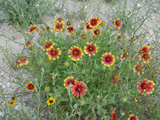
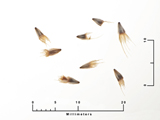
We have a field full of Indian Blanket that are blooming now and would like to share some seeds with our friends! Where is the seed on them and I take it we wait till they are done blooming to get them?ANSWER:
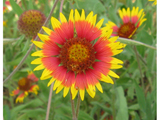
Gaillardia pulchella (Indian Blanket) is an annual, so it is a very good idea to distribute seeds to others. From our webpage on this plant (follow plant link above to read all of it) here are the Propagation Instructions:
"Propagation Material: Seeds
Description: Plant in the fall and rake the seed into loose topsoil to ensure good seed/soil contact. With moisture from rain or watering, G. pulchella will germinate in 1 – 2 weeks and establish a healthy taproot system before the winter frost. If sowing seed indoors in late winter, allow 8 weeks for well-rooted seedling before transplanting at start of frost-free period.
Seed Collection: After flowering ceases, allow seeds to completely mature before mowing for reseeding or collecting to plant in a new area. Look for heads with no dried petals persisting. Since G. pulchella is an annual, it is essential that this species be allowed to reseed for an abundant display the following year.
Seed Treatment: Dried seeds can be stored refrigerated up to four years.
Maintenance: One of the easiest wildfowers to establish. Although Indian blanket will grow in a variety of soil types, for best results, choose an open to lightly shaded site having loose, well-drained soil. G. pulchella frequently exhibits blanket-like density, which combines with the blending of bright reds and yellows to form a striking tapestry of color."
This plant blooms from May to August, which means some of the blooms may have already matured and have seeds ready to gather. You can leave some to deposit seeds where they are and remove others to share; you do not have to wait until all have bloomed.
From the Image Gallery
More Propagation Questions
Male and female possumhaws for berries from Georgetown TX
April 23, 2012 - Do I need to plant two ilex decidua (possumhaws), a male and female to have red berries on the tree in the winter?
view the full question and answer
Transplanting native yaupon into yard in Lowake TX
June 08, 2010 - I have lots of wild yaupon in my pasture,can I transplant it to the yard?
view the full question and answer
Will horseherb (Calyptocarpus vialis) survive planting in July
July 14, 2008 - I live in Southwest Austin and I am planting horseherb groundcover in my back yard that is part-shade. Can I plant this right now (July) or is it too hot to plant?
view the full question and answer
Transplanting wildflowers slated for destruction in Buda, TX.
June 16, 2015 - TXDOT has recently informed our church that they will be taking a sizeable amount of natural area fronting a ranch road for lane expansion. We are devastated to lose an are we have planted and nurtur...
view the full question and answer
Harvest dates-eastern Oregon
September 07, 2007 - I am looking for a source to provide me with harvest dates for seed of shrubs, grasses and wild flowers native to eastern Oregon.
view the full question and answer
| Support the Wildflower Center by Donating Online or Becoming a Member today. |