Native Plants

Q. Who is Mr. Smarty Plants?
A: There are those who suspect Wildflower Center volunteers are the culpable and capable culprits. Yet, others think staff members play some, albeit small, role. You can torture us with your plant questions, but we will never reveal the Green Guru's secret identity.

Did you know you can access the Native Plant Information Network with your web-enabled smartphone?

Ask Mr. Smarty Plants
Ask Mr. Smarty Plants is a free service provided by the staff and volunteers at the Lady Bird Johnson Wildflower Center.

rate this answer

Monday - November 07, 2011
From: Charlotte, NC
Region: Southeast
Topic: Erosion Control, Grasses or Grass-like, Herbs/Forbs, Shrubs
Title: Plants for a lakeside bank in NC
Answered by: Anne Bossart
QUESTION:
Our association is looking to plant a huge sloped area that runs down to Lake Wylie. We want to plant something that is good for erosion and that does not grow too tall so that we keep our view of the lake from our homes. We could use shorter plants at the top of the slope and taller ones nearer the bottom.ANSWER:
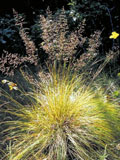
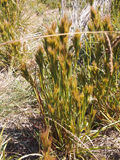
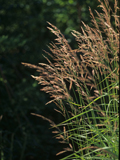
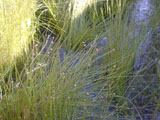
Without a doubt, native grasses are the best choice for your lakeside planting project. Their fibrous root systems will hold the slope (even a sandy one) and they are drought tolerant. Even though you are planting beside water, the soil conditions except for right at the water's edge, will tend to be dry because of the slope and the quick draining, sandy soil. You don't mention what direction the slope is facing, but your conditions are likely sunny, regardless. Again, grasses are ideal as their form is very evocative of a natural beach planting and they are very attractive when lit by the sun and flowing in the breeze.
These grasses should do well in your situation:
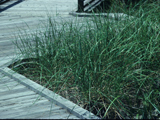
Ammophila breviligulata (American beach grass) (be careful with this one ... it is a vigorous spreader, but you did say your area is huge)
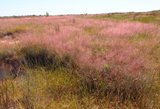
Aristida purpurea (Purple threeawn)
Panicum virgatum (Switchgrass)
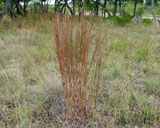
Schizachyrium scoparium (Little bluestem)
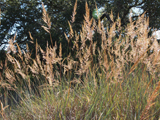
Sorghastrum nutans (Indiangrass)
Sporobolus heterolepis (Prairie dropseed)
and these will thrive in the wet conditions at the water's edge:
Andropogon glomeratus (Bushy bluestem)
Calamagrostis canadensis (Bluejoint)
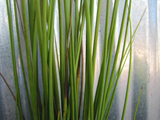
Eleocharis montevidensis (Sand spikerush)
Typha latifolia (Broadleaf cattail)
You should be able to create quite a dramatic planting using large drifts of these grasses with native wildflowers mixed in. You can choose from a list of wildflowers generated by our Native Plant Database. Do a Combination Search for North Carolina selecting herbs (herbaceous plants) and sunny and dry conditions (or wet for plants at the edge or in the water). You can also narrow the search by plant size, bloom time and bloom color. If you decide you would like to include shrubs in the planting, you can create another list, selecting shrubs (or subshrubs, which are smaller).
The more diverse your planting is, the more appealling it will be as wildlife habitat, so it will come alive with birds, butterflies, dragonflies and all sorts of critters. You will also be delighted to hear that planting taller plants right at the shoreline will discourage Canada Geese from making your lake their winter home!
From the Image Gallery


More Shrubs Questions
Need help for diseased Cherry Laurel tree in Houston
October 19, 2015 - A couple of weeks ago the leaves on my decade old cherry laurel began to turn brown. Now they are entirely brown. I have not changed the way in which I cared for it, but about three days ago I noticed...
view the full question and answer
Skin allergies; is Juniper the culprit in Simi Valley, CA?
July 21, 2012 - My husband and I have had terrible skin allergy problems this spring (for me it's been 3 years) and think it may be the juniper bushes outside our bedroom and kitchen windows. Is there a fast growin...
view the full question and answer
Pests on American Beautyberry from Austin
June 25, 2012 - Something is eating the leaves of my American Beautyberry shrubs. One is almost stripped of leaves on the upper branches. I have looked and can't see any insects or caterpillars. I have also looke...
view the full question and answer
Shrub or small tree to hide walls in southern California
August 31, 2009 - We have multiple issues in our back yard in 92683, and will probably need an assortment of plants to accomplish it. In a nutshell, here are the basics we were hoping to fix: 1) Ugly 5 & 6 foot block...
view the full question and answer
Non-native Pride of Barbados from San Antonio
August 26, 2011 - I have some very successful wildly blooming "Dwarf Pride of Barbados" plants growing in my xeriscape garden. Each year I cut them back to the ground.
I have just purchased a new variety called "...
view the full question and answer
| Support the Wildflower Center by Donating Online or Becoming a Member today. |