Native Plants

Q. Who is Mr. Smarty Plants?
A: There are those who suspect Wildflower Center volunteers are the culpable and capable culprits. Yet, others think staff members play some, albeit small, role. You can torture us with your plant questions, but we will never reveal the Green Guru's secret identity.

Did you know you can access the Native Plant Information Network with your web-enabled smartphone?

Ask Mr. Smarty Plants
Ask Mr. Smarty Plants is a free service provided by the staff and volunteers at the Lady Bird Johnson Wildflower Center.

rate this answer

Saturday - August 27, 2011
From: Bellwood, IL
Region: Midwest
Topic: Pests, Trees
Title: Bugs on Arizona Cypress in Bellwood IL
Answered by: Barbara Medford
QUESTION:
I live in Illinois and have an Arizona Cypress that looks like it is dying but I notice today it has bugs inside its cone. Can you tell me why and what can I do?ANSWER:
Cupressus arizonica (Arizona cypress) is native to North America; from our webpage on this tree:
"USA: AZ , CA , NM , NV , TX , UT
Native Distribution: W. TX to extreme s. NV, s. AZ & n. Mex.
Native Habitat: Hot, dry canyons & stream banks from 3000 to 7000 ft."
From the USDA Natural Resources Conservation Service on Cupressus arizonica:
"It is found naturally on dry, sterile, rocky mountain slopes and canyon walls, but does very well when planted on better soils or when irrigated. It requires a minimum of 10 to 12 inches of water annually. It is not recommended for soils with a high water table."
Doesn't sound much like extreme northeastern Illinois in USDA Hardiness Zone 4b, with average annual minimum temperatures of -20 to -25 deg F, does it? How long have you had that tree and did you buy it locally? Just because a plant is sold locally does not mean it will thrive locally. On top of everything else, you are very close to Lake Michigan and we are guessing you have a high water table, not recommended for this tree. This sort of situation is why the Lady Bird Johnson Wildflower Center is dedicated to the growth, propagation and protection of plants native not only to North America but to the area in which the plants are being grown.
Frankly, we don't think it possible for this tree to survive in your environment, and the bugs are probably just taking advantage of a weakened, dying tree. Before you purchase plants, we suggest you go to our Native Plant Database, do a Combination Search for Illinois, designating type of plant (tree, shrub,etc.) under General Appearance. You can also specify Light Requirements where the plant will go, Soil Moisture, even projected height as you search. You can go to our National Suppliers Directory, type your town and state name in the "Enter Search Location" box and you will get a list of native plant nurseries, seed companies and landscape professionals in your general area. All have contact information so you can find out if they have a plant you are looking for before you go shopping.
From the Image Gallery
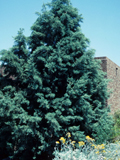
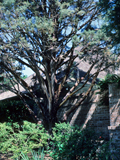
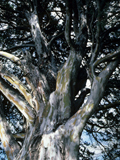
More Pests Questions
Goat damage to Arizona Cypress from Palmdale CA
June 28, 2012 - My goats stripped the bottom branches of my Arizona Cypress. Will they come back and how can I prevent future damage?
view the full question and answer
Controlling Cochineal Insects on Cholla Cactus
July 07, 2011 - We have cochineal insects on a cholla cactus. Will they kill the plant? What should we do to get rid of them if water spraying them won't work?
view the full question and answer
Possible damage by invasive, non-native earthworms in compost
January 03, 2007 - I received a worm bin (vermicomposter) for Christmas. The instructions that came with the bin say to use the red wiggler worm (Eisenia foetida) and that it is okay if some of the worms go into your g...
view the full question and answer
Sap drips from Sophora secundiflora
May 30, 2008 - We have an old Mountain Laurel (sophora secundiflora) about 20 ft tall. It blooms pretty well and seems healthy. We are wondering why it drizzles a non-sticky sap in tiny drops. Hold out your hand and...
view the full question and answer
Weeds in Buffalograss from Edmond OK
September 20, 2012 - We have a patch of buffalograss surrounded by patio/flower garden/vegetable garden. We like B-grass, but are getting a lot of weeds despite preemergents, and some bermuda had appeared.
Are there h...
view the full question and answer
| Support the Wildflower Center by Donating Online or Becoming a Member today. |