Native Plants

Q. Who is Mr. Smarty Plants?
A: There are those who suspect Wildflower Center volunteers are the culpable and capable culprits. Yet, others think staff members play some, albeit small, role. You can torture us with your plant questions, but we will never reveal the Green Guru's secret identity.
Did you know you can access the Native Plant Information Network with your web-enabled smartphone?

Ask Mr. Smarty Plants
Ask Mr. Smarty Plants is a free service provided by the staff and volunteers at the Lady Bird Johnson Wildflower Center.

rate this answer

Sunday - May 29, 2011
From: Richland, WA
Region: Northwest
Topic: Pests, Seasonal Tasks, Shrubs
Title: Preventing weeds in kinnikinnick in Richland WA
Answered by: Barbara Medford
QUESTION:
We planted our kinnickinick last Nov. and we live in Richland, WA, where it gets hot in the summer. We planted almost 500 of them on a hillside. Weeding is taking over our lives, to say the least. Do you recommend putting mulch down? We're afraid it will blow away. The product "Amaze" doesn't seem to be working very well. Also, how often should we be watering? This is the first summer they have been planted. Thanks so muchANSWER:
Arctostaphylos uva-ursi (Kinnikinnick) is one of our favorite plants, if only for the name, because it really won't grow down here in Texas. We do have to say that, even on lawn grasses or other ground cover, the first year or so, at least, is going to be consumed in pulling weeds. We always warn people who have put down new lawns or ground covers that no matter if they are native there, or well-adapted, the weeds are going to come in and revel in that new ground, which has no doubt been disturbed seriously in preparing for that planting. Weeds loooove disturbed ground.
According to this USDA Plant Profile, this plant grows natively in the next county over from Benton County in the southeast portion of Washington on the border with Oregon. We don't feel that it is out of place or in the wrong soil or climate,
We are not very familiar with Pre-emergent herbicides but we found this article explaining what they are and their uses. We thought this phrase was significant:
"Pre-emergent herbicides are generally used as a last resort, when more sensible means of controlling weeds have not been employed or have not worked well. Those of you with a weed-infested lot adjacent to your property might have no option but to use these products."
The same article discussed Amaze and referred to time of application as:
"Under most conditions, mid-February and mid-September."
The weeds you are struggling with are no doubt seeding out now, and may, indeed come up again before Fall. However, if you keep after them this year, then application of the pre-emergent herbicide in mid-September should be more beneficial.
In terms of using mulch, we always like mulch on bare ground. It will shade out the seedlings of the weeds that try to come up, and thus repress a lot of weeds. If you put down a 2 to 3 inch layer of mulch, it will help cool the soil, and also protect the roots of your plants in the Winter. Furthermore, if it is not raining, you probably should be watering your Arctostaphylos uva-ursi (Kinnikinnick), and that water will also help hold the mulch in place, and the mulch will hold the moisture in the soil. Actually, kinnikinnick is low water user, and withstands drought very well, but any plant needs supplementary watering if the rains are inconsistent in the first year that plant is in the ground.
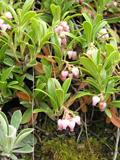
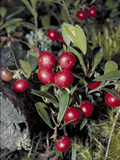
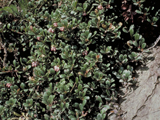
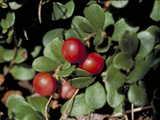
From our Native Plant Image Gallery:
More Seasonal Tasks Questions
Sycamore leaf snowbell from Pleasanton TX
August 18, 2012 - How do you care for a sycamore leaf snowbell. Does it like sun or part shade? How much water? How often and what should it be fed. How fast or slowly does it grow? Anything you can tell me would be ap...
view the full question and answer
Bluebonnets planted in late spring bloom, will they bloom again?
February 06, 2008 - New to South Texas & we decided to plant bluebonnets around our house. The seeds were planted in late spring & we were delighted to watch them start their initial growth-cycle. They ultimately produc...
view the full question and answer
Bermuda, not the only option in Memphis
November 04, 2014 - I'm building an energy efficient home in Memphis and want to extend that strategy to the landscaping. I'd like to plant native grasses, but this lot is surrounded by lots sodded with Bermuda grass....
view the full question and answer
Transplanting a redbud in Virginia Beach VA
April 21, 2010 - I have a 5-6 ft. Redbud Tree and like to dig up and move to different spot in my backyard. How/what is the proper way to do it without killing the tree?
view the full question and answer
Leaves on 3 year old maple turning brown in Lebo, KS.
July 16, 2011 - Hello, one of our five Maple trees which is is 3 yrs. old now, we saw a week ago that the leaves started turning brown and dropping. My question is: Will the tree survive this and return healthy next ...
view the full question and answer
| Support the Wildflower Center by Donating Online or Becoming a Member today. |