Native Plants

Q. Who is Mr. Smarty Plants?
A: There are those who suspect Wildflower Center volunteers are the culpable and capable culprits. Yet, others think staff members play some, albeit small, role. You can torture us with your plant questions, but we will never reveal the Green Guru's secret identity.
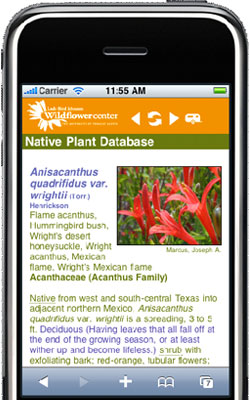
Did you know you can access the Native Plant Information Network with your web-enabled smartphone?

Ask Mr. Smarty Plants
Ask Mr. Smarty Plants is a free service provided by the staff and volunteers at the Lady Bird Johnson Wildflower Center.

rate this answer

Tuesday - May 31, 2011
From: Carson, CA
Region: California
Topic: Invasive Plants, Pests
Title: Snails in the ice plants in California
Answered by: Nan Hampton
QUESTION:
Ice plants and snails. Every morning when I go outside I see at least 20 or more snails. Is there a certain way that I should have planted them that would have prevented them from destroying my plant? Or is it automatic that they will come because these types of plants attract snails?ANSWER:
It is true that snails like and eat the non-native ice plant (Carpobrotus edulis), an invasive species from South Africa. Mr. Smarty Plants' first reaction is to let them eat them all up since they are invasive! But, then you no doubt like your ice plants and the snails are probably eating more desirable plants as well. You did nothing wrong in the way you planted them to cause the snails to like them—they just like them! However, with a little effort, you can control the snails. There are several methods that you can use in conjunction with each other to do the best job of controlling them. You can hand pick them, catch them in simple traps baited with beer or with yeast and water, or create barriers around areas containing your plants. A combination of methods will give you the best success. Visit the University of California Integrated Pest Management page to learn about snails and the various ways to manage them.
More Invasive Plants Questions
Transplanting Virginia creeper
September 02, 2008 - I have a large Virginia creeper plant approximately 15 feet in length. Is it possible to transplant the whole thing without killing it? If so how do I care for it after it has been moved? Thank yo...
view the full question and answer
Liriope spicata for erosion and dust suppression from Bonifay FL
August 16, 2011 - I want to plant Liriope 'spicata'. I know it can be aggressive and that's what I want. We live on dirt road and need something by road for help in erosion and it's also hard to mow this are...
view the full question and answer
Native plants to go between patio stones in Oceanside CA
February 24, 2010 - Hello Mr. Smarty Plants! I live in Oceanside CA about 5 mi from the coast and have an about 20' sq private patio with "issues". Patio has with flagstones, one side all sun all day, middle area part...
view the full question and answer
Invasiveness of Cosmos from Decatur GA
April 26, 2013 - I have been searching for an answer concerning the invasive plant Cosmos. I know that Florida declares this but I have not been able to find out does Georgia? And specifically,is it only the yellow Co...
view the full question and answer
Non-native invasive carrot wood tree losing leaves in Alpine CA
April 22, 2014 - My carrot wood tree is losing all of its leaves. The tree is about 15foot high & 13 years old. Could it be gophers? The tree was trimmed 1 year ago.
view the full question and answer
| Support the Wildflower Center by Donating Online or Becoming a Member today. |