Native Plants

Q. Who is Mr. Smarty Plants?
A: There are those who suspect Wildflower Center volunteers are the culpable and capable culprits. Yet, others think staff members play some, albeit small, role. You can torture us with your plant questions, but we will never reveal the Green Guru's secret identity.

Did you know you can access the Native Plant Information Network with your web-enabled smartphone?

Ask Mr. Smarty Plants
Ask Mr. Smarty Plants is a free service provided by the staff and volunteers at the Lady Bird Johnson Wildflower Center.

rate this answer

Wednesday - October 27, 2010
From: Anderson, SC
Region: Southeast
Topic: Deer Resistant
Title: Deer-resistant plants for Anderson SC
Answered by: Barbara Medford
QUESTION:
I usually plant pansies in the fall & impatiens in the spring under a large oak tree which gets afternoon sun. My impatiens were beautiful early on, but then were annihilated by something. I think it was deer since we saw tracks where they ate our tomato plants. We live in a well-populated city area, but the deer are here now. Will I be safe planting pansies, or are there other plants that are deer-resistant that I could try?ANSWER:
To begin with, both pansies and impatiens are non-native to North America. At the Lady Bird Johnson Wildflower Center, we are dedicated to the growth, propagation and protection of plants native not only to North America but to the area in which the plants are being grown. So, we really can't give you advice about planting those, or their deer resistance, because they are out of our realm of expertise. However, we do have a list of Deer-Resistant Species, found on the Recommended Species page, which might be of some help to you.
Few plants are completely deer resistant. Several factors influence deer browsing including the density of the deer population, environmental conditions such as drought, and plant palatability. Deer tend to avoid plants with aromatic foliage, tough leathery and/or hairy or prickly leaves or plants with milky latex or sap.
We went to the Deer Resistant Species list. On the sidebar, we selected on South Carolina, "herb" (herbaceous blooming plant) and "part shade" to see what might be suited to your purpose. You could refine this search by indicating soil moisture available, even bloom color and bloom time, if you wish. Of course, the more specifications you add, the fewer choices you will get. When we ran the search as we indicated above, we got 42 results. We will list some that we think would be appropriate. Follow each plant link to that page to learn the Growing Conditions and bloom time. Note that we consider "sun" to be 6 hours or more of sun a day, "part shade" as 2 to 6 hours of sun, and "shade" as less than 2 hours. You might watch the shade around your oak tree and adjust your requirements according to how much sun plants under it actually get. Futhermore, some of these plants are rated as only "mildly resistant" and we avoided choosing any of those.
If you have difficulty obtaining the plants you choose, go to our National Suppliers Directory, type your town and state in the "Enter Search Location" box, and you will get a list of native plant nurseries, seed suppliers and consultants in your general area. All have contact information so you can find out if they have what you are looking for.
Deer-resistant blooming shade plants for Anderson SC:
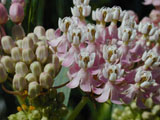
Asclepias incarnata (Swamp milkweed)
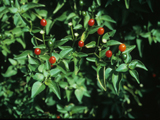
Capsicum annuum (Chile pequin)
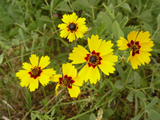
Coreopsis tinctoria (Plains coreopsis)
Euphorbia marginata (Snow on the mountain)
Eupatorium serotinum (Late boneset)
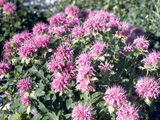
Monarda fistulosa (Wild bergamot)
Passiflora lutea (Yellow passion vine)
Rudbeckia hirta (Black-eyed susan)
Salvia coccinea (Scarlet sage)
Scutellaria ovata (Heart-leaf skullcap)
Verbesina virginica (Frostweed)
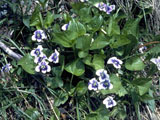
Viola sororia (Missouri violet)
From our Native Plant Image Gallery:


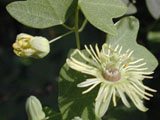

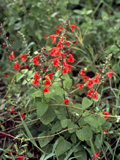
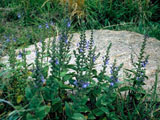
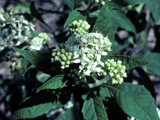
More Deer Resistant Questions
Evergreen, deer resistant privacy screen for Villanova PA
March 29, 2013 - Looking for something that is deer resistant and ideally evergreen to block a shed and fence that my neighbor recently installed. Live in Eastern PA. Not the best drainage and also shade for most of...
view the full question and answer
Using Sound to Repel Deer
July 15, 2013 - We have several motion activated water scarecrows for deer intrusions and have heard about sound scarecrows. Do you know if they are effective and do they bother pets such as cats, birds, etc.?
view the full question and answer
Need a deer resistant plant that will grow in clay soil in Missouri.
June 22, 2009 - I need a plant or bush that is deer resistant and that will grow in clay soil. Can you help me?
view the full question and answer
Deer Resistant and Drought Tolerant Pink-Flowering Shrub for Austin, TX
April 15, 2013 - Is there a pink-flowering bush that is deer resistant and drought tolerant that would do well in Austin, TX? If not pink flowering, any color of a flowering bush is fine.
view the full question and answer
Deer resistant low-lying plants for Michigan
May 13, 2009 - I want to create a bed of low lying plants (under 4 ft.)in the front of my cottage. The soil is completely sandy and gets eastern sun in the AM. There are many deer in the area.
view the full question and answer
| Support the Wildflower Center by Donating Online or Becoming a Member today. |