Native Plants

Q. Who is Mr. Smarty Plants?
A: There are those who suspect Wildflower Center volunteers are the culpable and capable culprits. Yet, others think staff members play some, albeit small, role. You can torture us with your plant questions, but we will never reveal the Green Guru's secret identity.

Did you know you can access the Native Plant Information Network with your web-enabled smartphone?

Ask Mr. Smarty Plants
Ask Mr. Smarty Plants is a free service provided by the staff and volunteers at the Lady Bird Johnson Wildflower Center.

rate this answer

Sunday - June 27, 2010
From: Plainwell, MI
Region: Midwest
Topic: Invasive Plants
Title: Invasive silverleaf nightshade in Plainwell MI
Answered by: Barbara Medford
QUESTION:
Solanum elaeagnifolium Cav. Silverleaf nightshade, Silver-leaf nightshade, White horse nettle. We purchased our land and built here 3 years ago. I have these all over my 30 acres of land including my horse pasture. How do I get rid of them? Will the grass eventually choke them out? I pull them as much as I can but there are too many to get them all out. Thank you.ANSWER:
You have our sympathy, Solanum elaeagnifolium (silverleaf nightshade) is a real problem. It is invasive, poisonous, difficult to eradicate and native to North America. What it is NOT, according to this USDA Plant Profile, is native to Michigan. But we believe you, those profile maps are probably not updated very often, and an invasive plant like this can move faster than the research on it. From the page on this plant in our Native Plant Database:
"The lavender, star-shaped flowers with yellow centers are beautifully set off by the silvery foliage, and large patches of the plant in full bloom are striking. However, the plant is an aggressive, poisonous weed, spreading steadily from deep rootstocks; in a few states it is classified as a noxious weed."
According to this University of California Integrated Pest Management website Silverleaf Nightshade, it is reproduced by seed and creeping roots that give rise to bud shoots. That means mowing down the plant before it has a chance to flower and make seeds doesn't mean it can't survive from its roots. And, if it is in your horse pasture, you need to be even more concerned about its poisonous properties. Not knowing what kind of grass you have, we have no idea if it can crowd out the weed, but we wouldn't be optimistic. You might want to read some of the comments from Dave's Garden from people who are already fighting the plant. One comment said they had "heard" grass would choke it out.
We read through several really mind-bending research papers on this plant, most of them from other countries where they are not welcoming the weed imported from the United States. This article from the Washington State Noxious Weed Control Board is even more discouraging.
We would suggest you contact the Michigan State University Extension office for Allegan County. Our thinking is that no matter what the USDA Profile says, if you have this weed on your property, you can bet other people around you do, too. Possibly the staff at the Extension Office have come up with some sort of plan. We hope so.
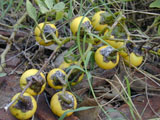
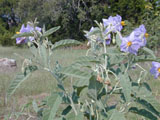
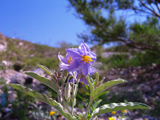
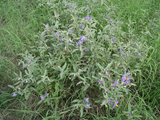
From our Native Plant Image Gallery:
More Invasive Plants Questions
When should I plant bermuda grass seeds?
February 10, 2010 - When should I plant bermuda grass seeds?
view the full question and answer
When to plant non-native red-tip photinia
November 17, 2011 - When do you plant the Red-Tip Photinia Flowering Shrubs
in Roanoke VA?
view the full question and answer
Controlling poison oak or poison ivy in Iowa
April 29, 2010 - We recently purchased a property that is VERY wooded and has been vacant for two yrs. with little upkeep previously. We have (we were told) l00 yr old poison oak vines hanging
from trees. We hired so...
view the full question and answer
Definition of a weed
April 22, 2003 - What is your definition of a weed?
view the full question and answer
Maintenance of Blue grama in early stages
July 06, 2007 - I am seeding my large back yard with blue grama - 30-45 minutes of almost daily hand weeding for two months keeps me from falling too far behind on the green foxtail, bindweed, elm tree seedlings, pig...
view the full question and answer
| Support the Wildflower Center by Donating Online or Becoming a Member today. |