Native Plants

Q. Who is Mr. Smarty Plants?
A: There are those who suspect Wildflower Center volunteers are the culpable and capable culprits. Yet, others think staff members play some, albeit small, role. You can torture us with your plant questions, but we will never reveal the Green Guru's secret identity.

Did you know you can access the Native Plant Information Network with your web-enabled smartphone?

Ask Mr. Smarty Plants
Ask Mr. Smarty Plants is a free service provided by the staff and volunteers at the Lady Bird Johnson Wildflower Center.

rate this answer

Monday - May 24, 2010
From: Miami, FL
Region: Southeast
Topic: Diseases and Disorders
Title: Palm trees turning orange in Miami
Answered by: Barbara Medford
QUESTION:
Why are my palm trees turning orange?ANSWER:
There are currently about 202 known genera of palms and 2600 species worldwide, so we don't know exactly what you have. We know of 7 native to North America, although many people who have questioned us about damage to their palms turned out to be referring to Sago Palms, which are not palms but cycads, and not native to North America.
With the very bad winter in many parts of the United States, we have been blaming discoloration of palms on unexpected cold; perhaps they were planted out of their normal habitat or in an area that got too cold during one of the storms. It seems to us that palms should be okay, in terms of climate, in the Miami area. We looked a little further, and found out there is a palm disease called "Lethal Yellowing." Now, we understand you described the discoloration on your palms as orange, but maybe "lethal yellowing" sounds better than "lethal oranging." Anyway, this University of Florida Extension article on Lethal Yellowing of Palms describes how the palms are infected, and what is going on as far as control.
Beyond that, we are a little at a loss, since so few of the palms grown in North America are native, and we are all about plants native not only to North America but to the area in which they are being grown. We found several websites that might yield more information for you, particularly if you are able to identify the genus and species of the plants you have.
The International Palm Society
Palm and Cycad Society of Florida
Central Florida Palm and Cycad Society
Here is a list of the plants with the name "palm" in their common name that are native to North America. Perhaps you will find your palm in these, and can search the Internet on that specific name for better information.
Acoelorraphe wrightii (Everglades palm)
Coccothrinax argentata (Florida silver palm)
Rhapidophyllum hystrix (needle palm)Sabal palmetto (cabbage palmetto)
Washingtonia filifera (California fan palm)
Pictures of Acoelorraphe wrightii (Everglades palm) from Google
Pictures of Coccothrinax argentata (Florida silver palm) from Google
From our Native Plant Image Gallery:
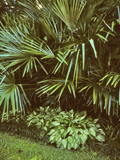
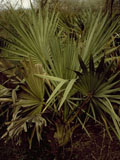
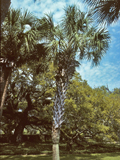
More Diseases and Disorders Questions
Texas Mountain Laurel oozing sap in Spicewood, TX.
July 05, 2012 - We have a Texas mountain laurel that seems to be sweating. Oozing sap with no apparent signs of any type of bore holes, or holes made from any birds.
view the full question and answer
Flameleaf sumac problems
October 18, 2007 - I have three flameleaf sumacs, which were planted last December. One is doing very well, but two are losing their leaves. First, black spots appear on the leaves, then the leaves turn yellow and wilt,...
view the full question and answer
Are brown junipers (Juniperus ashei) dead?
November 08, 2011 - If the cedar/junipers in our area are brown, will they ever come back green? Or just clear them out as dead. There are many of them due to the drought.
Thank you.
view the full question and answer
Damage to native elm in Texas
August 20, 2008 - We had a major landscape renovation done over the winter. One of the trees, an elm about 10 yrs old, remained in the bed although plants around it were removed. The tree has suddenly started turning...
view the full question and answer
Care of Live Oaks
July 11, 2012 - We have Two Young Live Oaks in the front of Our home. We had them treated for insects, ect. Now what can we do to make them Full Green and Happy Happy Happy again.Thank You
view the full question and answer
| Support the Wildflower Center by Donating Online or Becoming a Member today. |