Native Plants

Q. Who is Mr. Smarty Plants?
A: There are those who suspect Wildflower Center volunteers are the culpable and capable culprits. Yet, others think staff members play some, albeit small, role. You can torture us with your plant questions, but we will never reveal the Green Guru's secret identity.

Did you know you can access the Native Plant Information Network with your web-enabled smartphone?

Ask Mr. Smarty Plants
Ask Mr. Smarty Plants is a free service provided by the staff and volunteers at the Lady Bird Johnson Wildflower Center.

rate this answer

Thursday - August 20, 2009
From: San Antonio, TX
Region: Southwest
Topic: Compost and Mulch, Propagation, Transplants, Poisonous Plants, Shrubs
Title: Transplanting adventitious shoots of a mountain laurel in San Antonio
Answered by: Barbara Medford
QUESTION:
Is it possible to transplant branches (shoots) growing from a mountain laurel that was chopped down? Some are two years old and several feet tall (but not yet blooming) and some as small as a foot. It's next to our driveway and growing right up next to a twelve foot flowering pear tree and just a few feet from a huge crepe myrtle tree. I recognized the leaves and began staking the branches when we first moved in and they continue to grow but I think they get too much shade to flower. This is one of my favorite native Texas trees and if remotely possible would like to move it to another area of the yard or a large pot, since it's so late in the year. Or, should I just leave it alone?ANSWER:
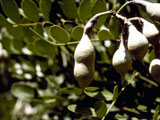
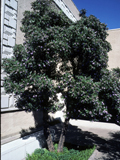
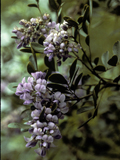
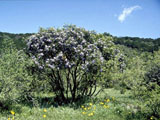
Sophora secundiflora (Texas mountain-laurel) is native around Bexar County. It is a very slow-growing tree, especially in the first few years, so patience is key. Don't do anything now while we are in a blazing heat and dry wave in Central Texas. Keep it watered, and it's probably just as well that it has some shade right now. The mountain laurel is very difficult to transplant, because of its deep taproot. Propagation can be done by seed, cuttings, layering or grafting, but all give very slow results. Warning: The brilliant red seeds contain the highly poisonous alkaloid cytisine (or sophorine) - this substance is related to nicotine and is widely cited as a narcotic and hallucinogen. The seeds are a lovely bright red, and might be very tempting to children. You can, if you wish to keep the plant, cut those seeds off as they develop.
In answer to your question, it's hard to know if you have suckers coming up from roots or plants coming up from seeds. The roots may extend much farther than you realize, and still be producing suckers. Our recommendation is that you go in under some of the little plants with a shovel or trowel, scooping out as much earth beneath it as you can. If you hit a large root, and can't get the shoot out without breaking it off, that's probably a sucker. If you feel you have an actual rooted plant, get some of the excess soil off of it, and get it into a pot of good quality potting soil. We would also suggest that you make arrangements to take several of these transplants, to allow for a failure rate. Don't fertilize, the potting soil probably has some nutrients in it, and you don't want to shock the little roots. Keep it in light shade, and make sure the soil is kept moist, but not soggy. Drainage is important, you need a pot with drainage holes. When, and if, you get some good, vital plants going, transplant again, this time into your garden. This should be done in late Fall in Texas, and could even be next fall, 2010, to really help it get going. Hopefully, by then there will be ample roots to hold a soil ball together. This plant will tolerate sun (6 or more hours of sun a day) or part shade (2 to 6 hours of sun). Dig a hole in an appropriate place, larger than the root ball the plant has formed. Make sure the plant stays moist in the ground, as well, but that water does not stand on the surface. A good idea is to prepare the area where you intend to make the permanent planting with some compost, which will help with the drainage and assist the little roots with access to trace nutrients in the soil. Again, don't fertilize, at least until Spring. The plant will be semi-dormant, anyway, and the composted soil should be adequate.
More Poisonous Plants Questions
Is Bignonia capreolata (Crossvine) known to cause skin irritation
July 23, 2013 - Is Crossvine (Bignonia capreolata L.) known to cause a rash? We are trying to identify the source of a rash-after-gardening, and have not seen any of the big three (poison ivy, poison oak, poison suma...
view the full question and answer
Is Rosa rugosa poisonous?
August 04, 2007 - Are beach plums from a Rosa rogosa poisonous?
view the full question and answer
Is the fruit of Melothria pendula edible?
November 22, 2014 - Is the fruit of Melothria pendula edible?
view the full question and answer
Poisonous cherries from trees in Angola, IN
June 25, 2009 - Are there any poisonous cherries from trees in Indiana?
view the full question and answer
Curing plant rash
September 02, 2008 - I went walking in the woods a few weeks ago, and my leg swiped some kind of cactus or something. It scratched me up and I had to remove little white spines with tweezers. I developed an intensely itch...
view the full question and answer
| Support the Wildflower Center by Donating Online or Becoming a Member today. |