Native Plants

Q. Who is Mr. Smarty Plants?
A: There are those who suspect Wildflower Center volunteers are the culpable and capable culprits. Yet, others think staff members play some, albeit small, role. You can torture us with your plant questions, but we will never reveal the Green Guru's secret identity.
Did you know you can access the Native Plant Information Network with your web-enabled smartphone?

Ask Mr. Smarty Plants
Ask Mr. Smarty Plants is a free service provided by the staff and volunteers at the Lady Bird Johnson Wildflower Center.

rate this answer

Sunday - June 28, 2009
From: Lancaster, PA
Region: Mid-Atlantic
Topic: Compost and Mulch, Planting, Seeds and Seeding, Herbs/Forbs
Title: Failure to come up of blackeyed susans in Lancaster PA
Answered by: Barbara Medford
QUESTION:
My blackeyed susans have been blooming for ten years. All of a sudden this year they didn't come up at all..why?ANSWER:
We frequently get questions from gardeners similar to yours, in which a plant that has done well in a certain place suddenly begins to fail or, as in your case, simply disappears. We really have no way of knowing what has happened, about all we can do is give you questions to ask yourself to try to determine the cause and what to do about it. If those plants have done well in one spot for ten years, what about the environment could have changed in the last year? During the time they should have been coming up, was there unusual cold or rain of drought?
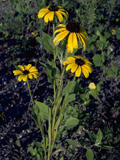
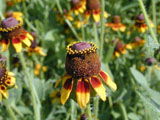
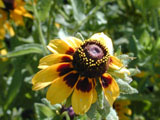
From our Native Plant Database, we learned this about: Rudbeckia hirta var. pulcherrima (blackeyed Susan):
"Long-lasting blooms; if happy, will behave as perennial. This plant is a biennial - it produces a rosette of leaves the first year and flowers in the second year."
In other words, every year some of your plants were just non-blooming rosettes, and some were blooming (and seeding) second-year plants. The plant must have been reseeding itself all those years, and for some reason, last year, it did not. So, this problem may not be one that just happened, it may have to do with an environmental change of some sort in the last two years that has broken its growing, blooming and seeding cycle. If you still like the plants, and the the area around them has not changed sufficiently to discourage their growing (too much shade from other plants, for instance), you might try refreshing the bed, adding compost or other organic matter to loosen it up and improve the drainage, and then plant fresh seeds at the appropriate time for your climate.

More Seeds and Seeding Questions
How to get rid of plants spreading fluffy seeds
July 27, 2008 - I live in Blaine, MN next to a Lake. The "buffer zones" next to the lake are filled with native grasses, weeds & wildflowers. We are trying to identify a plant that blooms July with lavender flowe...
view the full question and answer
Growth of yucca from seed pods from Saginaw MI
October 05, 2013 - How do you grow a yucca plant from the pods? Do I need to dry out the pods first?
view the full question and answer
Camellia seeds
September 21, 2008 - Hi Mr. Smarty Plants;
I have a Camellia plant that has bulbs that look like they could be fruit. And when this bulb opened, four or five little nuts came out. Are they fruit or nuts and can they be e...
view the full question and answer
Mountain ash seedlings in Yorkshire, England
May 25, 2008 - Is there any way I can stop Mountain Ash from seeding in my garden. This year in particular, I am absolutely overrun with the seedlings and once they get a hold they are difficult to remove.
view the full question and answer
Care for oak acorns after planting from Huntsville TX
April 21, 2012 - I planted oak trees from acorns, how often and how much do I water them?
view the full question and answer
| Support the Wildflower Center by Donating Online or Becoming a Member today. |