Native Plants

Q. Who is Mr. Smarty Plants?
A: There are those who suspect Wildflower Center volunteers are the culpable and capable culprits. Yet, others think staff members play some, albeit small, role. You can torture us with your plant questions, but we will never reveal the Green Guru's secret identity.
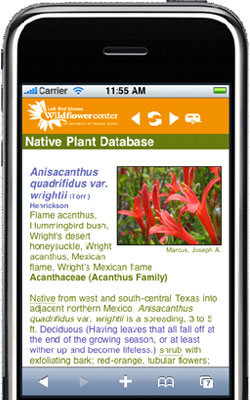
Did you know you can access the Native Plant Information Network with your web-enabled smartphone?
Ask Mr. Smarty Plants
Ask Mr. Smarty Plants is a free service provided by the staff and volunteers at the Lady Bird Johnson Wildflower Center.

rate this answer

Saturday - May 30, 2009
From: Campbellton, TX
Region: Southwest
Topic: Non-Natives, Pests, Watering
Title: Problems with tomatoes in tubs in Campbellton, TX
Answered by: Barbara Medford
QUESTION:
I have my tomatoes planted in big black plastic tubs, they are starting to wilt and dry up. I have put Sevin dust on them for bugs. I haven't been over watering. Could you please tell me why they are dying?ANSWER:
Lycopersicon esculentum, tomato, is native to South America, a member of the Solanaceae, or Nightshade, family. Since its early cultivation by prehistoric natives of South America, it has moved northward through Mexico and is one of the most hybridized of all plants. Both of these facts remove them from our area of expertise. The Lady Bird Johnson Wildflower Center is dedicated to the care and propagation of plants native not only to North America but to the area in which the plant is being grown. Although the tomato plant is out of our field, we would like to mention that planting anything in the summer in Texas in black plastic is dangerous, in terms of the soil heating. That black plastic really conducts the heat into the soil, and plants are accustomed to being grown in soil kept cool by the insulation of all the earth around it and sun only hitting the surface. That's just a thought, we have no expert proof, but we know we have fried plants we left in the black plastic from the nursery in the sun.
For some help from some experts who actually know what they're talking about, read this website from Cornell University Horticulture by Stephen Reiners, Ten Mistakes to Avoid When Growing Tomatoes. Another good article is from Northern Gardening.com Growing Healthy Tomatoes by Terry L. Hockey. In terms of spraying the Sevin on the plants, have you seen and identified any bugs on your tomatoes? Read this article from Living With Bugs.com Sevin (Carbaryl) Insecticide. Before you fix something, find out what the problem is.
More Pests Questions
Need bug repelling plants in Arlington, VA
February 08, 2010 - What kind of plants are best bug repellents, and need little or no maintenance.
I'm a city girl and don't like bugs (spiders)
view the full question and answer
Caterpillars attacking mountain laurel in Marble Falls TX
August 27, 2009 - What are the caterpillars that eat up our mountain laurel? Nothing left but a few stems.
view the full question and answer
Problems with Live Oak in Boerne TX
April 24, 2011 - I had my large Live Oak trimmed last year. This spring there seems to be a problem with leaf growth. Most leaves are small in nature and appear to have been attacked possibly by bugs. Many of the bran...
view the full question and answer
Will Canada geese eat Asclepias tuberosa from Cape May Court, NJ
May 20, 2014 - Will Canada geese eat my butterfly milkweed (Asclepias tuberosa)? I know this plant is deer resistant. I really want to plant some on sandy bank near pond in my back yard, but I fear the geese will ...
view the full question and answer
Flying insects attacking yucca flacida in Wilmington NC
June 11, 2010 - How do I treat flying insects from eating the flowers on my Yucca Flaccida shrub.
view the full question and answer
| Support the Wildflower Center by Donating Online or Becoming a Member today. |