Native Plants

Q. Who is Mr. Smarty Plants?
A: There are those who suspect Wildflower Center volunteers are the culpable and capable culprits. Yet, others think staff members play some, albeit small, role. You can torture us with your plant questions, but we will never reveal the Green Guru's secret identity.

Did you know you can access the Native Plant Information Network with your web-enabled smartphone?

Ask Mr. Smarty Plants
Ask Mr. Smarty Plants is a free service provided by the staff and volunteers at the Lady Bird Johnson Wildflower Center.

rate this answer

Tuesday - March 17, 2009
From: Wichita, KS
Region: Midwest
Topic: Shade Tolerant, Herbs/Forbs, Shrubs
Title: Plants for northern exposure in Wichita, KS
Answered by: Barbara Medford
QUESTION:
What are good plants for the north side of the house with acidic soil in Zone 6, Wichita, KS?ANSWER:
The north side of a structure is often considered to be subject to more shade, although you didn't specify that. Since you also didn't specify if you were interested in shrubs or herbaceous flowering plants, we will find a selection that will do well in part shade (2 to 6 hours or of sun a day) or shade (less thans 2 hours of sun a day). We will go to Recommended Species, click on Kansas on the map, and select first for "herb" (herbaceous flowering plants) under Habit, shade or part shade under Light Requirement, and then "shrub" with the same light requirements. You can repeat this process, putting in different light requirements as well as soil moisture, or searching for vines, ferns or grasses. When you follow a plant link to the page on the individual plant, you can check for soil type (as we will), propagation and links to other sources in information on the plant.
The Lady Bird Johnson Wildflower Center recommends only plants native to North America and to the areas in which the plant grows naturally. Plants grown in their native area will require less fertilizer, water or maintenance to flourish.
HERBS
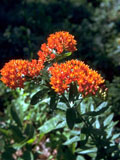
Asclepias tuberosa (butterfly milkweed)
Campanulastrum americanum (American bellflower)
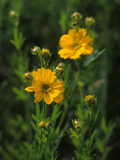
Coreopsis palmata (stiff tickseed)
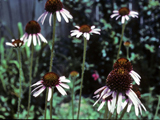
Echinacea angustifolia (blacksamson echinacea)
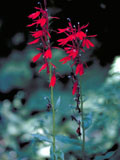
Lobelia cardinalis (cardinalflower)
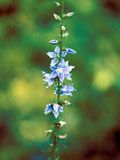
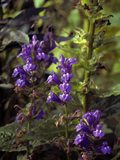
Lobelia siphilitica (great blue lobelia)
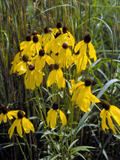
Ratibida pinnata (pinnate prairie coneflower)
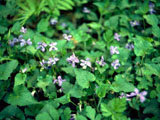
Viola sororia (common blue violet)
SHRUBS
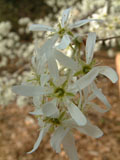
Amelanchier arborea (common serviceberry)
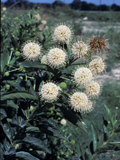
Cephalanthus occidentalis (common buttonbush)
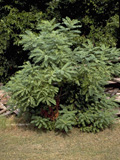
Amorpha fruticosa (desert false indigo)
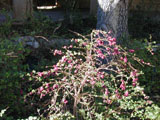
Symphoricarpos orbiculatus (coralberry)
More Shade Tolerant Questions
Deer resistant, drought and shade tolerant plants to go under oak tree in Austin
March 21, 2011 - What is the best deer resistant, drought resistant native plant to grow under my huge Oak tree? Grass does not grow. Will iris bloom?
view the full question and answer
Interaction of Habiturf and St. Augustine grasses from Willow City TX
April 16, 2012 - How does Habiturf and St. Augustine interact? Does one dominate the other? Can you plant them in close areas? Thank you.
view the full question and answer
Different shades of green in Taxodium distichum (bald cypress)
June 05, 2008 - I have two bald cypress trees 50 feet apart, but there was very different soil in the two holes. One was a clayey soil and the other was much more the Austin limestone soil. The trees are about 2 ye...
view the full question and answer
Native ground covers for rocky, shady slope in Arlington, TX
January 25, 2009 - I need a good native ground cover for a completely shaded and rocky 30 degree slope with red sandy soil and southern exposure. Will anything grow in these conditions?
view the full question and answer
Container plants for shade in Austin
March 15, 2011 - I reside in 78739. Just moving here from So Cal (where all plants are perennials), I'm looking to create a good "Shade loving" Container for near my front door. I'm looking at 'Summer Wave' Wi...
view the full question and answer
| Support the Wildflower Center by Donating Online or Becoming a Member today. |