Native Plants

Q. Who is Mr. Smarty Plants?
A: There are those who suspect Wildflower Center volunteers are the culpable and capable culprits. Yet, others think staff members play some, albeit small, role. You can torture us with your plant questions, but we will never reveal the Green Guru's secret identity.
Did you know you can access the Native Plant Information Network with your web-enabled smartphone?
Ask Mr. Smarty Plants
Ask Mr. Smarty Plants is a free service provided by the staff and volunteers at the Lady Bird Johnson Wildflower Center.

rate this answer

Friday - March 13, 2009
From: Austin, TX
Region: Southwest
Topic: Propagation, Pruning
Title: Controlling size of red yucca in Austin
Answered by: Jackie OKeefe
QUESTION:
I have planted red yucca in my backyard, which produces many flowering stalks for the past few years. These red yucca are becoming too large for the area that are planted in. What recommendations do you have for maintaining the size of these gorgeous plants? Can I prune or shear off some of the "ever-green foliage" of the red yucca.ANSWER:
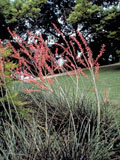
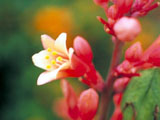
Hesperaloe parviflora (redflower false yucca) is a real workhorse plant for Austin landscapes. Its long-lasting and attractive blooms, wildlife value, easy-care nature and suitability to our climate and soils make it very desirable in our landscapes. Over time, as you have experienced, the clumps expand and become denser. Far from being a problem, this is an opportunity. These clumps are easily divided and the excess pieces can be moved to other sites, potted up, or given to your budding gardener friends. This solution is preferable to chopping away foliage, which can leave the plant with an unkempt look.
To divide-a task best done in fall or winter before new growth starts-take a close look at your plant. You should be able to see where the clump has formed new offsets as it grew. These can be dug away with a sharp spade. Each offset will produce a new plant. If more drastic size reduction is necessary, you can dig out the root clump and divide the whole thing. This site, Grow'em Plant Propagation Database, Clump Division, is a good visual of the process. It should be noted that the visuals are of a daylily, Hemerocallis, while the Red Yucca, not a yucca at all nor a daylily, is a member of the Agavaceae (Century Plant) family. Dividing an overcrowded plant gives it growing room again.
More Propagation Questions
Pink lady slipper orchids in Maine
May 24, 2009 - Hi, I have moved to Maine from Virginia--it's a new world of plants!!Exciting!! I have found 2 pink lady slippers on our property. What can I do to encourage them to multiply? I know some wild flowe...
view the full question and answer
Transplanting Eve's Necklace from Round Mountain TX
April 16, 2013 - We have dozens of small Eve's necklace plants coming up in our large yard. I would like to share them with my friends who aren't so lucky. Many years ago, I tried to transplant one, and it didn't...
view the full question and answer
Flowering plant for gravesite in Weatherford TX
June 23, 2013 - I want to plant flowering plant of some kind at parent's grave site in Weatherford, TX. The family cemetery is on a limestone hill with no irrigation or ability to water other than nature. Would on...
view the full question and answer
Propagation of wax myrtle from Lafayette LA
December 10, 2012 - Hello,
I have a good portion of Wax Myrtle Seeds. How do I get them Started for planting? Have been told to put several seeds in a Jar lid in a very damp paper-towel & leave them there till they ...
view the full question and answer
Altering the flowering time of Phacelia tanacetifolia
September 08, 2008 - I have been using Phacelia tanacetifolia as a forage plant in a 1 acre and 6 acre enclosure to mass rear the Blue Orchard Bee,(BOB), Osmia lignaria for use as a managed pollinator of almonds in Califo...
view the full question and answer
| Support the Wildflower Center by Donating Online or Becoming a Member today. |