Native Plants
Q. Who is Mr. Smarty Plants?
A: There are those who suspect Wildflower Center volunteers are the culpable and capable culprits. Yet, others think staff members play some, albeit small, role. You can torture us with your plant questions, but we will never reveal the Green Guru's secret identity.
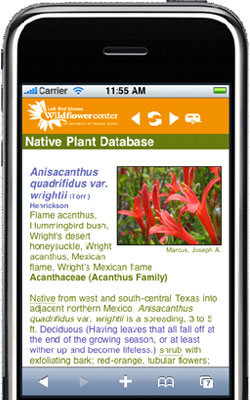
Did you know you can access the Native Plant Information Network with your web-enabled smartphone?
Ask Mr. Smarty Plants
Ask Mr. Smarty Plants is a free service provided by the staff and volunteers at the Lady Bird Johnson Wildflower Center.
rate this answer

Wednesday - March 23, 2005
From: pittsburgh, PA
Region: Mid-Atlantic
Topic: Wildlife Gardens
Title: Planting for parrots
Answered by: Nan Hampton
QUESTION:
I have 2 parrots, a sun conure and a nanday conure, and I would like to find some plants to put in their aviary room that are safe for parrots. Can you help me with this question?ANSWER:
Since we aren't experts on bird physiology and behavior, I think you would be wise to contact bird groups whose members would have experience with plants that might be harmful to your parrots. There seem to be a number of Pennsylvania cage bird clubs. There are also lists of web sites devoted to parrots of the US, Canada and Europe. You might find information about plants that are harmful to parrots through one of the Chat Forums.After you have determined what plants should be avoided in the aviary, you can decide on the types of native plants you would like to put there. On the Regional Factpacks page of the Wildflower web site you can download a PDF file of "Recommended Native Plant Species Lists" for the Mid-Atlantic states. The file is arranged by type of plants (Cacti, Ferns, Grasses, Shrubs, Trees, Vines, Herbaceous/ Wildflowers) and gives you the botanical names, the common names, the native range (by state) and comments about plant size, bloom color and period, habitat and special features. You can find more information about any plant you choose from the list by searching the Native Plants Database. By selecting "Pennsylvania" in the "Nurseries" database in the National Suppliers Directory you can find native plant nurseries in your area to contact to determine the availability and cost of your chosen plants.
More Wildlife Gardens Questions
Native Bird Feeding in Belton, TX
July 04, 2011 - We recently bought a bird feeder and a huge bucket of non-native bird seed (I'm not sure if the whole seed mix is non-native, but I believe most of the mix is). The birds go through the whole bird fe...
view the full question and answer
Bird-friendly plants for South Texas
April 05, 2011 - Which are the best plants that provide food (perennials, shrubs, trees, and vines) to attract birds to my backyard garden? (I have water and cover and would like to make sure I have the 10 best plants...
view the full question and answer
Looking for grasses for slope around retention pond in Florida
August 02, 2011 - I live in St. Petersburg, FL on a large retention pond. Most of my neighbors on the pond have seawalls. I do not nor do my neighbors to my left and right. I am interested in colorful grasses to put...
view the full question and answer
Bee-pasture recommendations for AR
November 30, 2011 - Hello, I live in Melbourne, Ar, up in the NE corner of the state. I keep bees and would like to put in a couple acres of something for them. I'm leaning towards Viper's Bugloss. Do you know where I ...
view the full question and answer
Shrubs and small trees for a slope in NY
May 21, 2012 - We are looking for a living wall made of shrubs / small trees - no more than 25' for the top of a steep creek bed. We are looking for the best erosion preventing types.
view the full question and answer
| Support the Wildflower Center by Donating Online or Becoming a Member today. |