Native Plants

Q. Who is Mr. Smarty Plants?
A: There are those who suspect Wildflower Center volunteers are the culpable and capable culprits. Yet, others think staff members play some, albeit small, role. You can torture us with your plant questions, but we will never reveal the Green Guru's secret identity.

Did you know you can access the Native Plant Information Network with your web-enabled smartphone?

Ask Mr. Smarty Plants
Ask Mr. Smarty Plants is a free service provided by the staff and volunteers at the Lady Bird Johnson Wildflower Center.

rate this answer

Sunday - July 27, 2008
From: Italy, TX
Region: Southwest
Topic: Compost and Mulch, Propagation, Transplants, Watering
Title: Transplanting a Texas redbud sapling
Answered by: Barbara Medford
QUESTION:
I've just discovered a Texas red bud sapling (baby tree)that decided to grow next to our fire pit. Although there's no reason for us to sit around the campfire in 100 degree weather, I would like to move the little red bud before a weed eater comes along. Could you tell me how to properly uproot, transplant, and care for the little guy? (Note: I'm experimenting with all the tips you gave me for trying to propagate bluebells. We've got white ones growing in a flower pot, going to seed.!)ANSWER:
My, you are one of our frequent customers. We are either going to have to give you a discount or put you on our Christmas card list. And congratulations on your propagation experiments with the bluebells, sounds like you are on the right track!
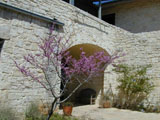
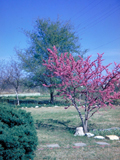
Now, as to transplanting Cercis canadensis var. texensis (Texas redbud). Follow this link to get the general Texas information on the plant, and then see this USDA Forest Service article on the redbud for more technical information. The young trees are fairly easily transplanted, but PLEASE not in the summer. If you are really concerned that something is going to get the redbud before you can move it to safety, put some mesh screening around it, or maybe a big KEEP OUT! sign. Moving it in November will give it a much greater chance at success. Since you have time, select the spot for the new tree, and amend the soil with compost or other humus. When you transplant the tree, be sure to keep it deep-watered until it seems established, and put a nice shredded bark mulch around its base. This will both shelter the roots from heat and cold and will continue to decompose, increasing the good texture of the soil.

More Transplants Questions
Caterpillars on Mountain Laurel from Austin
July 25, 2013 - My 1-yr old mountain laurel has been decimated by small yellow and black catepillars. It recovered a bit and pushed out some fresh new growth, and more came and decimated that too. Are these caterpi...
view the full question and answer
Rotating a non-native cypress in its hole in Annapolis, MD
April 02, 2009 - I have a follow up question to a Cypress transplant question from December 28, 2008. We trimmed our 5 1/2 foot Dwarf Hinoki Cypress back too far, and now the side facing the street has some bare spot...
view the full question and answer
Need suggestions for plants to form a privacy hedge in Granbury, TX.
April 14, 2011 - We live on a rocky hill in Hood County, Tx. and need suggestions for evergreen anything that will provide privacy. Red Cedars were added in October 2010 and it looks as if half of those are dying. He...
view the full question and answer
Removal of leaves before transplanting
April 05, 2008 - Before transplanting a plant, is it a good idea to remove leaves?
view the full question and answer
Replanting yaupon in Blanco TX
January 16, 2013 - How do I replant Yaupon in its native area Blanco TX?
view the full question and answer
| Support the Wildflower Center by Donating Online or Becoming a Member today. |