Native Plants

Q. Who is Mr. Smarty Plants?
A: There are those who suspect Wildflower Center volunteers are the culpable and capable culprits. Yet, others think staff members play some, albeit small, role. You can torture us with your plant questions, but we will never reveal the Green Guru's secret identity.

Did you know you can access the Native Plant Information Network with your web-enabled smartphone?

Ask Mr. Smarty Plants
Ask Mr. Smarty Plants is a free service provided by the staff and volunteers at the Lady Bird Johnson Wildflower Center.

rate this answer

Friday - May 30, 2008
From: St. Johns, NF
Region: Canada
Topic: Groundcovers, Shrubs
Title: Low-growing plant for grave in boggy Newfoundland
Answered by: Nan Hampton
QUESTION:
I am looking for any suggestions on what type of plant I can plant on a grave. It is very boggy (peat)land. I want something that is hardy & not too tall. We have about 8 weeks of summer, July & August. Something that is easy to take care off. Any suggestions?ANSWER:
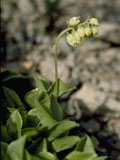
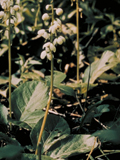
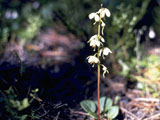
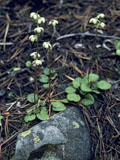
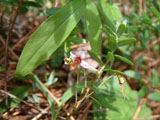
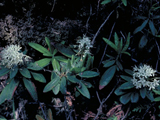
It seems that an evergreen plant would be a good choice for a grave. Something in the wintergreen family (Family Pyrolaceae) should work well since they are small with evergreen leaves and charming flowers in the summer.
Orthilia secunda (sidebells wintergreen)
Pyrola americana (American wintergreen)
Pyrola chlorantha (greenflowered wintergreen)
Pyrola grandiflora (largeflowered wintergreen)
Pyrola minor (snowline wintergreen)
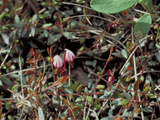
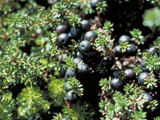
The following are evergreen low-growing shrubs and subshrubs growing less than 3 feet tall:
Vaccinium vitis-idaea ssp. minus (mountain cranberry)
Vaccinium macrocarpon (cranberry)
Vaccinium oxycoccos (small cranberry)
Andromeda polifolia (bog rosemary)
Empetrum nigrum (black crowberry)
Gaultheria hispidula (creeping snowberry) with photos and more information from borealforest.org
Ledum groenlandicum (bog Labrador tea)
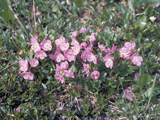
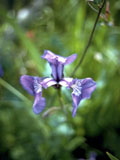
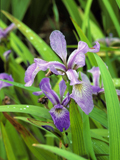
If you want to put something at the site that isn't evergreen but will produce beautiful blossoms, you might consider using a native iris:
Iris versicolor (harlequin blueflag)


More Groundcovers Questions
Ground cover for Brooklyn, NY
January 25, 2013 - Hi Mr Smarty Plants,
I'm looking for a fast growing ground cover for my Brooklyn, NY back yard. The area is nestled between 3 buildings and a fairly large tree, so most of the day its shady, but ...
view the full question and answer
Native, full-sun, 4-in. evergreen grasses for Leander TX
November 07, 2011 - Help! I need a native Texas evergreen sedge/grass/ground cover for full-sun/hot/dry area between sidewalk and street. The plants will need to be kept about 4" high, if growth is higher it must be mow...
view the full question and answer
Splash-proof plants from Oakton VA
October 01, 2012 - Hi Mr Smarty Plants,
Re: low, evergreen ground cover, Northern Virginia
The bare soil around my freshly painted screen porch splashes up onto the white framing when it rains so I am looking for ...
view the full question and answer
Shade Tolerant Groundcover for Texas
July 13, 2016 - I live in Atascosa county in Pleasanton Texas, I have an abundance of Live Oak and Ash trees shading my property and need a groundcover for my backyard which is nothing but sand and where I have dogs ...
view the full question and answer
Dying non-native St. Augustine grass from Austin
May 02, 2013 - Although we all know St. Augustine grass is not a good thing, I am stuck with it and am trying to save areas that appear to have take-all fungus. I have done much reading online and have tried peat m...
view the full question and answer
| Support the Wildflower Center by Donating Online or Becoming a Member today. |