Native Plants
Q. Who is Mr. Smarty Plants?
A: There are those who suspect Wildflower Center volunteers are the culpable and capable culprits. Yet, others think staff members play some, albeit small, role. You can torture us with your plant questions, but we will never reveal the Green Guru's secret identity.
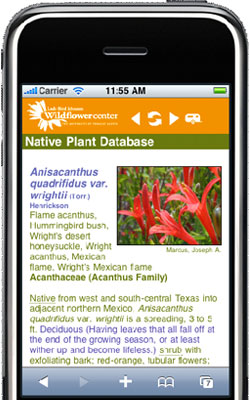
Did you know you can access the Native Plant Information Network with your web-enabled smartphone?

Ask Mr. Smarty Plants
Ask Mr. Smarty Plants is a free service provided by the staff and volunteers at the Lady Bird Johnson Wildflower Center.

rate this answer

Wednesday - January 09, 2008
From: Paris, TX
Region: Southwest
Topic: Groundcovers
Title: Ground cover for trails in Northeast Texas
Answered by: Barbara Medford
QUESTION:
I have several acres of wooded land in Northeast Texas, Southern Lamar County. Both sandy and black land. I have created trails through the woods and would like to plant a native ground cover or grass to keep the trails from being too muddy. The trails are mostly shaded. I want a hardy, low maintence cover. Any suggestions?ANSWER:
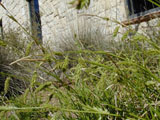
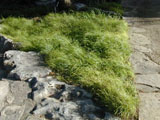
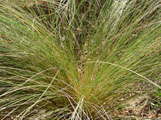
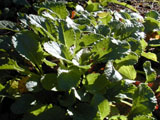
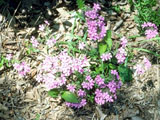
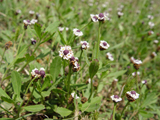
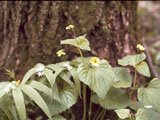
This is a toughie in two respects: (1) most of the grasses, sedges and perennials are not all that low-growing and, (2) the ones that are would probably not be thrilled with foot traffic. As edgings or border, however, a number of them could work to help prevent erosion and also to mark the trails. We have been in a number of East Texas state parks where pine trees were plentiful, and they had paths mulched with pine needles, which made a nice footing, soaked up moisture and helped to keep weeds down. If you are in an area where pine needles are freely available, you might consider that as an alternative. We did come up with a number of suggestions for plant material that might work in your situation:GRASSES AND SEDGES
Bouteloua curtipendula (sideoats grama)
Carex blanda (eastern woodland sedge)
Carex cherokeensis (Cherokee sedge)
Nassella tenuissima (finestem needlegrass)
LOW-GROWING PERENNIALS:
Adiantum capillus-veneris (common maidenhair)
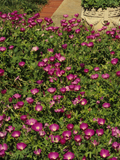
Callirhoe involucrata (purple poppymallow)
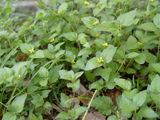
Calyptocarpus vialis (straggler daisy)
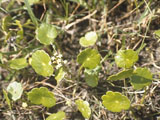
Hydrocotyle umbellata (manyflower marshpennywort)
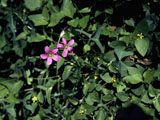
Oxalis drummondii (Drummond's woodsorrel)
Packera obovata (roundleaf ragwort)
Phlox divaricata (wild blue phlox)
Phyla nodiflora (turkey tangle fogfruit)
Viola pubescens var. pubescens (downy yellow violet)
When you have read the descriptions of these plants and made a selection, you will probably want to go to our Native Plant Suppliers list to find one convenient for you; contact them and find out what is available, and whether they might have viable alternatives to suggest.
More Groundcovers Questions
Ground cover for damp areas
January 11, 2009 - I am looking for a cover ground plants that tolerate damp areas. Any suggestions?
view the full question and answer
Evergreen ground covers and low plants for Dallas area
May 25, 2010 - Would like a list of low growing (24" or less) evergreen plants including ground covers, scrubs, etc-flowering and non-flowering that are hardy and require low maintenance in the Dallas area. So ofte...
view the full question and answer
Native ground cover for Fort Lauderdale, FL.
November 02, 2010 - I just moved into a duplex with a narrow back yard with dark sandy soil and no irrigation system. I travel and am looking for a hardy ground cover that can take heat, drought and limited sun between 1...
view the full question and answer
Ground cover for East Texas
November 07, 2010 - I live in the country of east Texas and wish to grow native ground covers around my house and property. I have no way to control this growth, as I have no fences or borders. I have sandy soil and th...
view the full question and answer
Will Habiturf thrive in Houston?
July 31, 2012 - Will Habiturf grow in partial sun? My lawn is surrounded by trees so that there is only about an hour each day with direct overhead sun. The rest of the day there is a light shade.
view the full question and answer
| Support the Wildflower Center by Donating Online or Becoming a Member today. |