Native Plants

Q. Who is Mr. Smarty Plants?
A: There are those who suspect Wildflower Center volunteers are the culpable and capable culprits. Yet, others think staff members play some, albeit small, role. You can torture us with your plant questions, but we will never reveal the Green Guru's secret identity.
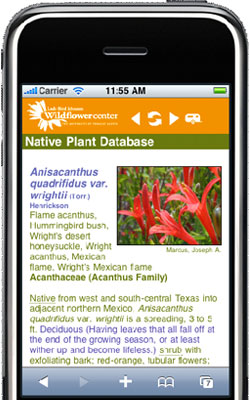
Did you know you can access the Native Plant Information Network with your web-enabled smartphone?

Ask Mr. Smarty Plants
Ask Mr. Smarty Plants is a free service provided by the staff and volunteers at the Lady Bird Johnson Wildflower Center.

rate this answer

Wednesday - October 31, 2007
From: Austin, TX
Region: Southwest
Topic: Shade Tolerant
Title: Shade-loving plants for a long, narrow bed.
Answered by: Nan Hampton
QUESTION:
We are installing a bed with a student-made sculpture dedicated to mothers at our high school in Austin, Texas. The bed is against the two-story school, east facing,and shaded by cedar elm. What can we plant in this long shallow bed that can a thrive in so little light? I was thinking of beauty berry, which has done well under live oak. What else? Groundcover and shrubs. White avens? Cedar Sedge?ANSWER:
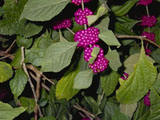
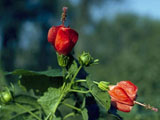
Mr. Smarty Plants thinks you have several very attractive choices for your bed. For example:Callicarpa americana (American beautyberry) and Malvaviscus arboreus (Turk's cap) both grow very well in the shade. They both lose their leaves in the wintertime, however, and the Turk's cap essentially dies to the ground to resprout from the roots in the spring.
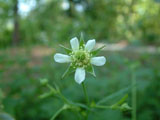
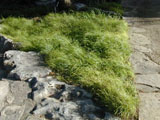
Geum canadense (white avens) and the sedges [Carex planostachys (cedar sedge) and Carex texensis (Texas sedge)] should do nicely in the shade and are evergreen.
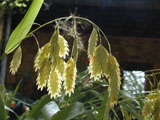
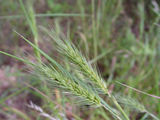
There are a couple of native grasses (Chasmanthium latifolium (Inland sea oats) and Elymus canadensis (Canada wildrye) that grow well in the shade and have foliage and seed heads that are attractive even after the grasses have died.
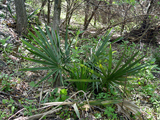
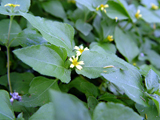
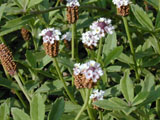
Another evergreen possibility is Sabal minor (dwarf palmetto) and two low groundcovers that grow in the shade, Calyptocarpus vialis (straggler daisy) and Phyla nodiflora (Texas frogfruit), and both are evergreen in mild winters.
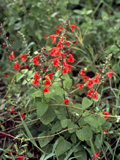
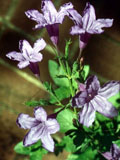
Finally, both Salvia coccinea (blood sage) and Ruellia nudiflora (violet wild petunia) are happy in the shade, bloom over a long period and retain their foliage well into the winter.
More Shade Tolerant Questions
How to stabilize a slope under Red Oaks?
March 19, 2013 - A portion our front "yard" (20x40 feet) is a limestone hillside shaded by 3 large spanish oaks. The small amount of grass holding onto the hillside is now gone from the drought, and the hill has er...
view the full question and answer
Understory Shrubs for Pennsylvania Clay
December 04, 2013 - I want to replace three non-native Euonymus alatus with native shrubs that will serve as host plants for butterfly/moth species and/or attract bumblebees and other native bees. The shrubs I have are ...
view the full question and answer
Plants Needed for a Shaded, Rocky Slope in Alabama
July 06, 2016 - I live in Alabama where the soil is clay and rocky. I've tried planting on a rocky slope I have but, it's also shaded. Not even Juniper will survive on this slope. I've spent thousands of dollars tryi...
view the full question and answer
Plants for shade in Abilene TX
October 29, 2011 - I live in Abilene, Texas. I am trying to find the best plants to fill in an area on the North side of my home, which gets absolutely no sun. The area is sprinklered, and stays fairly moist. I really d...
view the full question and answer
Non-blooming crape myrtle in Italy, TX
June 25, 2008 - It's Italy, TX, again! Thanks for the advice and links, and I'll study those..but here's where I'm stumped on crape myrtle. I have two (almost) trees because they've been planted over 15 years ...
view the full question and answer
| Support the Wildflower Center by Donating Online or Becoming a Member today. |