Native Plants

Q. Who is Mr. Smarty Plants?
A: There are those who suspect Wildflower Center volunteers are the culpable and capable culprits. Yet, others think staff members play some, albeit small, role. You can torture us with your plant questions, but we will never reveal the Green Guru's secret identity.

Did you know you can access the Native Plant Information Network with your web-enabled smartphone?

Ask Mr. Smarty Plants
Ask Mr. Smarty Plants is a free service provided by the staff and volunteers at the Lady Bird Johnson Wildflower Center.

rate this answer

Saturday - October 27, 2007
From: Austin, TX
Region: Southwest
Topic: Grasses or Grass-like, Herbs/Forbs, Wildflowers
Title: Small, flowering, evergreen plants for hillside in Austin.
Answered by: Nan Hampton
QUESTION:
I have a steep, dry hillside measuring approximately 4 feet high by six feet wide. I want to plant low growing, evergreen, flowering plants across the bed that will flower as long as possible, and thrive in the given conditions. I live in Austin. The hillside receives part to full sun. There is irrigation for water. At the top of the bed there is yellow nandina, a crepe myrtle and rosemary shrubs. Do you have any suggestions, please?ANSWER:
Here are a few plants that bloom for long periods of time and are mostly evergreen; i.e., they stay green in milder winters, but may go dormant during very cold winters. The first four are a little larger and showier than the last two, but perhaps you could use a mixture.
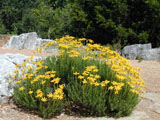
Chrysactinia mexicana (damianita)
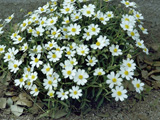
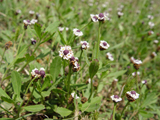
Melampodium leucanthum (plains blackfoot)
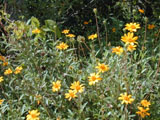
Wedelia texana (hairy wedelia)
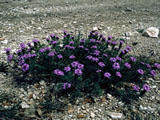
Glandularia bipinnatifida var. bipinnatifida (Prairie verbena)
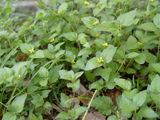
Calyptocarpus vialis (straggler daisy)
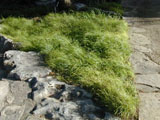
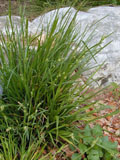
If you want something that will stay green all year long, but without showy blossoms, you could consider using one of the sedges. For example:
Carex planostachys (cedar sedge)
Carex blanda (eastern woodland sedge)
More Wildflowers Questions
White Bluebonnets
March 15, 2004 - Are white Bluebonnets rare?
view the full question and answer
Native plants for limestone ledge with thin soil in Austin, TX
February 14, 2007 - My back yard is essentially a limestone ledge with less than an inch of soil on the top in full sun. What native plants can live in this environment? Since I can't really dig a hole, maybe I should...
view the full question and answer
More on bluebonnets
May 12, 2005 - My bluebonnet plants have seed pods (I guess they are, they look like pods of snap peas). Can I collect these or do I just leave them alone and hope they multiply? If I can collect them, what is the ...
view the full question and answer
Green thread-Thelesperman filifolium
May 13, 2007 - Looking for information on a wild flower called green thread. Can you tell us the actual name or any information about this flower.
view the full question and answer
Native flowers for September wedding in Kittanning PA
October 27, 2010 - I am planting flowers for a wedding on September 17th 2010. What flowers bloom best. Looking for blues,whites and pinks.
view the full question and answer
| Support the Wildflower Center by Donating Online or Becoming a Member today. |