Native Plants

Q. Who is Mr. Smarty Plants?
A: There are those who suspect Wildflower Center volunteers are the culpable and capable culprits. Yet, others think staff members play some, albeit small, role. You can torture us with your plant questions, but we will never reveal the Green Guru's secret identity.

Did you know you can access the Native Plant Information Network with your web-enabled smartphone?

Ask Mr. Smarty Plants
Ask Mr. Smarty Plants is a free service provided by the staff and volunteers at the Lady Bird Johnson Wildflower Center.

rate this answer

Sunday - August 12, 2007
From: Austin, TX
Region: Southwest
Topic: Wildlife Gardens
Title: Native plants to attract bees for vegetable garden
Answered by: Nan Hampton
QUESTION:
I'm looking for native plants that can help attract bees around my vegetable garden to help with pollination. What recommendations do you have?ANSWER:
Bees, honey bees and native solitary bees, are especially attracted to plants in the aster family (Family Asteraceae), buckwheat family (Family Polygonaceae), and mint family (Family Lamiaceae). Here are some suggestions for plants native to Travis County, Texas that are good bee attractors:Asteraceae
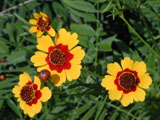
Coreopsis tinctoria (golden tickseed)
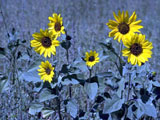
Helianthus annuus (common sunflower)
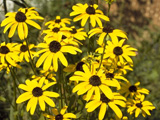
Rudbeckia hirta (blackeyed Susan)
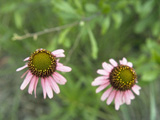
Echinacea angustifolia (blacksamson echinacea)
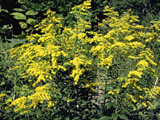
Solidago nemoralis (gray goldenrod)
Polygonaceae
Eriogonum longifolium (longleaf buckwheat)
Eriogonum multiflorum (heartsepal buckwheat)
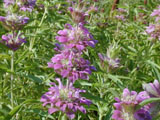
LamiaceaeMonarda citriodora (lemon beebalm)
Salvia farinacea (mealycup sage)
The Maryland Department of Natural Resources has a list of bee attracting plants where you can find more suggestions for plants for your garden. Please realize that all those plants on the list are not native to your area and, indeed, some are not even native to North America. For a list of plants native Travis County, visit the web page of the Austin chapter of the Native Plant Society of Texas.
For a discussion of the mysterious disappearance of honeybees (Apis mellifera), there is an excellent article, Stung, by Elizabeth Kolbert, in the August 6, 2007 issue of the New Yorker.
More Wildlife Gardens Questions
Passion for passionflower
May 16, 2010 - We have passionflower vine on our trellis. We planted the vines about 3 weeks ago. they grew well and started to flower. Recently a number of the vines began to wither while others are ok. The plants...
view the full question and answer
Bee-friendly perennials for Texas
March 19, 2011 - What plants native to east-central TX (College Station, 77840) will attract honeybees?
I have a small "yard" behind my condo. I'd like to plant flowering perennials that will support local bee ...
view the full question and answer
Wildlife and bird friendly hedgerow for Chicago suburb
November 30, 2013 - Want to plant a wildlife/bird friendly hedgerow
in suburban Chicago. Looking for a recommended mix of understory trees as well a shrubs and grasses. Site is part shade with average to wet soil and tr...
view the full question and answer
Plants for butterflies and hummingbirds in Louisville, KY
March 31, 2009 - Mr. Smarty Plants,
I live in Louisville KY. I have a waterfall and ponds connected by a small stream. I want to plant several plants around my waterfall- approx. 20 sq ft on both sides of waterfall....
view the full question and answer
Evergreen plant with berries for wildlife
September 16, 2007 - We live in central Texas and I am attempting to plant for wildlife. Could you suggest an evergreen, approximately 3-4 feet tall, that would have berries for the birds in the Fall and winter? The pla...
view the full question and answer
| Support the Wildflower Center by Donating Online or Becoming a Member today. |