Native Plants

Q. Who is Mr. Smarty Plants?
A: There are those who suspect Wildflower Center volunteers are the culpable and capable culprits. Yet, others think staff members play some, albeit small, role. You can torture us with your plant questions, but we will never reveal the Green Guru's secret identity.

Did you know you can access the Native Plant Information Network with your web-enabled smartphone?

Ask Mr. Smarty Plants
Ask Mr. Smarty Plants is a free service provided by the staff and volunteers at the Lady Bird Johnson Wildflower Center.

rate this answer

Monday - May 28, 2007
From: Baltimore, MD
Region: Mid-Atlantic
Topic: Diseases and Disorders, Transplants, Herbs/Forbs
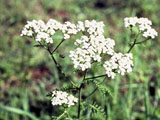
Title: Transplant shock in Achillea millefolium
Answered by: Barbara Medford
QUESTION:
I had a clump of yarrow in my garden and was worried that it would become very aggressive to the other plants. I decided to transplant it into large clay pots to control it. Immediately after the transplant into the pots, it became very wilted looking. After three days, it is still not "bouncing back". Some of the stems do have buds already. What should I do to help it recover? Should I trim it back? If I do, will it flower this year?ANSWER:
You are correct that Achillea millefolium (common yarrow) can be quite invasive. Transplanting it suddenly into "new dirt" in a big pot may have been too much of a shock for even this tough plant. One problem with transplanting any plant is to prevent wilting from respiration of moisture from the leaves. Often in transplanting, it pays to trim back as much as one-third of the plant material to minimize water loss from the plant. Also, it's difficult to get enough water into very dry potting soil at first. One good way to make sure it's wet all the way through is to fill the pot and then stand it in a basin of water, letting the water soak up from the bottom, then let it drip and drain before you make the transplant. At the same time, you don't want soggy soil, as that will just drown the roots, already suffering from the shock of being taken from their original planting. All this having been said, your question about whether these plants will survive has still not been answered. Possibly trimming it back now would help it survive, but that very well could mean no blooms this year, since yarrow blooms in early Summer. Also, although it's a full sun plant, it could probably do with a little shade part of the day, again to cut down on the transplant shock. In summary, you may be able to help the plant survive and bloom another year. And, in future, you might choose to do your transplanting when the plant is more dormant, perhaps in the Fall.
More Transplants Questions
Field of Dreams
June 07, 2009 - I planted a field of sunflowers in April. I transplanted some of the crowded plants to different rows in mid-May - no problems. I have tried to transplant some of the plants this first week of June ...
view the full question and answer
Tall Evergreens for Pennsylvania
January 06, 2011 - I want to plant tall evergreen trees that grow really tall in deep shade or that I can plant already fairly large and withstand the shock of planting in a mature state and live in deep shade. I thank ...
view the full question and answer
When is the best time to transplant Esperanza bushe in Buda, TX?
September 04, 2013 - When is the best time to transplant an Esperanza bush? I want to move it because it is overwhelming my front yard.
Thank you,
view the full question and answer
Transplanting a young lilac
November 05, 2012 - This past spring I planted a hybrid lilac in the ground. The weather here has started to get cold, and much more so at night. Also, the temperatures go from warm to cold and back again as if unsure wh...
view the full question and answer
Problems with transplanting cenizo in Weatherford TX
September 29, 2009 - I tried to transplant a Silverado Sage into a large pot but within 1 day it started wilting. Could it be the soil? I used potting soil not soil from the ground which is a sandy soil.
view the full question and answer
| Support the Wildflower Center by Donating Online or Becoming a Member today. |