Native Plants

Q. Who is Mr. Smarty Plants?
A: There are those who suspect Wildflower Center volunteers are the culpable and capable culprits. Yet, others think staff members play some, albeit small, role. You can torture us with your plant questions, but we will never reveal the Green Guru's secret identity.
Did you know you can access the Native Plant Information Network with your web-enabled smartphone?

Ask Mr. Smarty Plants
Ask Mr. Smarty Plants is a free service provided by the staff and volunteers at the Lady Bird Johnson Wildflower Center.

rate this answer

Friday - March 18, 2016
From: Richardson, TX
Region: Southwest
Topic: Pruning, Shrubs
Title: When to Prune Desert Willow in Texas?
Answered by: Anne Van Nest
QUESTION:
I just learned I should have pruned back my desert willows. It's early March in North Texas. Is it too late to prune now? They are not leafing out yet.ANSWER:
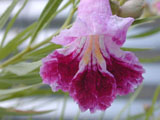
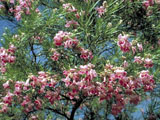
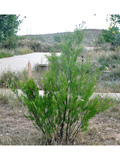
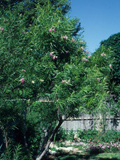
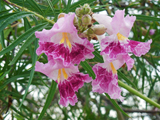
The Lady Bird Johnson Wildflower Center Native Plant Database has the following information: Desert-willow is a 15-40 ft., slender-twigged, small tree or large shrub, often with leaning, twisting trunk and open, spreading crown. Leaves are deciduous, willow-like, light green, both opposite and alternate, 4–12 inches long and 1/3 inch wide. The blossom is funnel-shaped, 1–1 1/2 inches long, spreading at the opening into 5 ruffled, petal-like lobes. The flower is dark pink or purple, often with white or yellow and purple streaks within the throat. The catalpa-like flowers are borne in terminal racemes. By early autumn, the violet-scented flowers, which appear after summer rains, are replaced by slender seedpods, 6–10 inches long, which remain dangling from the branches and serve to identify the tree after the flowers are gone.
Named for its resemblance to willows, this popular ornamental tree is actually related to catalpa trees, Yellowbells (Tecoma stans), and Trumpet vine (Campsis radicans). Its exotic-looking blooms, rapid growth, drought tolerance, and ease of maintenance have made it a sought-after plant within its range, which in nature is from south-central Texas south to Nuevo Leon and Zacatecas in Mexico and west all the way to southern California and Baja California. Adapted to desert washes, it does best with just enough water to keep it blooming and healthily green through the warm months. Many cultivars have been selected, with varying flower colors, leaf sizes, and amounts of seed pods. Mostly blooms heaviest May to June but will continue to bloom sporadically throughout the warm season after rains. Flower color ranges from solid white or muted pink to darker rose and purple, as well as two-toned combinations of those colors. Throat often yellow-tinged. Many cultivars available with varying flower colors.
Prune frequently during its first few years to encourage minimal or single trunks. Water occasionally during prolonged drought. Remove spent flowers and seed pods to encourage continued blooming. To encourage branching and blooming, cut back during winter dormancy by a third.
From the Image Gallery
More Shrubs Questions
Failure to thrive of Lantanas
August 06, 2008 - Here at work we have 4 beautiful yellow Santanas(should I say had), the leaves have started to turn brown and no longer blooming. Appears to have a fungus or disease.
Please help!
view the full question and answer
Does Wax Myrtle Have a Taproot?
March 25, 2015 - Does a wax myrtle have a taproot?
view the full question and answer
Native plants for morning sun in Pembroke MA
October 07, 2009 - Could you please suggest native groundcover,plants/shrubs/grasses for eastern facing slope which gets morning sun? It is my front yard which slopes down toward driveway so it would be a major focal po...
view the full question and answer
Flowering evergreen shrubs for sun in Austin
August 09, 2010 - I am looking for a flowering evergreen shrubs that can take all afternoon sun(on the west side of our house. Preferably 2ft high and 2 ft wide. I had planted a few Salvia Greggii(Autumn Sage) which on...
view the full question and answer
Possibility of invasiveness of blackberry bush
March 27, 2008 - I bought a blackberry bush from Home Depot last year. My sister said if I planted it in the ground it would take over my lawn. So I put it in a big planter up against my fence, but I'd like to put it...
view the full question and answer
| Support the Wildflower Center by Donating Online or Becoming a Member today. |