Native Plants
Q. Who is Mr. Smarty Plants?
A: There are those who suspect Wildflower Center volunteers are the culpable and capable culprits. Yet, others think staff members play some, albeit small, role. You can torture us with your plant questions, but we will never reveal the Green Guru's secret identity.
Did you know you can access the Native Plant Information Network with your web-enabled smartphone?
Ask Mr. Smarty Plants
Ask Mr. Smarty Plants is a free service provided by the staff and volunteers at the Lady Bird Johnson Wildflower Center.

rate this answer

Monday - March 16, 2015
From: Graham, TX
Region: Southwest
Topic: Plant Identification, Edible Plants, Trees
Title: Identity of wild plum in Childress County, Texas
Answered by: Nan Hampton
QUESTION:
I have a Wild Plum follow up question. My wife grew up around the Childress TX area. She remembers going around the creeks and gathering Wild Plums for her mother as a child. Would you have any idea what type of Wild Plums she found there? She also remembers that they were like in thickets.ANSWER:
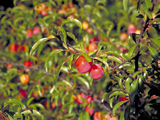
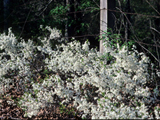
My guess is that it is Prunus angustifolia (Chickasaw plum). This is the only plum species that is shown on the distribution map on the USDA Plants Database as occurring in Childress County. It is described as a "twiggy, thicket-forming tree" that can grow 15-30 feet tall. Here is more information from TAMU Aggie Horticulture and Missouri Botanical Garden.
Another plum species, Prunus gracilis (Oklahoma plum), occurs in adjacent Collingsworth County. It is also thicket-forming but its height as listed as 1.5 to 6 feet. See the USDA Plants Database distribution map. Here is more information TAMU Aggie Horticulture and Oklahoma University Biosurvey.
From the Image Gallery
More Edible Plants Questions
How Do Persimmons Breed - Starkville, MS
August 14, 2012 - Thank you for your earlier response about the genders of native persimmon trees. We have two, a much larger one that has borne fruit for years and years and a smaller one that I'd just assumed was m...
view the full question and answer
Growing Chile Pequin Indoors
December 09, 2015 - About a year ago I visited your page and as a result I planted 8 seeds in spring 2015 from a large Chile Pequin plant that came up wild in my Cedar Park home near Austin. The last harvest was late su...
view the full question and answer
Problems with non-native tomatoes from Spokane WA
August 18, 2012 - I have 2 tomato plants in 1 whiskey barrel, they are in abundance with tomatoes. My problem is when the tomatoes start to ripen, half green & half light red within 1 day the tomatoes are really soft ...
view the full question and answer
Non-native pomegranate failing to fruit from Highland Village TX
October 20, 2012 - Last spring I planted a pomegranate tree (type: Wonderful) which is supposed to produce edible fruit. It had 5 or 6 absolutely beautiful blooms, but each of them dropped off and no sign of fruit. Is...
view the full question and answer
Edible plants in Western Pennsylvania
October 02, 2008 - Can you please give me a list of five edible plants in Western Pennsylvania and the seasons in which they are available?
view the full question and answer
| Support the Wildflower Center by Donating Online or Becoming a Member today. |