Native Plants

Plant Database
Search for native plants by scientific name, common name or family. If you are not sure what you are looking for, try the Combination Search or our Recommended Species lists.
Flaigg, Norman G.
Pavonia lasiopetala
Pavonia lasiopetala Scheele
Rock Rose, Rose Pavonia, Rose Mallow, Pavonia
Malvaceae (Mallow Family)
Synonym(s): Pavonia wrightii
USDA Symbol: pala13
USDA Native Status: L48 (N)
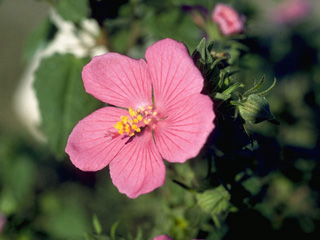
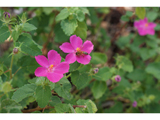
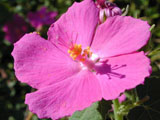
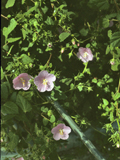
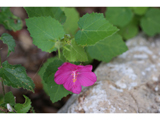
A small shrub, usually woody at the base only, with stems up to 4 feet tall. Found in shallow soil on limestone, in rocky places in woodlands, and at the edges of thickets. Leaves with petioles sometimes as long as the blade; blade up to 2 1/2 inches long, but mostly shorter, ovate to 3 lobed, with a pointed or blunt tip, flat or slightly lobed base, coarsely toothed or wavy margins, dark green on the upper surface and lighter on the lower. Flowers showy, rose colored, roughly 1 1/2 inches wide with a yellow column formed by the pistil and stamens, appearing from spring to fall. Fruit a 5-lobed capsule with remnants of the flower at its base, separating into 5 units at maturity.
Plant Characteristics
Duration: PerennialHabit: Shrub
Leaf Arrangement: Alternate
Leaf Complexity: Simple
Breeding System: Flowers Bisexual
Fruit Type: Schizocarp
Size Notes: Up to about 4 feet tall.
Bloom Information
Bloom Color: Pink , YellowBloom Time: Apr , May , Jun , Jul , Aug , Sep , Oct , Nov
Distribution
USA: TXNative Distribution: In TX, from Edwards Plateau through Rio Grande Plains to adjacent Mex.
Native Habitat: Dry, rocky woods and slopes. Pastures, Savannas, Ditches, Ravines, Depressions Open woodlands.
Growing Conditions
Water Use: LowLight Requirement: Sun , Part Shade
Soil Moisture: Dry
Drought Tolerance: High
Cold Tolerant: yes
Soil Description: Prefers well-drained, limestone soils. Also Medium Loam Rocky, Limestone-based, Sandy, Sandy Loam, Clay Loam, Clay, Caliche type.
Conditions Comments: Herbaceous stems rise from a woody base. Pink hibiscus-like flowers. Velvety, scalloped leaves. The flowers attract hummingbirds.
Benefit
Use Ornamental: Pavonia makes an excellent choice for landscaping. Able to survive the summer heat, its profusion of brilliant flowers adds a colorful touch to a dry landscape. Attractive, Blooms ornamental, Easily grown, Perennial garden.Use Wildlife: Nectar-butterflies, Nectar-moths, Hummingbirds.
Conspicuous Flowers: yes
Attracts: Hummingbirds
Deer Resistant: Moderate
Propagation
Propagation Material: Seeds , Softwood CuttingsDescription: Sow and lightly cover seed with soil. Pavonia can also be propagated from softwood tip cuttings. Take cuttings in spring before plant starts to bloom, or on nursery plants kept cut back. Cuttings with big buds or blooms are at a disadvantage. They root and grow fast in hot weather. Cut a stem three to six inches long, just below the node. Remove all but the top leaves and place in vermiculite.
Seed Collection: Seeds can be collected from the capsule when it turns brown, but before it becomes dry and splits. Spread in thin layers to thoroughly air-dry. Dust with Sevin dust and store in ventilated containers at room temperature. Will remain viable up to two years.
Seed Treatment: Germination may be staggered due to differences in seed coat thickness. More uniform germination rates may be achieved by first soaking the seeds in hot water.
Commercially Avail: yes
Maintenance: Cut back the shrub each year to encourage bushy growth. It may tend to become leggy during the growing season, so additional pruning may be necessary. Water intermittently to ensure blooming. Mildew is unavoidable - sometimes more sun seems to make it go away, sometimes not.
Find Seed or Plants
Order seed of this species from Native American Seed and help support the Wildflower Center.
Mr. Smarty Plants says
Evergreen native shrubs for poor drainage area in Cedar Hill, TX
March 21, 2008
Hi! I have one (big!) bed in on the front of my house. Due to the way the house/motorcourt is built, that area (when it rains as much as it did last year!) doesn't drain well. I now have to replac...
view the full question and answer
Native plants for butterfly garden in Waco, TX
February 03, 2008
Few weeks ago I sent you a letter but never got an answer back.
I would like to have your suggestions of native plants for a butterfly garden (30'x 30') here in Waco. The plants must be (1)drought ...
view the full question and answer
Spring blooming plants for spring sun and summer shade
July 03, 2007
I live in San Antonio. I'm faced with a dilemma. I've got mature native pecans. In the summer they provide beautiful full shade. However, in the winter and even into the late spring, my yard is ...
view the full question and answer
List of native perennial Texas flowers
March 13, 2006
Good day, I am searching for a list of native Texas flowers (preferably perennials) for a flower garden.
Thank you.
view the full question and answer
From the National Organizations Directory
According to the species list provided by Affiliate Organizations, this plant is on display at the following locations:Naval Air Station Kingsville - Kingsville, TX
Lady Bird Johnson Wildflower Center - Austin, TX
Texas Discovery Gardens - Dallas, TX
Sibley Nature Center - Midland, TX
Brackenridge Field Laboratory - Austin, TX
NPSOT - Native Plant Society of Texas - Fredericksburg, TX
Texas Parks and Wildlife Department - Austin, TX
NPSOT - Fredericksburg Chapter - Fredericksburg, TX
NPSOT - Austin Chapter - Austin, TX
National Butterfly Center - Mission, TX
NPSOT - Williamson County Chapter - Georgetown, TX
Bibliography
Bibref 355 - Landscaping with Native Plants of Texas and the Southwest (1991) Miller, G. O.Bibref 354 - Native & Naturalized Woody Plants of Austin & the Hill Country (1981) Lynch, D.
Bibref 318 - Native Texas Plants: Landscaping Region by Region (2002) Wasowski, S. & A. Wasowski
Bibref 248 - Texas Wildflowers: A Field Guide (1984) Loughmiller, C. & L. Loughmiller
Bibref 291 - Texas Wildscapes: Gardening for Wildlife (1999) Damude, N. & K.C. Bender
Bibref 297 - Trees of Central Texas (1984) Vines, Robert A.
Bibref 328 - Wildflowers of Texas (2003) Ajilvsgi, Geyata.
Search More Titles in Bibliography
Web Reference
Webref 38 - Flora of North America (2019) Missouri Botanical Garden, St. Louis, MO & Harvard University Herbaria, Cambridge, MA.Webref 23 - Southwest Environmental Information Network (2009) SEINet - Arizona Chapter
Additional resources
USDA: Find Pavonia lasiopetala in USDA PlantsFNA: Find Pavonia lasiopetala in the Flora of North America (if available)
Google: Search Google for Pavonia lasiopetala
Metadata
Record Modified: 2023-02-21Research By: TWC Staff, WFS