Native Plants

Plant Database
Search for native plants by scientific name, common name or family. If you are not sure what you are looking for, try the Combination Search or our Recommended Species lists.
Page, Lee
Oenothera macrocarpa
Oenothera macrocarpa Nutt.
Bigfruit Evening-primrose, Missouri Evening-primrose, Fluttermill, Big-fruit Evening-primrose, Missouri Primrose, Bigfruit Evening Primrose
Onagraceae (Evening Primrose Family)
Synonym(s):
USDA Symbol: oema
USDA Native Status: L48 (N)
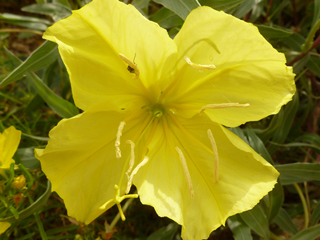
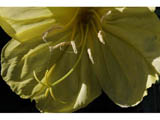
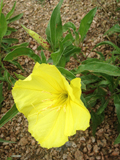
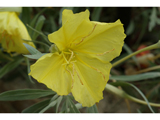
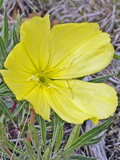
The perennial big-fruit evening-primrose or Missouri evening-primrose can be trailing or upright, usually growing 8-10 in. high. Its large, 3-4 in. wide, yellow flowers are showy. The four-petaled flowers, which grow from the upper leaf axils, open in the evening and close the next day, sometimes fading reddish. The foliage is narrow, thick and gray-green.
Plant Characteristics
Duration: PerennialHabit: Herb
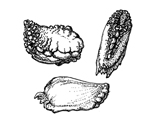
Fruit Type: Capsule
Size Notes: 8-10 inches tall.
Flower: Having a long floral tube and mostly nocturnal flowering, this species is pollinated primarily by hawk moths (family: Sphingidae). (Reslit 2842).
Bloom Information
Bloom Color: YellowBloom Time: Apr , May , Jun , Jul , Aug
Distribution
USA: AR , IL , KS , MO , NE , OK , TN , TXNative Distribution: S.e. NE to TX, e. to TN; introduced elsewhere
Native Habitat: Limestone glades & bluffs; roadsides; rocky prairies & hillsides
Growing Conditions
Water Use: LowLight Requirement: Sun
Soil Moisture: Dry
Soil Description: Rocky, gravelly, or sandy soils. Calcareous, Sandy, Limestone-based, Sandy Loam, Medium Loam
Conditions Comments: Stunning, large, four-petaled yellow flowers open in the early evening on a handsome plant with low, mounding habit. Flowers are open for only one evening, but the plant flowers over a long period of time.
Benefit
Use Ornamental: Color, Blooms ornamental, Showy, Attractive, Rock gardensUse Wildlife: Nectar-Moths
Conspicuous Flowers: yes
Interesting Foliage: yes
Attracts: Hummingbirds
Nectar Source: yes
Deer Resistant: Moderate
Value to Beneficial Insects
Special Value to Native BeesThis information was provided by the Pollinator Program at The Xerces Society for Invertebrate Conservation.
Propagation
Propagation Material: SeedsDescription: This plant is easily propagated from seed, sown in spring or fall, or stem cuttings taken in early summer.
Seed Treatment: No treatment necessary.
Commercially Avail: yes
Maintenance: Prevent complete soil dryness, Remove spent blossoms, Maintain mulch layer, Fertilize in spring with rose food
Find Seed or Plants
Order seed of this species from Native American Seed and help support the Wildflower Center.
From the National Organizations Directory
According to the species list provided by Affiliate Organizations, this plant is on display at the following locations:Naval Air Station Kingsville - Kingsville, TX
Lady Bird Johnson Wildflower Center - Austin, TX
NPSOT - Native Plant Society of Texas - Fredericksburg, TX
Texas Parks and Wildlife Department - Austin, TX
NPSOT - Fredericksburg Chapter - Fredericksburg, TX
NPSOT - Williamson County Chapter - Georgetown, TX
Wildflower Center Seed Bank
LBJWC-MLE-2 Collected 2009-06-24 in Lampasas County by Lady Bird Johnson Wildflower CenterBibliography
Bibref 766 - Dale Groom's Texas Gardening Guide (2002) Groom, D.Bibref 946 - Gardening with Prairie Plants: How to Create Beautiful Native Landscapes (2002) Wasowski, Sally
Bibref 355 - Landscaping with Native Plants of Texas and the Southwest (1991) Miller, G. O.
Bibref 318 - Native Texas Plants: Landscaping Region by Region (2002) Wasowski, S. & A. Wasowski
Bibref 281 - Shinners & Mahler's Illustrated Flora of North Central Texas (1999) Diggs, G. M.; B. L. Lipscomb; B. O'Kennon; W. F...
Bibref 291 - Texas Wildscapes: Gardening for Wildlife (1999) Damude, N. & K.C. Bender
Bibref 286 - Wildflowers of the Texas Hill Country (1989) Enquist, M.
Search More Titles in Bibliography
Research Literature
Reslit 2842 - Pollination limitation to reproductive success in the Missouri evening primrose, Oenothera macrocarpa (Onagraceae) (2001) Jennifer M. Moody-Weis, John S. HeywoodThis information was provided by the Florida WIldflower Foundation.
Search More Titles in Research Literature
From the Archive
Wildflower Newsletter 1989 VOL. 6, NO.2 - Wildflower Network Operates in Louisiana, Wildflower Handbook Published, Researc...Additional resources
USDA: Find Oenothera macrocarpa in USDA PlantsFNA: Find Oenothera macrocarpa in the Flora of North America (if available)
Google: Search Google for Oenothera macrocarpa
Metadata
Record Modified: 2022-08-24Research By: WFS