Native Plants

Plant Database
Search for native plants by scientific name, common name or family. If you are not sure what you are looking for, try the Combination Search or our Recommended Species lists.
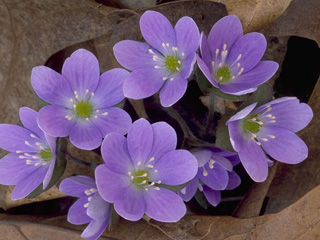
Sherman, Doug
Hepatica nobilis var. obtusa
Hepatica nobilis Schreb. var. obtusa (Pursh) Steyerm.
Roundlobe Hepatica, Round-lobed Hepatica, Liverleaf
Ranunculaceae (Buttercup Family)
Synonym(s): Anemone americana, Anemone hepatica, Hepatica americana, Hepatica hepatica, Hepatica triloba var. americana
USDA Symbol: henoo
USDA Native Status: L48 (N), CAN (N)
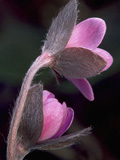
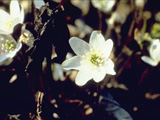
Pink, white or purplish blossoms arise in early spring on fuzzy, 4-6 in. stems. The leaves, which grow from ground level on hairy stems after the flower has blossomed, are 3-lobed, rounded and evergreen until the following spring.
This is an early spring wildflower, usually with lavender flowers and 3-lobed leaves that persist throughout the winter. The Sharp-lobed Hepatica (Hepatica nobilis var. acuta), has more pointed leaf lobes and bracts. The genus name refers to the 3-lobed leaf that supposedly bears a resemblance to the liver. Because of this, early herbalists assumed the plant to be effective in treating liver ailments.

Plant Characteristics
Duration: PerennialHabit: Herb
Leaf Retention: Deciduous
Fruit Type: Achene
Size Notes: Up to about 6 inches tall.
Leaf: Variegated dark and light green. Deep red in fall and winter.
Autumn Foliage: yes
Flower: Flowers 1/2 to 1 inch across.
Bloom Information
Bloom Color: White , Pink , Blue , PurpleBloom Time: Mar , Apr , May
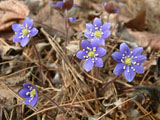
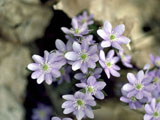
Bloom Notes: Color ranges from white to pink to pale blue to lavender. An early spring bloomer.
Distribution
USA: AL , AR , CT , DC , DE , FL , GA , IA , IL , IN , KY , MA , MD , ME , MI , MN , MO , MS , NC , NH , NJ , NY , OH , PA , RI , SC , TN , VA , VT , WI , WVCanada: MB , NB , NS , PE
Native Distribution: N.S. to Man., s. to n. FL, AL, & AR. Eastern North America, Zones 5 to 8.
Native Habitat: Rich, mesic to dry, deciduous, pine & sometimes spruce woods
Growing Conditions
Water Use: Low , MediumLight Requirement: Part Shade , Shade
Soil Moisture: Dry , Moist
Soil pH: Acidic (pH<6.8)
Drought Tolerance: High
Heat Tolerant: yes
Soil Description: Neutral to acidic soils, but prefers acidic. Prefers high humus.
Benefit
Use Ornamental: Attractive foliage and delicate blooms for small garden spaces.Use Wildlife: Winter browse
Conspicuous Flowers: yes
Interesting Foliage: yes
Deer Resistant: No
Propagation
Propagation Material: Root Division , SeedsDescription: Seeds should be planted outside immediately after collection. In the Southeast, sow in fall. First-year seedlings will only have 2 leaves, but will expand after that. Seeds are hard to collect, so an alternate propagation method is fall division. Clumps, however, are slow to increase. When dividing a clump, it is best to leave 2-3 buds in each division.
Seed Collection: Approximate collection date in northern U.S.: Mid to late May.
Commercially Avail: yes
From the National Organizations Directory
According to the species list provided by Affiliate Organizations, this plant is on display at the following locations:Mt. Cuba Center - Hockessin, DE
Bibliography
Bibref 1620 - Gardening with Native Plants of the South (Reprint Edition) (2009) Wasowski, S. with A. WasowskiBibref 1294 - The Midwestern Native Garden: Native Alternatives to Nonnative Flowers and Plants An Illustrated Guide (2011) Adelman, Charlotte and Schwartz, Bernard L.
Search More Titles in Bibliography
Web Reference
Webref 57 - Atlas of Florida Plants (2020) Institute for Systematic BotanyWebref 38 - Flora of North America (2019) Missouri Botanical Garden, St. Louis, MO & Harvard University Herbaria, Cambridge, MA.
Webref 23 - Southwest Environmental Information Network (2009) SEINet - Arizona Chapter
Additional resources
USDA: Find Hepatica nobilis var. obtusa in USDA PlantsFNA: Find Hepatica nobilis var. obtusa in the Flora of North America (if available)
Google: Search Google for Hepatica nobilis var. obtusa
Metadata
Record Modified: 2023-05-04Research By: TWC Staff