Native Plants

Plant Database
Search for native plants by scientific name, common name or family. If you are not sure what you are looking for, try the Combination Search or our Recommended Species lists.
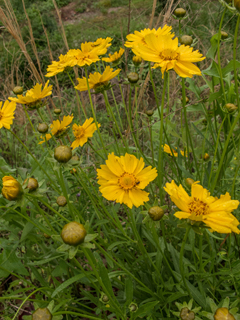
Brundage, Stephanie
Coreopsis lanceolata
Coreopsis lanceolata L.
Lanceleaf Coreopsis, Lance-leaved Coreopsis, Lanceleaf Tickseed, Sand Coreopsis
Asteraceae (Aster Family)
Synonym(s): Coreopsis crassifolia, Coreopsis heterogyna, Coreopsis lanceolata var. villosa
USDA Symbol: cola5
USDA Native Status: L48 (N), HI (I), CAN (N)
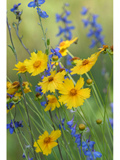
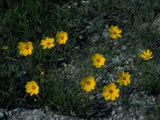
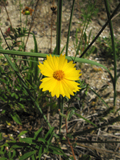
Lance-leaf tickseed grows in small clumps but forms extensive colonies. It is 1-2 feet tall and has leaves 3-4 inches long, opposite, sometimes alternate near the top where the leaves are fewer. Some of the leaves are deeply cut, almost forming 3 leaflets. Flower heads are yellow, 1-1 1/2 inches across. The yellow center or disc flowers stand out distinctly from the ray flowers, which appear to be attached just below them. Ray flowers are 4-lobed. The yellow, daisy-like flowers occur singly atop long, naked peduncles.
This native species has branching stems at base and often forms sizable colonies along roadsides and in old fields. A southern species, Greater Tickseed (C. major), 2-3' (60-90 cm) tall, has sunflower-like flower heads 1-2" (2.5-5 cm) wide and opposite leaves deeply segmented into 3 parts, appearing as a whorl of 6. Nearly a dozen other perennial yellow-flowered Coreopsis species occur in the East.

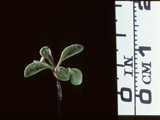
Plant Characteristics
Duration: PerennialHabit: Herb
Leaf Retention: Evergreen
Size Notes: Up to about 2 feet tall.
Leaf: Green
Fruit: Fruit is a cypsela (pl. cypselae). Though technically incorrect, the fruit is often referred to as an achene.
Bloom Information
Bloom Color: YellowBloom Time: Mar , Apr , May , Jun , Jul , Aug
Distribution
USA: AL , AR , CA , CO , CT , DE , FL , GA , HI , IA , IL , IN , KS , KY , LA , MA , MD , ME , MI , MN , MO , MS , NC , NE , NH , NJ , NM , OH , OK , OR , PA , RI , SC , TN , TX , VA , VT , WI , WV , WYCanada: BC , ON
Native Distribution: FL to e. TX & n. NM, n. to VA, Ont., MI, WI, MO & CO; naturalized in n.e. states
Native Habitat: Open woodlands, Prairie, Plains, Meadows, Pastures, Savannas
Growing Conditions
Water Use: MediumLight Requirement: Sun , Part Shade , Shade
Soil Moisture: Dry
CaCO3 Tolerance: None
Soil Description: Sandy, gravelly soils. Sandy, Sandy Loam, Medium Loam, Clay Loam, Clay, Acid-based, Calcareous
Conditions Comments: Lance-leaved coreopsis is the most common coreopsis and is easy to grow. It is drought tolerant but is not a reliably perennial. However it self-sows readily and can become weedy. The showy golden flowers are nice in a vase and are a popular plant for visiting pollinators. It should have frequent deadheading to keep it in bloom well into the summer.
Benefit
Warning: Officially listed as an "Invasive Alien Species" in Japan where it has become a serious pest species.Conspicuous Flowers: yes
Attracts: Butterflies
Nectar Source: yes
Deer Resistant: No
Value to Beneficial Insects
Special Value to Native BeesSupports Conservation Biological Control
This information was provided by the Pollinator Program at The Xerces Society for Invertebrate Conservation.
Propagation
Propagation Material: Clump Division , SeedsDescription: Plant seeds in early spring. Can also be propagated by division of basal rosettes or by seed. In the fall, lift a clump from the outer edge of the plant and separate the rosette. Remove a few of the leaves to reduce moisture loss, replant, and water thoroughly.
Seed Collection: Nutlets are mature and ready for collection about four weeks after the flowers wither. Watch the inner series of bracts; when they begin to darken, it is time to collect. Remove chaff and store in sealed, refrigerated containers. Storage life is at least three years.
Seed Treatment: Seeds of this species benefit from light and KNO3 enrichment for germination.
Commercially Avail: yes
Maintenance: May be selectively thinned to improve appearance by removing clumps from the interior of the planting. Mulching helps conserve moisture and control weeds.
Find Seed or Plants
Order seed of this species from Native American Seed and help support the Wildflower Center.
Find seed sources for this species at the Native Seed Network.
View propagation protocol from Native Plants Network.
Mr. Smarty Plants says
Native flowers for Door County, Wisconsin
September 02, 2009
We recently were required to put in a new septic system on our vacation property in Door County, WI. This left us with a clearing on our wooded lot where the septic field is now located. The installer...
view the full question and answer
Attracting butterflies in Tennessee
July 03, 2009
What flowers and plants do the caterpillars in Tennessee eat? And do you know what butterflies live in Tipton Co. Tennessee?
view the full question and answer
Native plants to stabilize a steep bank in Pennsylvania
April 23, 2008
I would like to use native plantings to stabilize a steep bank of a septic leach field in eastern Pennsylvania. My purpose is to control erosion and to eliminate the need for mowing. What would you r...
view the full question and answer
National Wetland Indicator Status
| Region: | AGCP | AK | AW | CB | EMP | GP | HI | MW | NCNE | WMVE |
| Status: | UPL | FACU | FACU | FACU | UPL | FACU | FACU | UPL |
From the National Organizations Directory
According to the species list provided by Affiliate Organizations, this plant is on display at the following locations:Naval Air Station Kingsville - Kingsville, TX
Lady Bird Johnson Wildflower Center - Austin, TX
Texas Discovery Gardens - Dallas, TX
Sibley Nature Center - Midland, TX
Crosby Arboretum - Picayune, MS
Texas Parks and Wildlife Department - Austin, TX
NPSOT - Austin Chapter - Austin, TX
Native Seed Network - Corvallis, OR
Jacob's Well Natural Area - Wimberley, TX
NPSOT - Williamson County Chapter - Georgetown, TX
Mt. Cuba Center - Hockessin, DE
Bibliography
Bibref 928 - 100 easy-to-grow native plants for Canadian gardens (2005) Johnson, L.; A. LeyerleBibref 766 - Dale Groom's Texas Gardening Guide (2002) Groom, D.
Bibref 1620 - Gardening with Native Plants of the South (Reprint Edition) (2009) Wasowski, S. with A. Wasowski
Bibref 318 - Native Texas Plants: Landscaping Region by Region (2002) Wasowski, S. & A. Wasowski
Bibref 248 - Texas Wildflowers: A Field Guide (1984) Loughmiller, C. & L. Loughmiller
Bibref 291 - Texas Wildscapes: Gardening for Wildlife (1999) Damude, N. & K.C. Bender
Bibref 1294 - The Midwestern Native Garden: Native Alternatives to Nonnative Flowers and Plants An Illustrated Guide (2011) Adelman, Charlotte and Schwartz, Bernard L.
Search More Titles in Bibliography
Web Reference
Webref 38 - Flora of North America (2019) Missouri Botanical Garden, St. Louis, MO & Harvard University Herbaria, Cambridge, MA.Webref 23 - Southwest Environmental Information Network (2009) SEINet - Arizona Chapter
Research Literature
Reslit 261 - First Korean report of downy mildew on Coreopsis lanceolata caused by Plasmopara halstedii (2009) Y. J. Choi, M. J. Park and H. D. ShinReslit 214 - Growth regulators and storage temperature govern germination of Coreopsis seed (1992) W. J. Carpenter and E. R. Ostmark
Reslit 102 - Age of maturity and life span in herbaceous, polycarpic perennials (2000) M. H. Bender, J. M. Baskin and C. C. Baskin
Reslit 72 - Secondary seed dormancy in Coreopsis lanceolata (1994) S. J. Banovetz and S. M. Scheiner
Reslit 71 - The effects of seed mass on the seed ecology of Coreopsis lanceolata (1994) S. J. Banovetz and S. M. Scheiner
Reslit 58 - Detection and characterization of phytoplasmas infecting ornamental and weed plants in Iran (2007) G. Babaie, B. Khatabi, H. Bayat, M. Rastgou, A. Ho...
Reslit 492 - First Report of Leaf Spot Caused by Pseudomonas cichorii on Coreopsis lanceolata in Italy (2009) A. Garibaldi, G. Gilardi, C. Moretti and M. L. Gul...
Reslit 490 - First report of powdery mildew caused by Podosphaera fusca on Coreopsis lanceolata in Italy (2007) A. Garibaldi, D. Bertetti and M. L. Gullino
Reslit 463 - Importance of Seed and Microsite Limitation: Native Wildflower Establishment in Non-native Pasture (2010) A. L. Frances, C. R. Adams and J. G. Norcini
Reslit 462 - Establishment and management of native wildflowers on Florida roadsides and former pastures (2008) A. L. Frances
This information was provided by the Florida WIldflower Foundation.
Search More Titles in Research Literature
From the Archive
Wildflower Newsletter 1985 VOL. 2, NO.2 - Guide to Black-Eyed Susan, Parkways, Wildflowers for the East, Arboretum Mall to...Wildflower Newsletter 1986 VOL. 3, NO.3 - Fall Planting Tips, Growth Provides Enthusiasm, 1985 Financial Facts, Gathering ...
Wildflower Newsletter 1987 VOL. 4, NO.4 - Wildflower Center Sows Seeds for the Country, Hotline for Texas, New Goals Plans...
Wildflower Newsletter 1989 VOL. 6, NO.2 - Wildflower Network Operates in Louisiana, Wildflower Handbook Published, Researc...
Additional resources
USDA: Find Coreopsis lanceolata in USDA PlantsFNA: Find Coreopsis lanceolata in the Flora of North America (if available)
Google: Search Google for Coreopsis lanceolata
Metadata
Record Modified: 2022-12-09Research By: NPIS, ADA, GDB