Native Plants

Plant Database
Search for native plants by scientific name, common name or family. If you are not sure what you are looking for, try the Combination Search or our Recommended Species lists.
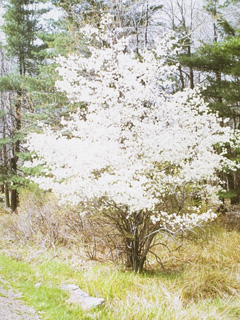
Vick, Albert F. W.
Amelanchier canadensis
Amelanchier canadensis (L.) Medik.
Canadian Serviceberry, Canadian Service-berry, Shadblow Serviceberry, Juneberry, Shadbush, Junebush
Rosaceae (Rose Family)
Synonym(s): Amelanchier canadensis var. subintegra, Amelanchier lucida
USDA Symbol: amca4
USDA Native Status: L48 (N), CAN (N)
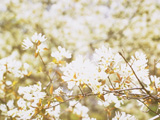
Canadian Service-berry or Shadblow Service-berry is a small, understory tree or large, multi-trunked shrub usually growing in clumps with many upright branches. Its crown is delicate and open. Long-petaled, white blossoms, opening before leaves emerge, are followed by a small, crimson-colored, edible, apple-like fruit. Enduring fall foliage is orange to rusty-red. The deciduous plant grows 6-20 ft. high, sometimes taller.
Serviceberries are subject to many disease and insect problems. Damage from these problems is usually cosmetic rather than life threatening. This is an East Coast plant. However, the name is commonly used in the nursery trade and generally refers to Amelanchier arborea, or possibly some hybrids.
Plant Characteristics
Duration: PerennialHabit: Tree
Leaf Retention: Deciduous
Fruit Type: Pome
Size Notes: Up to about 30 feet tall.
Leaf: Green
Autumn Foliage: yes
Fruit: Red to purple
Bloom Information
Bloom Color: WhiteBloom Time: Mar , Apr , May
Distribution
USA: AL , CT , DC , DE , GA , MA , MD , ME , MS , NC , NH , NJ , NY , PA , RI , SC , TN , VA , WVCanada: NB , NS , PE , QC
Native Distribution: ME to GA, w. to c. NY
Native Habitat: Wood borders; moist, upland woods
Growing Conditions
Water Use: MediumLight Requirement: Sun , Part Shade , Shade
Soil Moisture: Moist , Wet
CaCO3 Tolerance: High
Soil Description: Moist, but well-drained, soils.
Conditions Comments: Serviceberries are subject to many disease and insect problems. Damage from these problems is usually cosmetic rather than life threatening.
Benefit
Use Wildlife: An important browse and food plant for birds and other wildlife.Conspicuous Flowers: yes
Attracts: Birds
Value to Beneficial Insects
Special Value to Native BeesSupports Conservation Biological Control
This information was provided by the Pollinator Program at The Xerces Society for Invertebrate Conservation.
Propagation
Description: This species can be rooted from early spring hardwood cuttings or softwood cutting taken in the summer. Sow untreated seeds in fall or cold-stratified seed in spring.Seed Collection: Collect fruits as soon as they ripen (if you can beat the birds) and clean seeds immediately to prevent fermentation. Fertile seeds are dark brown with a leathery seed coat. Seed extraction is usually by macerating the fruit and washing them over screens. Air dry and store in sealed, refrigerated containers for up to five years.
Seed Treatment: Cold-moist stratification for 90-120 days.
Commercially Avail: yes
Find Seed or Plants
View propagation protocol from Native Plants Network.
National Wetland Indicator Status
| Region: | AGCP | AK | AW | CB | EMP | GP | HI | MW | NCNE | WMVE |
| Status: | FAC | FAC | FAC |
From the National Organizations Directory
According to the species list provided by Affiliate Organizations, this plant is on display at the following locations:Delaware Nature Society - Hockessin, DE
Natural Biodiversity - Johnstown, PA
Longwood Gardens - Kennett Square, PA
Mt. Cuba Center - Hockessin, DE
Bibliography
Bibref 1620 - Gardening with Native Plants of the South (Reprint Edition) (2009) Wasowski, S. with A. WasowskiBibref 841 - Native Alternatives to Invasive Plants (2006) Burrell, C. C.
Search More Titles in Bibliography
Web Reference
Webref 38 - Flora of North America (2019) Missouri Botanical Garden, St. Louis, MO & Harvard University Herbaria, Cambridge, MA.Webref 23 - Southwest Environmental Information Network (2009) SEINet - Arizona Chapter
Additional resources
USDA: Find Amelanchier canadensis in USDA PlantsFNA: Find Amelanchier canadensis in the Flora of North America (if available)
Google: Search Google for Amelanchier canadensis
Metadata
Record Modified: 2023-05-08Research By: TWC Staff