Native Plants

Plant Database
Search for native plants by scientific name, common name or family. If you are not sure what you are looking for, try the Combination Search or our Recommended Species lists.
DiQuilio, Carol
Zinnia grandiflora
Zinnia grandiflora Nutt.
Plains Zinnia, Rocky Mountain Zinnia, Prairie Zinnia, Little Golden Zinnia, Yellow Zinnia
Asteraceae (Aster Family)
Synonym(s): Crassina grandiflora
USDA Symbol: ZIGR
USDA Native Status: L48 (N)
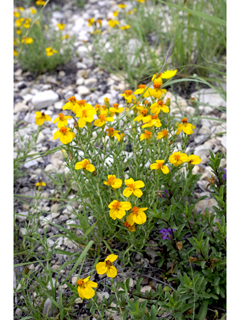
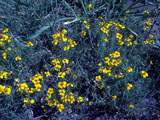
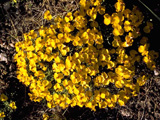
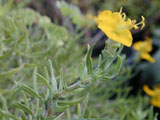
This low-growing perennial is a 6-8 in., mound-shaped plant with numerous bright-yellow, 3- to 6-rayed flowers. There are usually several, much-branched stems from a woody base, making the plant almost shrub-like. Tiny, needle-like leaves form a mossy mat when plant is not in bloom. Several short, leafy, slightly woody stems in a low, round clump have numerous small flower heads with 3-6 nearly round yellow-orange rays.
The genus, Zinnia, was named by Linneas in honor of Johann Gottfried Zinn. Zinn was a German anatomist, ophthalmologist, and botanist born in 1727 and died in 1759 (in Germany). He was extraordinary professor of medicine and director of the botanical gardens in the university town of Gottingen. He was one of the first to render an accurate description of the eyeball and he investigated the vessels and nerves of the eye cavity.


Plant Characteristics
Duration: PerennialHabit: Shrub
Size Notes: Up to about 8 inches tall.
Flower: Flower 1 inch
Fruit: Fruit is a cypsela (pl. cypselae). Though technically incorrect, the fruit is often referred to as an achene.
Bloom Information
Bloom Color: YellowBloom Time: Apr , May , Jun , Jul , Aug , Sep , Oct , Nov
Distribution
USA: AZ , CO , KS , NM , OK , TXNative Distribution: KS to NV, s. to w. TX, AZ, & n. Mexico as far south as Zacatecas
Native Habitat: Dry, calcareous slopes & mesas
Growing Conditions
Water Use: LowLight Requirement: Part Shade
Soil Moisture: Dry
Soil Description: Dry, calcareous soils. Sandy Loam, Sandy, Gravelly, Limestone/chalky, Limestone-based, Caliche type.
Conditions Comments: This plant is ideal for dry, gravelly rock gardens, parkways, and medians, as well as well-drained flower gardens. Because it spreads by rhizomes, plains zinnia is also good for erosion control on steep, sandy slopes. Its color lasts most of the summer.
Benefit
Use Ornamental: Showy, Erosion control, Rock gardens, Perennial garden, Border, Rocky hillsideUse Wildlife: Rocky Mountain zinnia attracts butterflies. Flowers-Butterflies & moths, Flowers-Syrphid flies, Pollen-Butterflies , Pollen-Moths, Pollen-Bees, Nectar- bees, Nectar- butterflies, Nectar-Moths, Nectar-Butterflies, Nectar-Bees
Conspicuous Flowers: yes
Deer Resistant: High
Value to Beneficial Insects
Special Value to Native BeesThis information was provided by the Pollinator Program at The Xerces Society for Invertebrate Conservation.
Propagation
Description: Sow seed in fall or spring. Germination rates are often low. Divide young plants in spring. Treated herbaceous cuttings with some woody base will give moderate results. Take cuttings in late spring.Seed Collection: Seeds break easily when machine-cleaned, thus are seldom commercially available.
Seed Treatment: Cold-moist stratification may enhance germination rate.
Commercially Avail: yes
Find Seed or Plants
Find seed sources for this species at the Native Seed Network.
From the National Organizations Directory
According to the species list provided by Affiliate Organizations, this plant is on display at the following locations:Texas Discovery Gardens - Dallas, TX
Sibley Nature Center - Midland, TX
Texas Parks and Wildlife Department - Austin, TX
Native Seed Network - Corvallis, OR
Bibliography
Bibref 355 - Landscaping with Native Plants of Texas and the Southwest (1991) Miller, G. O.Bibref 995 - Native Landscaping from El Paso to L.A. (2000) Wasowski, S. and A. Wasowski
Bibref 318 - Native Texas Plants: Landscaping Region by Region (2002) Wasowski, S. & A. Wasowski
Bibref 248 - Texas Wildflowers: A Field Guide (1984) Loughmiller, C. & L. Loughmiller
Bibref 291 - Texas Wildscapes: Gardening for Wildlife (1999) Damude, N. & K.C. Bender
Bibref 328 - Wildflowers of Texas (2003) Ajilvsgi, Geyata.
Search More Titles in Bibliography
Web Reference
Webref 38 - Flora of North America (2019) Missouri Botanical Garden, St. Louis, MO & Harvard University Herbaria, Cambridge, MA.Webref 23 - Southwest Environmental Information Network (2009) SEINet - Arizona Chapter
Additional resources
USDA: Find Zinnia grandiflora in USDA PlantsFNA: Find Zinnia grandiflora in the Flora of North America (if available)
Google: Search Google for Zinnia grandiflora
Metadata
Record Modified: 2023-01-27Research By: TWC Staff