Native Plants

Plant Database
Search for native plants by scientific name, common name or family. If you are not sure what you are looking for, try the Combination Search or our Recommended Species lists.
Makin, Julie
Viburnum nudum var. cassinoides
Viburnum nudum L. var. cassinoides (L.) Torr. & A. Gray
Withe-rod, Witherod Viburnum, Possumhaw, Wild Raisin
Caprifoliaceae (Honeysuckle Family)
Synonym(s): Viburnum cassinoides, Viburnum cassinoides var. harbisonii, Viburnum cassinoides var. nitidum, Viburnum nitidum
USDA Symbol: VINUC
USDA Native Status: L48 (N), CAN (N), SPM (N)
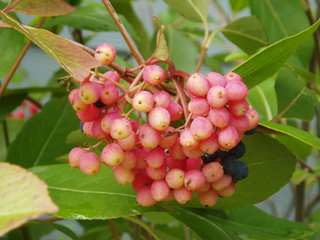
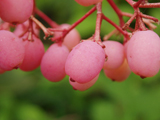
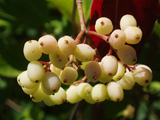
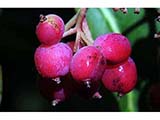
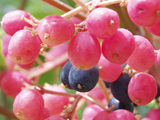
Witherod viburnum is a dense, 6-12 ft., deciduous shrub with upright stems becoming arching with age. Flat-topped clusters of white flowers are followed by colorful summer fruit which changes from iridescent pink to red; then becomes blue in late summer before turning black. Sometimes all these colors are present in the same fruiting cluster. The fall foliage is also variable and always colorful.
This is one of several relatively similar Viburnum species with edible fruit. Blackhaw (V. prunifolium) is more tree-like, growing to 20 feet (6 m) high, with finely toothed, oval leaves and many short twiggy branches borne at right angles to the stem. Nannyberry (V. lentago) is a shrub or tree growing to 30 feet (9 m) high, with long, tapering leaf tips and winged petioles.
Plant Characteristics
Duration: PerennialHabit: Shrub
Leaf Retention: Deciduous
Fruit Type: Drupe
Size Notes: Up to about 12 feet tall.
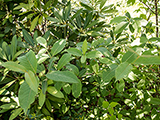
Leaf: Green.
Autumn Foliage: yes
Fruit: Black, Blue.
Bloom Information
Bloom Color: WhiteBloom Time: May , Jun , Jul
Distribution
USA: AL , CT , DC , DE , GA , IL , IN , KY , LA , MA , MD , ME , MI , MS , NC , NH , NJ , NY , OH , PA , RI , SC , TN , TX , VA , VT , WI , WVCanada: NB , NL , NS , PE , QC
Native Distribution: Nf. to Ont., s. to MD, n. IN & n.e. WI; also s. Appalacians above 3600 ft.
Native Habitat: Swamps; moist, upland woods & clearings; exposed rock crevices
Growing Conditions
Water Use: MediumLight Requirement: Sun , Part Shade , Shade
Soil Moisture: Moist , Wet
Soil pH: Acidic (pH<6.8)
CaCO3 Tolerance: High
Soil Description: Wet to dry soils.
Conditions Comments: Witherod viburnum transplants well. It is more tolerant of wet soil than other viburnums.
Benefit
Use Wildlife: Fruit attracts gamebirds, songbirds, shorebirds and mammals.Conspicuous Flowers: yes
Attracts: Birds
Propagation
Seed Collection: Collect the fruit as soon as it has turned a dark blue-black color. Store seeds with pulp on at 41 degrees.Commercially Avail: yes
Find Seed or Plants
View propagation protocol from Native Plants Network.
From the National Organizations Directory
According to the species list provided by Affiliate Organizations, this plant is on display at the following locations:Native Plant Center at Westchester Community College, The - Valhalla, NY
Mt. Cuba Center - Hockessin, DE
Bibliography
Bibref 841 - Native Alternatives to Invasive Plants (2006) Burrell, C. C.Search More Titles in Bibliography
Web Reference
Webref 23 - Southwest Environmental Information Network (2009) SEINet - Arizona ChapterAdditional resources
USDA: Find Viburnum nudum var. cassinoides in USDA PlantsFNA: Find Viburnum nudum var. cassinoides in the Flora of North America (if available)
Google: Search Google for Viburnum nudum var. cassinoides
Metadata
Record Modified: 2022-10-21Research By: TWC Staff