Native Plants

Plant Database
Search for native plants by scientific name, common name or family. If you are not sure what you are looking for, try the Combination Search or our Recommended Species lists.
Anderson, Wynn
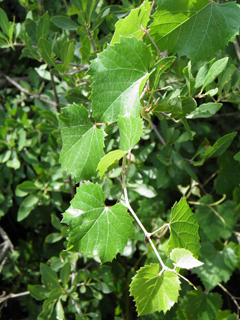
Vitis arizonica
Vitis arizonica Engelm.
Canyon Grape, Arizona Grape
Vitaceae (Grape Family)
Synonym(s): Vitis arizonica var. galvinii, Vitis arizonica var. glabra, Vitis treleasei
USDA Symbol: VIAR2
USDA Native Status: L48 (N)
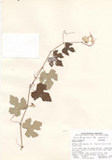
Canyon grape or Arizona grape is a shrubby, low-climbing vine with hairy stems; heart-shaped to shallowly three-lobed, leaves; small, fragrant, greenish flowers; and sweet, juicy, black berries. Branched, woody vine, with shredding, peeling bark; clambers over rocks, shrubs, trees.
The fleshy grapes are relished by birds, small mammals, and humans, in spite of the large seeds.
Plant Characteristics
Duration: PerennialHabit: Vine
Leaf Retention: Deciduous
Fruit Type: Berry
Size Notes: Stems sprawling to weakly climbing, up to about 20 feet long.
Fruit: Black, Blue
Bloom Information
Bloom Color: White , GreenBloom Time: Apr , May , Jun , Jul
Bloom Notes: White to greenish.
Distribution
USA: AZ , NM , NV , TX , UTNative Distribution: W. TX to s.w. UT, s. to n. Mex.
Native Habitat: Canyons; stream banks; 2000 to 7500 ft.
Growing Conditions
Water Use: LowLight Requirement: Part Shade
Soil Moisture: Dry
Soil Description: Well-drained soils. Limestone-based, Sandy, Sandy Loam, Medium Loam, Clay Loam, Clay.
Conditions Comments: Vines are useful for controlling erosion. The berries, ripe from Aug. to Oct., are of good quality for jelly and grape juice.
National Wetland Indicator Status
| Region: | AGCP | AK | AW | CB | EMP | GP | HI | MW | NCNE | WMVE |
| Status: | FACU | FACU | FACU |
From the National Organizations Directory
According to the species list provided by Affiliate Organizations, this plant is on display at the following locations:Texas Parks and Wildlife Department - Austin, TX
Bibliography
Bibref 995 - Native Landscaping from El Paso to L.A. (2000) Wasowski, S. and A. WasowskiBibref 318 - Native Texas Plants: Landscaping Region by Region (2002) Wasowski, S. & A. Wasowski
Bibref 291 - Texas Wildscapes: Gardening for Wildlife (1999) Damude, N. & K.C. Bender
Search More Titles in Bibliography
Web Reference
Webref 38 - Flora of North America (2019) Missouri Botanical Garden, St. Louis, MO & Harvard University Herbaria, Cambridge, MA.Webref 23 - Southwest Environmental Information Network (2009) SEINet - Arizona Chapter
Additional resources
USDA: Find Vitis arizonica in USDA PlantsFNA: Find Vitis arizonica in the Flora of North America (if available)
Google: Search Google for Vitis arizonica
Metadata
Record Modified: 2022-10-21Research By: TWC Staff