Native Plants

Plant Database
Search for native plants by scientific name, common name or family. If you are not sure what you are looking for, try the Combination Search or our Recommended Species lists.
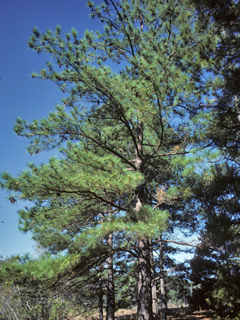
Wasowski, Sally and Andy
Pinus taeda
Pinus taeda L.
Loblolly Pine, Oldfield Pine, Bull Pine, Rosemary Pine
Pinaceae (Pine Family)
Synonym(s):
USDA Symbol: PITA
USDA Native Status: L48 (N)
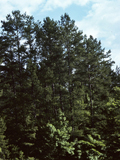
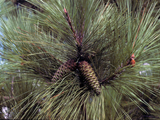
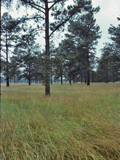
The principal commercial southern pine, a large, resinous, and fragrant tree with rounded crown of spreading branches. Loblolly pine is a 60 ft. tree which can reach 150 ft. It loses its lower branches with age, leaving an open, rounded crown. Dark green needles are 6-10 in. long. Bark is gray and scaly.
Loblolly Pine is native in 15 southeastern states. Among the fastest-growing southern pines, it is extensively cultivated in forest plantations for pulpwood and lumber. One of the meanings of the word loblolly is "mud puddle," where these pines often grow. It is also called "Bull Pine," from the giant size, and "Rosemary Pine," from the fragrant resinous foliage.
Plant Characteristics
Duration: PerennialHabit: Tree
Leaf Retention: Evergreen
Leaf Arrangement: Fascicled
Leaf Complexity: Simple
Leaf Shape: Linear
Breeding System: Flowers Unisexual , Monoecious
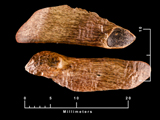
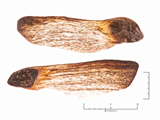
Fruit Type: Cone
Size Notes: Up to about 150 feet tall.
Leaf: Green
Fruit: Brown
Bloom Information
Bloom Color: Yellow , BrownBloom Time: Feb , Mar
Bloom Notes: Flowers inconspicuous. Pollen cones yellow to yellowish brown.
Distribution
USA: AL , AR , DC , DE , FL , GA , IL , KY , LA , MD , MS , NC , NJ , OK , SC , TN , TX , VANative Distribution: Coastal Plain & Piedmont from s. NJ to c. FL, w. to e. TX & n. in Mississippi Valley to extreme s.e. OK, c. AR & s. TN
Native Habitat: Sandy or gravelly savannas & hilly woodlands
Growing Conditions
Water Use: HighLight Requirement: Part Shade
Soil Moisture: Dry
CaCO3 Tolerance: Medium
Cold Tolerant: yes
Soil Description: Adaptable, but prefers moist, sandy soils. Sandy, Sandy Loam Acid-based, Medium Loam
Conditions Comments: Loblolly will respond well to extra moisture and richer soils. One of the fastest-growing southern pines. A pioneer species along river bottoms. Often infected with a rust which produces prominent, enlarged areas on twigs, branches and trunks. Also suffers damage from pine beetles.
Benefit
Use Ornamental: Fast growing, AttractiveUse Wildlife: Nesting site, Cover, Seeds-Small mammals, Seeds-granivorous birds.
Attracts: Birds , Butterflies
Larval Host: Elfin butterfly.
Butterflies and Moths of North America (BAMONA)
|
Southern pine sphinx (Lapara coniferarum) 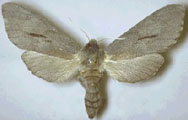 Larval Host |
Propagation
Propagation Material: SeedsDescription: Sow fresh, untreated seed in late fall.
Seed Collection: Collect cones from vigorous trees in late summer and fall just before they completely open to drop seeds. Spread cones on racks to dry so they will release seeds. Cones may be shaken to release seeds. Store at a moisture content of 5-10% fresh weight.
Commercially Avail: yes
Maintenance: Prevent complete soil dryness, Prune to maintain shape, Remove dead growth, Fertilize 3 times a year with lawn fertilizer 3:1:2 ratio
Find Seed or Plants
View propagation protocol from Native Plants Network.
Mr. Smarty Plants says
Evergreen plants safe for horses in Louisville, Kentucky
May 16, 2010
I have a horse farm in Louisville, Ky. I want to plant evergreen plants along the walls in front of the horse barns. What types of plants are not toxic to horses can I use? Thank you so much for all y...
view the full question and answer
Tree for sound block near Houston
April 24, 2010
I live in Pearland, just south of Houston and am looking for a tree that I can plant along my fenceline between my neighbor and me that will block noise. We have a pool and entertain a lot, but they a...
view the full question and answer
Eucalyptus tree for Spring, Texas
October 31, 2008
I've heard eucalyptus trees do not lose their leaves in the winter and grow considerably tall. I want to replace a decaying pine tree with a eucalyptus tree. Do you recommend that for the Spring, T...
view the full question and answer
National Wetland Indicator Status
| Region: | AGCP | AK | AW | CB | EMP | GP | HI | MW | NCNE | WMVE |
| Status: | FAC | FAC | FAC | UPL | UPL |
From the National Organizations Directory
According to the species list provided by Affiliate Organizations, this plant is on display at the following locations:Pineywoods Native Plant Center - Nacogdoches, TX
Delaware Nature Society - Hockessin, DE
Crosby Arboretum - Picayune, MS
Stengl Biological Research Station - Smithville, TX
Texas Parks and Wildlife Department - Austin, TX
Georgia Native Plant Society - Atlanta, GA
Bibliography
Bibref 766 - Dale Groom's Texas Gardening Guide (2002) Groom, D.Bibref 1186 - Field Guide to Moths of Eastern North America (2005) Covell, C.V., Jr.
Bibref 298 - Field Guide to Texas Trees (1999) Simpson, B.J.
Bibref 1185 - Field Guide to Western Butterflies (Peterson Field Guides) (1999) Opler, P.A. and A.B. Wright
Bibref 1620 - Gardening with Native Plants of the South (Reprint Edition) (2009) Wasowski, S. with A. Wasowski
Bibref 355 - Landscaping with Native Plants of Texas and the Southwest (1991) Miller, G. O.
Bibref 318 - Native Texas Plants: Landscaping Region by Region (2002) Wasowski, S. & A. Wasowski
Bibref 291 - Texas Wildscapes: Gardening for Wildlife (1999) Damude, N. & K.C. Bender
Search More Titles in Bibliography
Web Reference
Webref 3 - Flora of North America (2014) Missouri Botanical Garden, St. Louis, MO & Harvard University Herbaria, Cambridge, MA.From the Archive
Wildflower Newsletter 1988 VOL. 5, NO.5 - Penny Campaign Grows Oklahoma Wildflowers, Wildflower Center Collects Honors, Di...Additional resources
USDA: Find Pinus taeda in USDA PlantsFNA: Find Pinus taeda in the Flora of North America (if available)
Google: Search Google for Pinus taeda
Metadata
Record Modified: 2022-09-21Research By: TWC Staff