Native Plants

Plant Database
Search for native plants by scientific name, common name or family. If you are not sure what you are looking for, try the Combination Search or our Recommended Species lists.
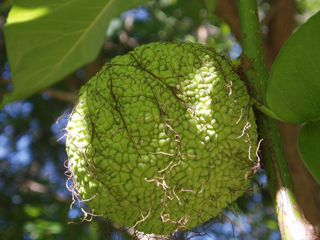
Makin, Julie
Maclura pomifera
Maclura pomifera (Raf.) C.K. Schneid.
Osage Orange, Bois d' Arc, Bodark, Horse Apple, Hedge Apple, Bowwood, Yellowwood, Naranjo Chino, Monkey Brains
Moraceae (Mulberry Family)
Synonym(s): Ioxylon pomiferum, Toxylon pomiferum
USDA Symbol: MAPO
USDA Native Status: L48 (N), CAN (I)
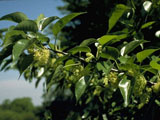
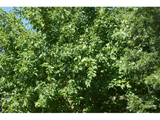
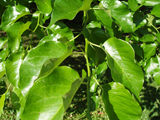
Medium-sized, thorny tree with short, often crooked trunk; broad, rounded or irregular crown of spreading branches; single, straight, stout thorns at base of some leaves; and milky sap. A durable tree, once planted in hedgerows; furnished bow wood for the Osage Indians. Bark yellowish brown, furrowed. Small branches with thorns up to 1 inch long. Leaves, including petiole, up to 9 inches long, shiny, ovate to narrower with a smooth margin. Flowers inconspicuous. Fruit conspicuous, green, the size and shape of an orange or grapefruit and containing a milky sap, inedible. Male and female flowers on separate trees, so fruits not on all trees.
Rows of these thorny plants served as fences in the grassland plains before the introduction of barbed wire. The name "Bodark" is from the French bois d arc, meaning "bow wood," referring to Native Americans' use of the wood for archery bows. It is also used for fenceposts. Early settlers extracted a yellow dye for cloth from the root bark. The fruit is eaten by livestock, which has given rise to yet another common name, "Horse-apple."
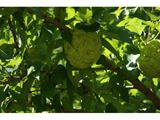
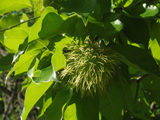
Plant Characteristics
Duration: PerennialHabit: Tree
Leaf Retention: Deciduous
Leaf Complexity: Simple
Leaf Texture: Smooth
Breeding System: Flowers Unisexual , Dioecious
Fruit Type: Aggregate
Size Notes: Up to about 65 feet tall.
Leaf: Green
Fruit: Green to yellowish-green.
Bloom Information
Bloom Color: GreenBloom Time: Apr , May , Jun
Distribution
USA: AL , AR , CA , CO , CT , DC , DE , FL , GA , IA , IL , IN , KS , KY , LA , MA , MD , MI , MO , MS , NC , NE , NJ , NM , NY , OH , OK , OR , PA , RI , SC , SD , TN , TX , UT , VA , WA , WI , WVNative Distribution: The original native range uncertain, but usually thought to be limited to the Red River drainage in sw. Arkansas, se. Oklahoma, and ne. Texas, possibly extending down the Blackland Prairies into central Texas; widely planted and naturalized in the eastern and northwestern states.
Native Habitat: Prairie, Plains, Meadows, Pastures, Savannas, Woodlands' edge, Opening, Fence rows, Ditches, Ravines, Depressions
Growing Conditions
Water Use: MediumLight Requirement: Sun
Soil Moisture: Dry
CaCO3 Tolerance: High
Heat Tolerant: yes
Soil Description: Medium Loam, Clay Loam, Clay
Conditions Comments: Medium-sized, spiny tree with short, often crooked trunk; broad, rounded or irregular crown of spreading branches; single, straight, stout spines at base of some leaves; and milky sap.
Benefit
Use Ornamental: Hedges, Attractive, Fruits ornamental, Fall conspicuousUse Wildlife: Nesting site, Cover, Fruit-mammals
Conspicuous Flowers: yes
Fragrant Flowers: yes
Interesting Foliage: yes
Attracts: Birds
National Wetland Indicator Status
| Region: | AGCP | AK | AW | CB | EMP | GP | HI | MW | NCNE | WMVE |
| Status: | FACU | UPL | UPL | FACU | FACU | FACU | UPL |
From the National Organizations Directory
According to the species list provided by Affiliate Organizations, this plant is on display at the following locations:Lady Bird Johnson Wildflower Center - Austin, TX
Texas Parks and Wildlife Department - Austin, TX
NPSOT - Williamson County Chapter - Georgetown, TX
Bibliography
Bibref 298 - Field Guide to Texas Trees (1999) Simpson, B.J.Bibref 354 - Native & Naturalized Woody Plants of Austin & the Hill Country (1981) Lynch, D.
Bibref 841 - Native Alternatives to Invasive Plants (2006) Burrell, C. C.
Bibref 291 - Texas Wildscapes: Gardening for Wildlife (1999) Damude, N. & K.C. Bender
Bibref 297 - Trees of Central Texas (1984) Vines, Robert A.
Search More Titles in Bibliography
Web Reference
Webref 38 - Flora of North America (2019) Missouri Botanical Garden, St. Louis, MO & Harvard University Herbaria, Cambridge, MA.Webref 23 - Southwest Environmental Information Network (2009) SEINet - Arizona Chapter
Additional resources
USDA: Find Maclura pomifera in USDA PlantsFNA: Find Maclura pomifera in the Flora of North America (if available)
Google: Search Google for Maclura pomifera
Metadata
Record Modified: 2023-04-18Research By: TWC Staff